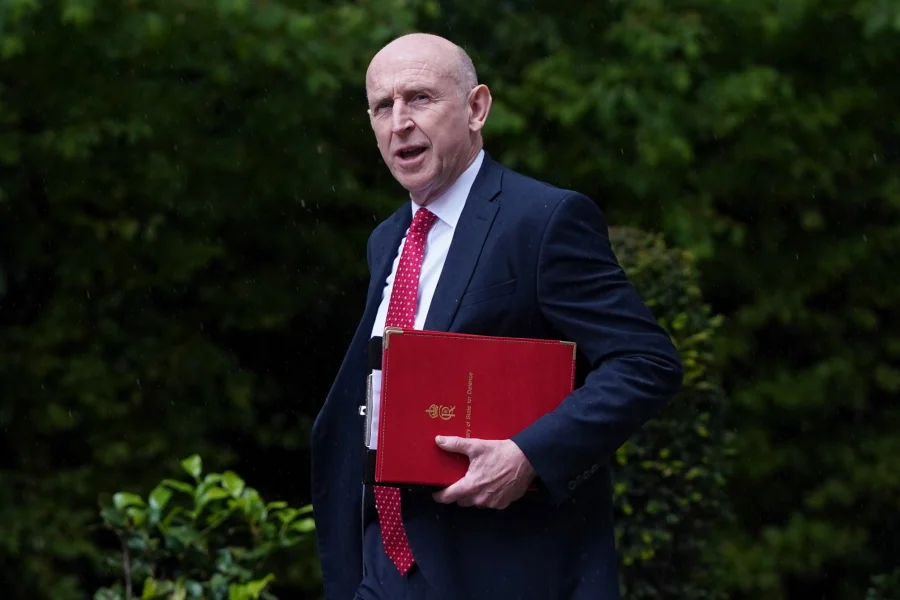
John Healey, the United Kingdom’s Defence Secretary, resigned on Thursday in a dramatic break with Prime Minister Keir Starmer’s government. His resignation letter was blunt: the government’s Defence Investment Plan falls “well short of what is required at this dangerous time.” The move has sent shockwaves through Westminster — and handed Donald Trump a powerful new argument for his long-running claim that Europe freeloads on American defence.
Why Healey’s Resignation Matters Beyond Westminster
Healey’s departure is not just a domestic political crisis. It directly validates Trump’s repeated assertion that European NATO members are not spending enough on their own defence. For years, Trump has accused allies of relying on the US military umbrella while underfunding their own forces. Now, Britain’s own former Defence Secretary has effectively agreed.
The Defence Funding Gap That Broke the Government
Healey told Starmer in his resignation letter that the government’s Defence Investment Plan — which has been delayed amid reported disagreements between the Ministry of Defence and the Treasury — is inadequate. “At a time of rising threats,” Healey wrote, the plan does not provide the resources needed to keep the UK safe. The delay itself signals deep internal conflict over how much to spend on the military.
How Trump’s Argument Gains New Credibility
Trump has long pointed to European defence spending as a burden on American taxpayers. Healey’s resignation — from a Labour government, no less — gives that argument a powerful, non-partisan boost. If even a British Defence Secretary says his own country isn’t spending enough, Trump’s case becomes harder to dismiss as mere political rhetoric.
Who Is Affected by This Political Crisis
British taxpayers face the immediate consequence: a government unable to agree on defence priorities. NATO allies watch nervously as a key European power signals internal division over military commitment. For ordinary Britons, the question is whether their country can defend itself without relying on the US — and at what cost.
Starmer’s Response and the Growing Pressure
Prime Minister Keir Starmer said in a letter to Healey that he was sorry to see him go but insisted the funding plan would provide necessary resources. However, the resignation has emboldened Labour MPs who already wanted Starmer to step down. The political fallout is now a full-blown crisis for a government already struggling with public confidence.
What the Defence Investment Plan Actually Says
The plan’s publication has been delayed, but reports indicate the Treasury is resisting the scale of spending the Defence Ministry says is needed. The gap between what the military wants and what the Treasury is willing to fund is at the heart of Healey’s resignation. Without a clear commitment, the UK’s defence posture remains uncertain.
Confirmed Facts vs What Remains Unclear
Confirmed: John Healey resigned as Defence Secretary on Thursday. His letter cited inadequate defence spending. The Defence Investment Plan is delayed due to Treasury-MoD disagreements. Starmer has rejected calls to resign.
Unclear: The exact figures in the delayed plan. Whether Starmer will face a formal leadership challenge. How NATO allies will respond to the UK’s internal crisis. The timeline for a new Defence Secretary appointment.
Why This Story Connects to a Wider NATO Debate
Healey’s resignation is the latest flashpoint in a long-running transatlantic argument. NATO members agreed in 2014 to spend 2% of GDP on defence, but many European nations have been slow to meet that target. Trump’s criticism has been a constant pressure point. Now, a British Defence Secretary has effectively admitted the criticism is valid.
What Britons Should Watch For Next
For UK citizens: watch for the new Defence Secretary’s appointment and whether the Defence Investment Plan is published with higher figures. For investors: defence stocks may react to uncertainty. For NATO watchers: the UK’s commitment to the alliance is now under scrutiny. For voters: the question of defence spending will likely become a major election issue.
What Could Happen Next
Starmer may appoint a new Defence Secretary quickly to contain the damage. But the underlying problem — a government unwilling to fund defence at the level military leaders say is needed — remains unresolved. If the Treasury continues to resist, further resignations or a full-blown leadership challenge could follow. Trump will almost certainly use this moment to press his case even harder.
Our Take
Healey’s resignation is a rare moment where a politician’s personal conviction aligns with a geopolitical argument. By stepping down over principle, he has done more to validate Trump’s Europe freeloading claim than any US official could. The deeper story is not just about one resignation — it is about whether Europe can take its own defence seriously. The UK, as a permanent UN Security Council member and nuclear power, is the test case. If Britain cannot agree to spend what its own Defence Secretary says is needed, what hope is there for the rest of Europe?
Frequently Asked Questions
Why did the UK Defence Secretary resign?
John Healey resigned because he believes the government’s Defence Investment Plan does not provide enough funding for the military at a time of rising global threats.
How does this relate to Donald Trump’s claims about Europe?
Trump has long argued that European NATO members rely on US defence without paying their fair share. Healey’s resignation — from a British government — effectively supports that argument by admitting UK defence spending is inadequate.
What happens next for Prime Minister Keir Starmer?
Starmer faces growing pressure from Labour colleagues to resign. He has so far resisted, but the resignation weakens his authority and could trigger a leadership challenge.
Will UK defence spending increase now?
It is unclear. The Defence Investment Plan’s publication is delayed due to disagreements between the Defence Ministry and the Treasury. A new Defence Secretary may push for higher spending, but the Treasury’s resistance remains a major obstacle.