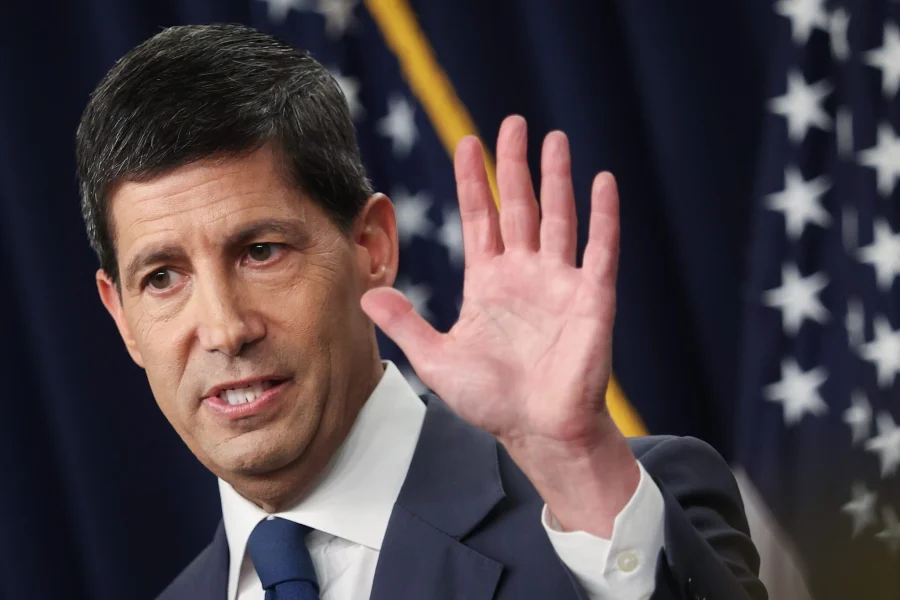
The Federal Reserve's new chairman is sending a clear message to Wall Street: expect to hear less from the central bank. But the response from major financial institutions is equally direct—silence may be far more dangerous than the detailed guidance they've grown accustomed to.
Warsh's Break From Bernanke-Era Transparency
Kevin Warsh, who served on the Board of Governors from 2006 to 2011 under his mentor Ben Bernanke, has been consistent in his criticism of forward guidance—the practice of publicly sharing expectations for short-term interest rates. He believes the Fed has become too comfortable revealing its policy path, and that this transparency has actually hamstrung its ability to make independent decisions.
During last week's FOMC press conference, Warsh built on this thinking. In reducing forward guidance, he argued, the central bank could reclaim flexibility that markets have effectively taken away through their intense focus on every word.
Why Goldman Sachs Sees Danger in Fed Silence
Wall Street is now blasting its response: dialing back communications will be tolerated, but a perceived void of information will not. Goldman Sachs has emerged as a leading voice of concern, warning that the absence of official Fed guidance creates a vacuum that will be filled by speculation, rumor, and misinformation.
The firm's analysts argue that markets have been conditioned to interpret every Fed signal for years. Removing that framework without a replacement doesn't create calm—it creates uncertainty, and uncertainty in financial markets historically translates to volatility.
The Evolution of Forward Guidance Under Pressure
Forward guidance became a cornerstone of Fed policy during the 2008 financial crisis, when the central bank needed to reassure markets despite having limited conventional tools. The approach evolved over subsequent years, with successive chairs refining how much detail to share about the likely path of rates.
Warsh's position represents a philosophical break from that trajectory. His view suggests the Fed's transparency efforts have created a market that overreacts to every data point and every phrase in every statement, making the central bank's job harder rather than easier.
What Reduced Fed Communication Means for Investors
For everyday investors and pension funds, the shift could mean a fundamentally different market environment. Instead of parsing Fed statements for clear signals about rate direction, investors will need to make decisions with less official guidance and more reliance on economic data interpretation.
This creates a steeper learning curve for retail investors who have grown accustomed to the Fed effectively pre-announcing its moves. The uncertainty premium could show up in wider yield spreads, more volatile equity markets, and more aggressive pricing of rate expectations.
Wall Street's Pushback and the Credibility Question
The tension between Warsh and major financial institutions raises a deeper question about Fed credibility. Supporters of reduced communication argue that markets should focus on economic fundamentals rather than central bank commentary. Critics counter that the Fed's credibility is built on its communication—and that reducing it undermines the very stability the central bank is meant to protect.
Goldman Sachs's warning reflects a broader institutional concern: in an era of rapid information dissemination and social media-driven narratives, an official silence from the Fed doesn't mean no information—it means uncontrolled information.
Confirmed Facts vs What Remains Unclear
What is confirmed: Warsh has publicly criticized forward guidance and indicated the Fed will share less about its policy path. Goldman Sachs has expressed concern that reduced communication will amplify misinformation and instability.
What remains unclear: the specific timeline for implementing reduced communication, whether the Fed will adopt a middle-ground approach, and how markets will actually react once the new policy takes full effect. The full scope of Warsh's communication overhaul has not been detailed.
The Fed's Institutional Shift and Its Market Implications
This isn't just a stylistic change—it represents a fundamental shift in how the world's most influential central bank interacts with global markets. The Fed's communication strategy has been a key tool for managing market expectations for nearly two decades, and removing it changes the calculus for every investor worldwide.
The broader implication extends beyond US markets. Central banks globally have followed the Fed's transparency model, and a reversal by the Fed could trigger similar reconsideration among other major central banks, potentially reshaping global monetary policy communication.
Risks and Balanced View on Reduced Fed Guidance
Supporters of Warsh's approach argue that reduced communication restores the Fed's independence and prevents markets from dictating policy. They contend that the current system creates a feedback loop where market reactions to Fed statements force the Fed to respond, limiting its options.
Critics, including Goldman Sachs, argue that the Fed operates in a world where information flows constantly, and official silence doesn't eliminate information—it just removes the most reliable source. The risk of misinformation filling the gap is real, and the potential for market instability is a legitimate concern that cannot be dismissed.
How Markets Are Adapting to the New Fed Reality
Financial institutions are already adjusting their strategies in anticipation of reduced Fed communication. Trading desks are placing greater emphasis on economic data releases, while strategists are developing new frameworks for interpreting policy without the anchor of forward guidance.
For the broader market, the adjustment period could be rocky. The transition from a communication-rich Fed environment to a more restrained approach will require markets to unlearn years of conditioning, and that process rarely happens smoothly.
Practical Guidance for Investors Navigating Fed Uncertainty
Investors should prepare for a market environment where Fed signals are less clear and volatility may increase. Diversification becomes more critical, and relying on a broader range of economic indicators rather than Fed commentary alone is advisable.
For those with long-term investment horizons, the shift in Fed communication shouldn't fundamentally alter strategy, but it does warrant a review of how much weight is placed on Fed statements versus underlying economic fundamentals.
Future Outlook: What Comes After Forward Guidance
The Fed's communication strategy is likely to evolve over the coming quarters as Warsh implements his vision. Whether the central bank moves to a completely minimal communication model or finds a middle ground remains to be seen.
What's clear is that the era of the Fed as a transparent guide for market expectations is ending. The question now is whether the new approach brings the flexibility Warsh seeks or the instability Goldman Sachs fears—or something in between.
Our Take
The tension between Warsh and Wall Street represents a genuine philosophical divide about the role of central bank communication in modern financial markets. Both sides have valid points: excessive guidance can indeed constrain policy flexibility, but a communication vacuum in an information-saturated world carries its own risks.
The resolution of this debate will shape not just Fed policy but the broader relationship between central banks and markets globally. For now, the market is entering uncharted territory, and the transition period will test whether the Fed's credibility can survive reduced communication—or whether Goldman Sachs's fears of misinformation and instability prove prescient.
Frequently Asked Questions
Why is Kevin Warsh reducing Fed communication?
Warsh believes the Fed has become too comfortable sharing its expectations for monetary policy, and that this transparency has hamstrung its ability to make independent decisions. He argues that forward guidance has made markets overly reactive to Fed statements, limiting the central bank's flexibility.
What is forward guidance in monetary policy?
Forward guidance is the Federal Reserve's practice of publicly communicating its expectations for future interest rate movements. It was introduced as a policy tool during the 2008 financial crisis to reassure markets and has since become a standard part of the Fed's communication strategy.
Why does Goldman Sachs fear reduced Fed communication?
Goldman Sachs warns that reducing official Fed communication creates an information vacuum that will be filled by speculation and misinformation. The firm argues that markets have been conditioned to rely on Fed guidance, and removing it without a replacement will increase market instability.
How will reduced Fed communication affect regular investors?
Regular investors may face a more volatile market environment with less official guidance on rate direction. This could mean wider yield spreads, more aggressive market reactions to economic data, and a steeper learning curve for those accustomed to clear Fed signals about policy direction.