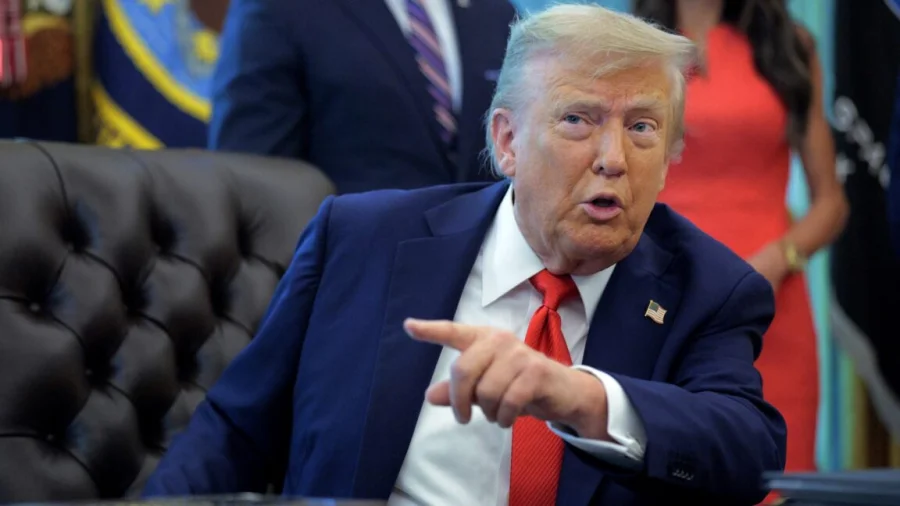
The battle lines over the future of artificial intelligence have been drawn in Washington. President Donald Trump has rejected urgent calls from leading industry figures to slow down AI development, instead announcing the creation of a new "AI Force" and the appointment of a dedicated AI tsar. In a full-throated defense of the emerging industry, the president dismissed growing safety concerns as a "hoax," setting the stage for a major policy showdown.
A New "AI Force" and a Tsar to Lead the Charge
The centerpiece of the announcement is the creation of an "AI Force," a new initiative designed to accelerate American leadership in artificial intelligence. While specific details regarding the force's structure, budget, and operational scope remain undisclosed, the move signals a decisive shift toward a deregulatory, accelerationist approach. The appointment of an AI tsar is intended to streamline federal efforts and remove perceived barriers to rapid innovation.
Why the White House Is Ignoring the Warnings
The president's stance directly contradicts a growing chorus of voices from within the tech industry itself. Leading researchers and executives have recently sounded the alarm, warning that without a coordinated slowdown, humans could lose control over rapidly advancing AI systems. By labeling these fears a "hoax," the administration is betting that the economic and strategic benefits of AI dominance outweigh the risks of unconstrained development.
From Safety Summit to Deregulation: The Policy Shift
This announcement marks a sharp departure from previous global efforts to establish AI safety guardrails. Just months ago, international summits focused on mitigating existential risks from AI. The new US stance effectively sidelines those concerns in favor of a competitive race for technological supremacy. It reflects a broader political realignment where AI is viewed less as a threat to be managed and more as a tool to be unleashed.
The Human Impact: Jobs, Security, and a Widening Divide
For the average American, the "AI Force" could mean faster integration of AI into daily life, from healthcare to transportation. However, it also raises unanswered questions about job displacement and the ethical use of automated systems. The dismissal of safety concerns may resonate with those who see regulation as a brake on progress, but it deepens anxiety for workers and communities already bracing for disruption.
Industry Backlash vs. Accelerationist Support
The response from the tech world has been predictably split. Accelerationists and investors who have long argued that regulation stifles innovation are likely to applaud the move. Conversely, safety-focused researchers and ethicists warn that removing the possibility of a slowdown is a dangerous gamble. The president's comments have effectively turned a complex technical debate into a polarized political issue.
What We Know and What Remains Unclear
Confirmed: The president has announced an "AI Force" and an AI tsar, and has publicly rejected AI slowdown calls as a "hoax."
Unclear: The specific powers of the AI tsar, the funding for the AI Force, and whether this initiative will involve any new federal oversight or remain purely promotional. It is also unclear how this aligns with existing executive orders on AI.
The American AI Moat: Speed as a Strategy
The underlying strategy appears to be a bet on the "American AI Moat"—the idea that the US can maintain its global lead through sheer speed and private-sector dynamism. By removing the threat of regulation, the administration hopes to attract investment and talent that might otherwise go to more restrictive jurisdictions. The "AI Force" is positioned as a catalyst for this ecosystem, though its actual impact will depend on execution.
Risks of a No-Holds-Barred Approach
The most significant risk is that safety concerns, once dismissed, could materialize in ways that are difficult to reverse. Critics argue that without guardrails, AI could be used for disinformation, cyberattacks, or autonomous weapons with little accountability. There is also the economic risk of a bubble, where unregulated hype leads to a crash that hurts investors and the broader economy.
A Global Race Without a Referee
This move places the US in direct contrast with the European Union, which has pursued comprehensive AI regulation. It signals a new era of AI nationalism, where nations compete for dominance without a shared rulebook. The lack of a global referee could lead to a fragmented internet and a race to the bottom on safety standards.
What This Means for You
For now, Americans should expect to see AI tools deployed more rapidly across government and industry. If you are a professional in a field vulnerable to automation, this is a signal to adapt your skills. For investors, the policy tailwind for AI companies is strong, but the lack of oversight increases volatility. Staying informed about the "AI Force" mandate will be crucial as it takes shape.
The Road Ahead
The success of the "AI Force" will depend on who is appointed as the AI tsar and whether they can translate the president's rhetoric into a coherent strategy. The coming months will reveal whether this accelerationist gamble pays off or if the warnings dismissed as a "hoax" will demand a reckoning.
Our Take
This is a defining moment in the AI era. By framing safety as a "hoax," the White House has chosen a path of maximum speed and minimum friction. It is a high-stakes bet that American innovation can outrun the risks. Whether this leads to a golden age of prosperity or a cascade of unintended consequences will be the central question of the coming decade.
Frequently Asked Questions
What is the "AI Force" announced by Trump?
The "AI Force" is a new initiative announced by President Trump to accelerate US artificial intelligence development. Specific details about its structure and funding have not yet been released.
Who will be the new AI tsar?
The president has announced the appointment of an AI tsar to lead the initiative, but the specific individual has not been named in the initial announcement.
Why did Trump call AI safety concerns a "hoax"?
President Trump dismissed AI safety concerns as a "hoax" to signal his administration's opposition to regulations that he believes would slow down innovation and US competitiveness.
How does this affect AI regulation in the US?
This announcement signals a move away from strict regulation and toward a deregulatory, pro-innovation stance, contrasting with the European Union's approach.