Three men walked out of the forested belt of Bankura and into police custody this week, carrying with them an AK-47 and INSAS rifles — and a paper trail of roughly 80 pending cases across two states. West Bengal Police confirmed the surrender, making it one of the more significant capitulations in the district in recent memory.
For residents of Bankura's western fringe, where the jungle meets the highway, the news lands differently than it would in Kolkata. It is both a relief and a reminder: the Maoist insurgency that once dominated this landscape has not vanished. It has thinned, scattered, and in cases like this, quietly walked in.
What the Bankura Surrender Actually Involves
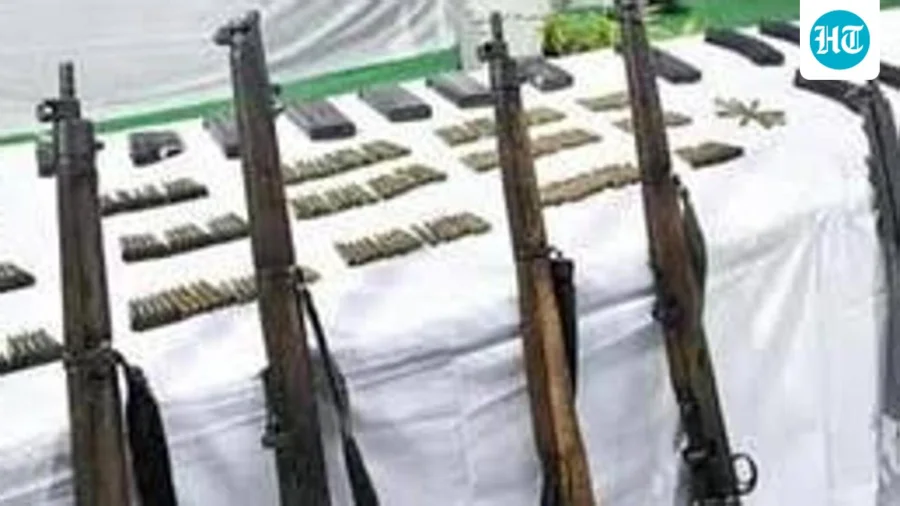
According to West Bengal Police, the three cadres belonged to the CPI (Maoist). They surrendered in Bankura district and handed over an AK-47 rifle along with INSAS rifles — the standard-issue Indian small arm that has repeatedly surfaced in Maoist recoveries over the years.
The presence of an AK-47 in a surrender is notable. It is not a weapon that circulates casually in this region; its recovery usually signals a cadre with operational standing rather than a peripheral recruit.
Why 80 Pending Cases Changes the Story
Police said around 80 cases are pending against the three men across West Bengal and Jharkhand. That number matters for two reasons.
First, it tells you these were not low-level foot soldiers. Cases of this volume typically accumulate over years and across jurisdictions — a pattern consistent with cadres who moved between the two states as part of a wider network.
Second, it shapes what happens next. A surrender does not erase a case. It begins a legal process that can stretch for years, and the outcome depends on how courts and investigators treat each individual charge.
How Maoist Presence in Bengal Has Shifted
The Maoist movement in West Bengal has been in steady decline since its peak in the late 2000s, when the movement's influence in the Jangalmahal region — spanning parts of Bankura, Purulia, West Midnapore and Jhargram — drew national attention and a heavy security response.
Over the past decade, surrenders, arrests, and internal fractures have reduced the movement's footprint. What remains is smaller, more mobile, and more dependent on cross-border movement into Jharkhand and Odisha. The Bankura surrender fits that pattern.
Who Is Affected — and Who Is Watching
The immediate impact falls on the families of the surrendered cadres, who now face a long legal process, and on the communities in Bankura's border blocks that have lived with the movement's presence for decades.
But there is a wider audience too: security planners in Kolkata and Ranchi, who track every surrender for what it reveals about arms supply chains, recruitment, and remaining hideouts. Each recovery is a data point.
What Police Have Said — and What They Haven't
West Bengal Police confirmed the surrender, the weapons recovered, and the approximate number of pending cases. They have not, so far, disclosed the identities of the three men, the specific charges against them, or whether the surrender was negotiated through a formal rehabilitation process.
That silence is not unusual. In Maoist-related cases, police often withhold operational details until questioning is complete.
Reading the Surrender in Context
Surrenders in Maoist-affected districts are rarely spontaneous. They usually follow a combination of factors: sustained pressure from security forces, exhaustion, family persuasion, and the availability of state rehabilitation schemes that offer a path back into civilian life.
Whether this particular surrender reflects a broader trend — or is an isolated event — is not yet clear from the information available. What is clear is that the weapons handed over were real, and the cases pending are numerous.
Confirmed Facts vs What Remains Unclear
Confirmed: Three CPI (Maoist) cadres surrendered in Bankura. An AK-47 and INSAS rifles were recovered. Around 80 cases are pending against them in West Bengal and Jharkhand, per police.
Unclear: Their identities, the specific charges, the terms of surrender, whether any rehabilitation package applies, and whether this signals a wider pattern of capitulation in the region. Any claim beyond what police have stated should be treated as speculation.
Risks and the Balanced View
Surrenders are often framed as victories, and in operational terms they are. But they also raise questions that rarely get asked: How long will the pending cases take to resolve? Will the surrendered cadres face trial, or will many charges lapse or be consolidated? And does a surrender of three men meaningfully reduce the movement's capacity, or simply remove three individuals from a network that has already adapted?
There is also the question of what happens to surrendered cadres after the cameras leave. Rehabilitation outcomes vary, and the gap between surrender and reintegration is where most of the real story sits.
The Wider Pattern in India's Maoist Belt
Across India's Red Corridor — stretching through Chhattisgarh, Jharkhand, Odisha, Andhra Pradesh and parts of West Bengal — the Maoist movement has contracted sharply over the past decade. Surrenders have become more frequent, and recoveries of automatic weapons more common.
But contraction is not extinction. The movement retains pockets of influence, and the surrender-and-recovery cycle in districts like Bankura is likely to continue for some years yet.
What Readers in the Region Should Know
For residents of Bankura and adjoining districts, the practical takeaway is straightforward: the surrender does not change daily life, but it does reduce the immediate presence of armed cadres in the area. Travel through interior forest blocks at night remains inadvisable, as it has been for years.
For those following the story, the next meaningful update will come when police disclose the identities of the three men and the nature of the charges against them.
What Could Happen Next
Investigators are likely to question the three on arms procurement routes, active hideouts, and contacts in Jharkhand. Depending on what emerges, further arrests or recoveries are possible.
On the legal side, the pending cases will move through courts in two states — a process that could take years. Any rehabilitation support will depend on the applicable state scheme and the nature of the charges.
Our Take
The Bankura surrender is a small event in a long, slow decline. It matters less as a headline than as a marker: the Maoist movement in West Bengal is no longer the force it was, but it is not gone, and the men who walked out of the jungle this week will spend years in courtrooms before their story is fully closed.
That gap — between surrender and resolution — is where the real accountability question sits, and it rarely makes the news.
Frequently Asked Questions
How many Maoists surrendered in Bankura?
Three CPI (Maoist) cadres surrendered in Bankura district, according to West Bengal Police.
What weapons were recovered in the Bankura surrender?
An AK-47 rifle and INSAS rifles were handed over by the three cadres at the time of surrender, police said.
How many cases are pending against the surrendered Maoists?
Around 80 cases are pending against them across West Bengal and Jharkhand, per West Bengal Police.
What happens to Maoists after they surrender in West Bengal?
Surrendered cadres are taken into custody and face proceedings linked to pending cases. Rehabilitation support, where applicable, depends on the relevant state scheme and the nature of the charges. Police have not disclosed the specific terms in this case.