Jim Kavanaugh never became a household name like Lionel Messi or Cristiano Ronaldo. He didn’t win a World Cup or score a goal that millions would replay. But six years after representing the United States at the 1984 Summer Olympics, he traded the soccer pitch for a boardroom in Missouri—and built a company that now generates $20 billion a year.
Today, the 63-year-old CEO of World Wide Technology (WWT) is a billionaire. And he has a message for anyone chasing success: resilience matters more than talent. He points to Messi as living proof.
The Olympic dream that didn’t end on the field
Kavanaugh’s soccer career was respectable but not legendary. He played for the US national team during the 1984 Los Angeles Olympics, a moment of pride but not global stardom. After a brief professional stint, he retired from the sport in 1990.
That same year, he co-founded World Wide Technology with David Steward. The company started as a small systems integrator and grew into one of the largest African American-owned businesses in America, with Steward as chairman. Kavanaugh became CEO.
Today, WWT provides technology solutions to Fortune 500 companies, government agencies, and global enterprises. Its revenue hit $20 billion in 2025, according to company disclosures.
Why Kavanaugh says talent is overrated
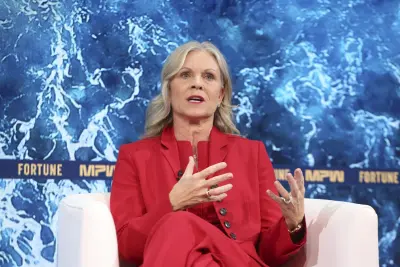
In a recent interview with Fortune, Kavanaugh argued that the qualities that separate elite athletes from the rest are the same ones that drive successful entrepreneurs. “It’s not just about talent,” he said. “It’s about resilience—the ability to get knocked down and get back up, again and again.”
He pointed to Lionel Messi, widely considered one of the greatest footballers of all time. “People see Messi’s genius on the field, but they forget the setbacks—the growth hormone deficiency as a child, the rejections, the pressure. What made him great wasn’t just his left foot. It was his refusal to quit.”
The Messi parallel: setbacks as fuel
Messi’s story is well-documented. Diagnosed with a growth hormone deficiency at age 11, his family couldn’t afford treatment. Barcelona’s sporting director famously signed him on a napkin. He faced injuries, criticism, and the weight of carrying a national team for years before finally winning the World Cup in 2022.
Kavanaugh sees his own journey in that arc. “In business, you face rejection every day. Deals fall through. Markets crash. People doubt you. The ones who survive aren’t necessarily the smartest or the most talented. They’re the ones who keep going.”
From soccer pitch to boardroom: the transferable mindset
Kavanaugh often speaks about how soccer taught him discipline, teamwork, and handling pressure. “In a game, you have 90 minutes to make an impact. In business, you have years—but the same principles apply. You need to read the field, adapt, and keep moving forward.”
He believes that many athletes fail to translate their sports discipline into business because they rely too heavily on their physical talent. “When your body can’t perform anymore, what’s left? If you haven’t built mental resilience, you’re lost.”
What Kavanaugh’s philosophy means for entrepreneurs and athletes
His message resonates beyond the boardroom. For young athletes dreaming of professional careers, Kavanaugh offers a reality check: talent opens doors, but resilience keeps them open. For entrepreneurs, his story is a reminder that failure is not the opposite of success—it’s part of the process.
“I’ve had moments where I thought the company wouldn’t make it,” he admitted. “But I learned from soccer that the game isn’t over until the final whistle. You keep playing.”
World Wide Technology: a $20 billion proof point
WWT’s growth is a testament to that mindset. The company has expanded through multiple economic cycles, including the dot-com bust, the 2008 financial crisis, and the pandemic. It now employs over 10,000 people and operates globally.
Kavanaugh and Steward have also become prominent philanthropists, donating millions to education and community development. Their story is often cited as one of the most successful Black-owned businesses in America, though Kavanaugh prefers to focus on the company’s culture rather than labels.
Confirmed facts vs what remains unclear
Confirmed: Jim Kavanaugh played for the US at the 1984 Olympics. He co-founded WWT in 1990. The company reported $20 billion in revenue in 2025. He has publicly stated that resilience matters more than talent and cited Messi as an example.
Unclear: The exact net worth of Kavanaugh is not publicly verified (Forbes estimates it in the billions). The full transcript of his Fortune interview has not been released. It is unclear if he has directly met Messi or spoken with him about this philosophy.
Risks and balanced view
Critics might argue that Kavanaugh’s “resilience over talent” narrative oversimplifies success. Talent, opportunity, timing, and privilege all play significant roles. Not every resilient person becomes a billionaire, and not every talented athlete fails without grit.
Moreover, Kavanaugh’s story is exceptional—not everyone who plays Olympic soccer can co-found a $20 billion company. His advice, while inspiring, may not be universally applicable. Some may also point out that WWT’s success is also tied to Steward’s leadership and the broader tech boom.
Wider trend: athletes turned entrepreneurs
Kavanaugh is part of a growing wave of athletes who have successfully transitioned into business. From Magic Johnson to David Beckham to Serena Williams, more sports figures are building empires beyond their playing careers. What sets Kavanaugh apart is that he built a tech company—not a sports-related brand—proving that athletic discipline can translate into any industry.
What you can learn from Kavanaugh’s approach
For readers—whether students, aspiring entrepreneurs, or athletes—Kavanaugh’s story offers practical lessons:
• Treat setbacks as data, not defeat.
• Build a support system (Kavanaugh credits his co-founder and team).
• Stay adaptable: the skills that got you here may not get you there.
• Focus on the long game: WWT took decades to reach $20 billion.
What’s next for Kavanaugh and WWT
Kavanaugh shows no signs of slowing down. WWT continues to expand into AI, cloud computing, and cybersecurity. He remains active in mentoring young entrepreneurs and speaking about the intersection of sports and business. An IPO has been rumored but not confirmed.
Our Take
Kavanaugh’s story is more than a feel-good billionaire narrative. It challenges a deeply ingrained cultural belief—that success belongs to the naturally gifted. By pointing to Messi, he reframes greatness as a product of persistence, not predestination. In an era where instant gratification is celebrated, his message is refreshingly old-school: keep showing up. That alone, he argues, separates the extraordinary from the merely talented.
Frequently Asked Questions
Who is Jim Kavanaugh?
Jim Kavanaugh is a former US Olympic soccer player (1984) and co-founder and CEO of World Wide Technology, a $20 billion technology solutions company based in Missouri.
What is World Wide Technology?
World Wide Technology (WWT) is a privately held technology company that provides digital solutions, cloud services, and cybersecurity to large enterprises and government agencies. It was founded in 1990 and reported $20 billion in revenue in 2025.
Why does Jim Kavanaugh say resilience matters more than talent?
Kavanaugh believes that talent alone is not enough to sustain long-term success. He argues that resilience—the ability to overcome setbacks, adapt, and keep going—is the defining trait of elite performers in both sports and business. He cites Lionel Messi’s career as an example.
How did Jim Kavanaugh go from soccer to business?
After his soccer career ended in 1990, Kavanaugh co-founded WWT with David Steward. He applied the discipline, teamwork, and pressure management he learned on the field to building a company. The business grew steadily over three decades to become a global tech giant.
Is Jim Kavanaugh a billionaire?
Yes. While his exact net worth is not publicly confirmed, Forbes and other outlets estimate it in the billions, given WWT’s $20 billion revenue and his ownership stake.
What does Lionel Messi have to do with Kavanaugh’s philosophy?
Kavanaugh points to Messi as a prime example of resilience. Despite early health struggles, rejections, and immense pressure, Messi persisted to become one of the greatest footballers ever. Kavanaugh uses Messi’s story to illustrate that resilience, not just natural talent, drives extraordinary achievement.