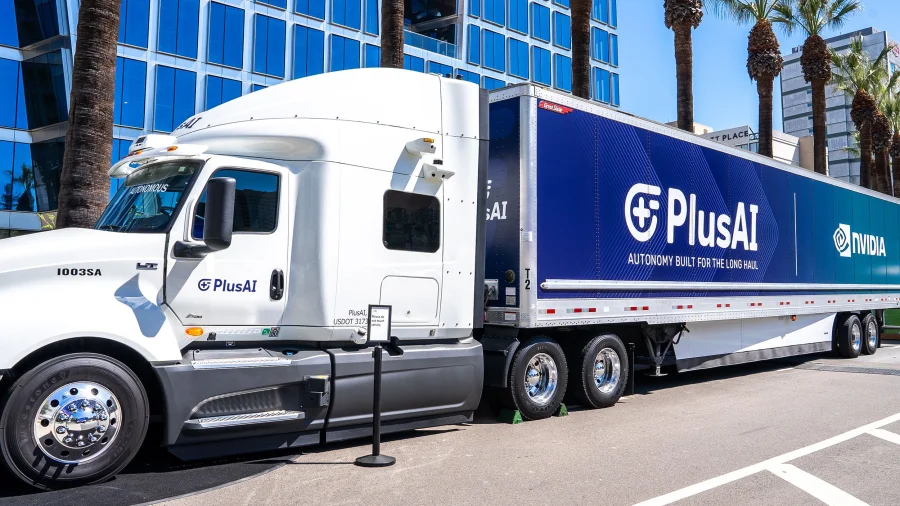
They came for the silicon. They left with the sand.
In a heist that reads less like a thriller and more like a cautionary tale about hype, thieves who hijacked trailers they believed were packed with Nvidia's AI chips reportedly discovered their haul was 20 tons of sand — a cargo worth almost nothing on any black market on earth.
The story, still unverified by official sources, has already spread fast across tech and logistics circles. And it captures something real: the extraordinary lengths criminals will now go to in pursuit of Nvidia hardware.
The Heist That Ended in a Pile of Sand
According to the account circulating, the thieves targeted trailers they believed were carrying Nvidia GPUs — the chips powering everything from ChatGPT to data centers to military-grade AI systems.
What they found inside, instead, was industrial sand. Twenty tons of it. The kind of cargo that costs more to move than it does to sell.
No arrests, no official police statement, and no confirmation from Nvidia or any logistics company have surfaced in the source material available. That absence matters — and readers should treat the viral version of this story with caution.
Why Nvidia Cargo Has Become a Criminal Magnet
Nvidia's H100 and H200 chips can fetch tens of thousands of dollars each on secondary markets. A single pallet can be worth more than a luxury car. A full trailer? Potentially millions.
That math has turned Nvidia shipments into one of the most attractive targets in global freight. Cargo theft rings, which once focused on electronics, pharmaceuticals, and tobacco, have reportedly pivoted toward AI hardware as demand has exploded.
The chips are small, dense, easy to resell, and nearly impossible to trace once they leave the supply chain. For organized crime, they are close to perfect.
How the AI Boom Rewrote the Rules of Cargo Theft
Before 2023, semiconductor theft was a niche problem. After the generative AI boom, it became a growth industry.
Data centers, cloud providers, and AI startups have been competing for a limited supply of Nvidia GPUs for over two years. That scarcity created a grey market — and a black one.
Logistics firms have responded with armed escorts, GPS-tracked containers, and decoy shipments. The sand-filled trailer, if the account is accurate, may have been exactly that: a decoy.
Who Really Loses When a Trailer Goes Missing
The immediate losers are insurers and freight companies, who absorb the cost of stolen cargo. But the ripple effects reach further.
Every hijacked shipment tightens supply a little more, pushing prices higher for legitimate buyers — startups, universities, and research labs that can least afford the markup.
And every successful theft signals to criminal networks that the risk is worth it. That is the real damage: not the sand, but the precedent.
What Nvidia and Investigators Have Said — and Haven't
As of now, no verified statement has been issued by Nvidia, local law enforcement, or any named logistics operator regarding this specific incident.
That silence is not unusual. Cargo theft investigations often stay quiet for weeks while insurers, police, and freight companies coordinate. But it also means the public version of this story remains, for now, unconfirmed.
Readers should distinguish between what is reported and what is verified. In this case, only the headline claim exists — the details do not.
Why Sand Might Have Been the Smartest Cargo All Along
If the trailers were indeed decoys, the strategy was clever. Sand is heavy, cheap, and utterly useless to a thief. It mimics the weight of a real GPU shipment, passes a casual inspection, and leaves hijackers with nothing to fence.
Decoy shipments have long been used in high-value freight — from pharmaceuticals to cash-in-transit. Applying the same logic to AI chips is a sign of how seriously the industry now takes the threat.
Confirmed Facts vs What Remains Unclear
Confirmed: The story as presented describes thieves stealing trailers believed to contain Nvidia cargo and finding sand instead.
Unclear: The location, date, identity of the thieves, whether any arrests were made, whether the trailers were decoys, and whether Nvidia was directly involved.
Speculation: Any claim that this was a coordinated sting, an inside job, or part of a larger pattern should be treated as unverified until official sources confirm it.
Nvidia's Real Moat: Scarcity It Cannot Fully Control
Nvidia's dominance rests on more than chip design. It is built on CUDA, its software ecosystem, years of developer lock-in, and a supply chain so constrained that demand consistently outruns supply.
That scarcity is the company's greatest strength — and its biggest vulnerability. It makes Nvidia hardware invaluable. It also makes it a target.
No amount of encryption or tracking can fully protect a physical object moving through a global freight network. That is the uncomfortable truth behind this story.
Risks and the Balanced View
It is tempting to treat this as a funny anecdote — thieves outsmarted by a pile of sand. But the underlying trend is serious.
Cargo theft raises insurance premiums, delays deliveries, and pushes up costs across the AI supply chain. It also fuels a black market that can put advanced chips in the wrong hands.
At the same time, this specific incident remains unverified. Without official confirmation, it should be read as a reported story, not an established fact.
The Bigger Pattern: AI Hardware Is the New Gold
This is not an isolated curiosity. It fits a broader shift: as AI becomes the defining technology of the decade, the physical infrastructure behind it — chips, servers, cooling systems — has become strategically valuable.
Where value goes, crime follows. The same logic that once made diamonds, art, and pharmaceuticals targets now applies to GPUs.
The sand-filled trailer, real or not, is a perfect symbol of that shift.
What Readers and Businesses Should Take Away
For logistics and supply chain professionals: assume your high-value tech cargo is being watched. Decoys, escorts, and tracking are no longer optional.
For investors: cargo theft is a small but real cost line in the AI supply chain. It is unlikely to move Nvidia's stock, but it is part of the friction the industry now lives with.
For everyone else: treat viral tech-crime stories with healthy skepticism until official sources confirm the details.
What Could Happen Next
If the incident is confirmed, expect logistics firms to publicize their decoy strategies as a deterrent. If it is not confirmed, expect the story to fade — but the underlying threat to remain.
Either way, the demand for Nvidia chips is not slowing. And neither, it seems, is the criminal interest in them.
Our Take
The best stories in tech are rarely about the technology itself. They are about what people will do to get it.
This one — thieves, trailers, and 20 tons of sand — is a reminder that the AI boom is not just a story of software and data centers. It is a story of physical things, moved by real trucks, on real roads, watched by real criminals.
Whether or not every detail holds up, the lesson does: when something becomes valuable enough, someone will try to steal it. And sometimes, the smartest defense is to let them.
Frequently Asked Questions
Did thieves really steal Nvidia trailers and find sand?
According to the story as reported, yes — thieves targeted trailers believed to contain Nvidia cargo and found sand instead. However, no official source has confirmed the incident at the time of writing.
Why would Nvidia shipments be filled with sand?
If accurate, the sand may have been part of a decoy strategy used by logistics firms to mislead cargo thieves. Decoy shipments are a known tactic in high-value freight security.
Are Nvidia GPUs actually being stolen frequently?
Nvidia's AI chips are among the most valuable and sought-after hardware in the world. While exact theft figures are not publicly available, the industry has reported rising concern over cargo theft targeting AI hardware.
What should I do if I see this story going viral?
Treat it as unverified until Nvidia, law enforcement, or a named logistics company confirms the details. Viral tech-crime stories often mix fact with exaggeration.