The Strait of Hormuz — the narrow waterway that carries about a fifth of the world's oil — is busier than many believed, even as ceasefire talks between Washington and Tehran have stalled.
In the last two months, US forces have counted nearly 1,000 commercial vessels entering and exiting the strait, sources told Bloomberg. That works out to roughly 17 ships per day — mostly large cargo and container ships testing the waters of a waterway that saw more than 100 daily crossings before war erupted on February 28.
Why the strait matters more than ever
The Strait of Hormuz connects the Persian Gulf to the Gulf of Oman and the open ocean. For decades, it has been the world's most strategically important oil chokepoint. When shipping stops here, global energy markets feel it within hours.
Even at 17 ships per day, the strait is far from normal. But the fact that commercial traffic is moving at all — under US naval overwatch and after Iranian drone threats — signals a fragile but real reopening.
US shoots down Iranian drones threatening ships
US forces shot down four Iranian one-way attack drones that were launched toward the Strait of Hormuz, according to military officials. The drones posed an immediate threat to regional shipping, and the US military described the action as defensive.
The downing of the drones underscores the persistent danger in the waterway. Even as traffic resumes, Iranian forces retain the ability to threaten vessels — and have demonstrated willingness to do so.
Ceasefire talks stall but shipping continues
Talks to extend the ceasefire between the US and Iran are dead in the water, Bloomberg reported, citing sources familiar with the negotiations. The ceasefire itself remains in place for now, but its future is uncertain.
The disconnect is striking: diplomatic progress has halted, yet the strait is seeing more commercial activity than at any point since the war began. This suggests that market forces and military deterrence — not diplomacy — are driving the reopening.
What naval overwatch means for ships and crews
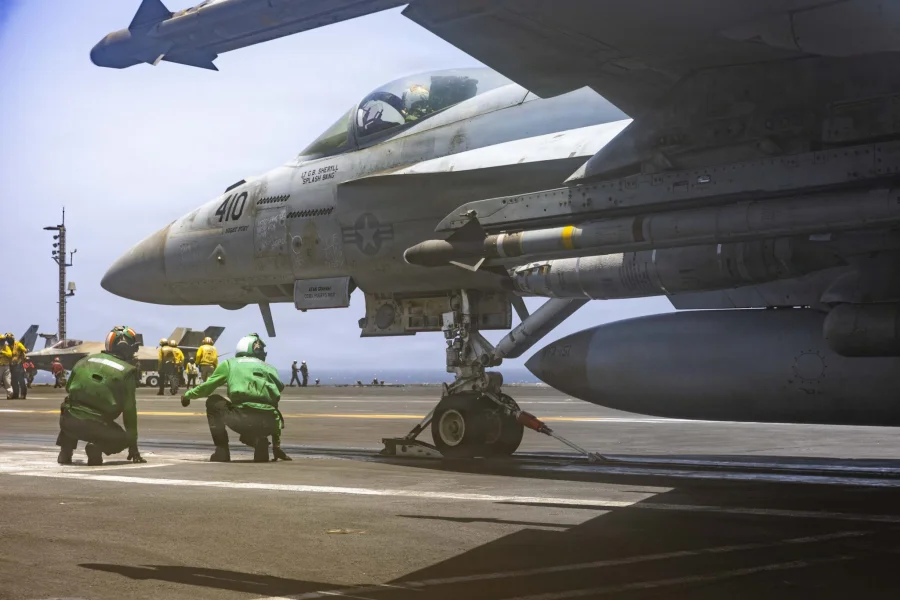
US naval overwatch involves continuous surveillance of the waterway, with warships and aircraft positioned to detect and respond to threats in real time. For commercial captains and shipping companies, this provides a layer of protection that was absent in the early weeks of the conflict.
Shipping executives told Bloomberg that the presence of US naval assets has given them enough confidence to resume some transits — though insurance costs remain high and crew safety concerns persist.
Confirmed facts vs what remains unclear
Confirmed: US forces shot down four Iranian attack drones near the Strait of Hormuz. Nearly 1,000 commercial vessels transited the strait in two months. Ceasefire talks have stalled.
Unclear: Whether the ceasefire will hold. Whether shipping volumes will continue to rise. Whether Iran will launch further drone or missile attacks. The exact number of ships before the war — estimates vary between 100 and 120 per day.
Risks and the fragile balance
The situation remains volatile. Iranian forces have not been neutralized — they have simply been deterred for now. Any escalation — a drone strike that gets through, a mine attack, or a diplomatic breakdown — could reverse the reopening overnight.
Shipping companies are watching the strait hour by hour. One attack on a commercial vessel would likely trigger a new wave of insurance exclusions and route diversions.
The wider pattern: chokepoint warfare
The Strait of Hormuz is not the only waterway under threat. Iran has also threatened a second chokepoint — the Bab el-Mandeb strait near Yemen — as part of its broader strategy to disrupt global trade routes in response to US and Israeli military operations.
This dual-threat approach means that even if Hormuz stabilizes, another crisis could emerge elsewhere. The world's energy supply chains remain exposed to Iranian asymmetric warfare.
What this means for global oil and trade
Every ship that passes through the Strait of Hormuz carries oil, liquefied natural gas, or containerized goods bound for Asia, Europe, and Africa. At 17 ships per day, the strait is handling roughly 15-20% of its normal capacity — enough to ease some supply fears but nowhere near enough to stabilize global energy markets.
Oil prices have remained elevated since February, partly because of the Hormuz disruption. Any sustained increase in traffic could help bring prices down — but only if the security situation holds.
What happens next
The immediate question is whether the ceasefire holds without a formal extension. If it collapses, US and Israeli operations could intensify, and Iranian retaliation could close the strait again.
If the ceasefire holds — even informally — shipping volumes may continue to creep upward. But no one in the shipping industry is betting on a full return to normal anytime soon.
Our Take
The Strait of Hormuz is not back to normal — but it is more open than many assumed. The combination of US naval overwatch, Iranian drone threats, and stalled diplomacy creates a precarious equilibrium. For now, commerce is moving. But the underlying conflict has not been resolved, and the strait remains the most dangerous waterway in the world for commercial shipping.
The real story here is not that traffic has resumed — it is that the resumption is happening without a political solution. That makes every transit a calculated risk.
Frequently Asked Questions
How many ships are passing through the Strait of Hormuz right now?
About 17 commercial vessels per day, according to US military counts — mostly large cargo and container ships. That is far below the pre-war average of over 100 ships per day.
Did the US shoot down Iranian drones near the strait?
Yes. US forces shot down four Iranian one-way attack drones that were launched toward the Strait of Hormuz and posed a threat to ships in the area.
Is the US-Iran ceasefire still in place?
The ceasefire is still technically in place, but talks to extend it have stalled. Sources told Bloomberg that negotiations are "dead in the water."
Is it safe for commercial ships to transit the Strait of Hormuz?
US naval overwatch provides some protection, but the risk remains significant. Iranian forces have demonstrated the ability to threaten vessels, and insurance costs remain high.
How does this affect global oil prices?
The strait normally handles about 20% of global oil shipments. Even partial reopening eases some supply fears, but oil prices remain elevated due to ongoing uncertainty and reduced capacity.