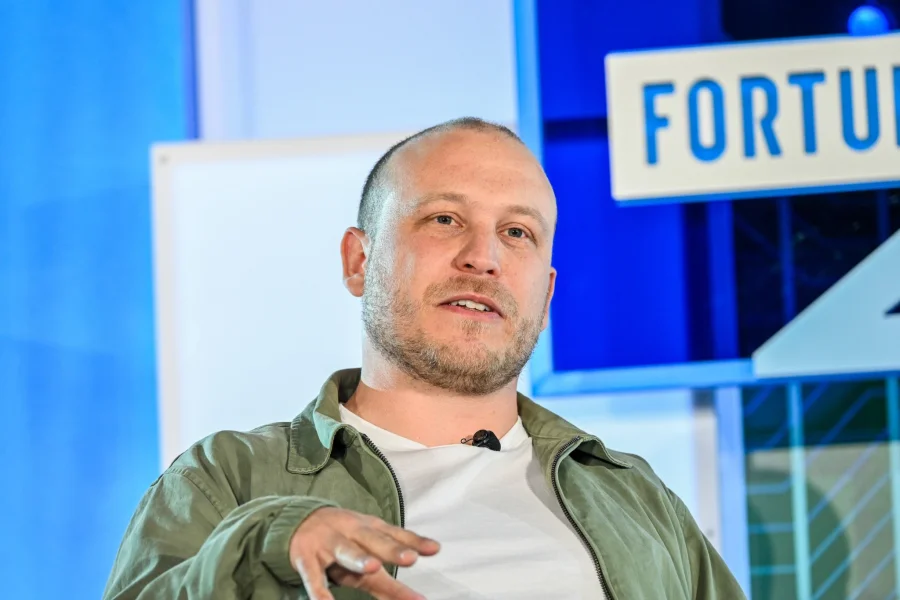
Boris Cherny, the head of Claude Code at Anthropic, dropped a revelation that sounds like science fiction — but it’s happening right now. During a fireside chat at the Fortune Brainstorm Tech conference, he told Fortune AI editor Jeremy Kahn: “I haven’t written a line of code by hand in, I think, eight months now.”
Then came the kicker. “Claude Code, 100% written by Claude Code,” he said. The tool that helps developers write code was itself built entirely by AI. No human fingers touched a keyboard to create it.
How a coding tool built itself
Claude Code is Anthropic’s AI-powered coding assistant, designed to help developers write, debug, and refactor software. But what makes this story remarkable is that the tool itself was generated by its own AI capabilities. Cherny described a workflow where he provides high-level instructions, and Claude Code handles the actual implementation.
“I haven’t written a line of code by hand in eight months,” Cherny said, almost in passing, as if this had become routine. For someone leading a product that competes with GitHub Copilot and Cursor, this isn’t a boast — it’s a data point about where software engineering is headed.
Why this matters for every developer
If the head of a major AI coding tool doesn’t write code manually anymore, what does that mean for the millions of software engineers worldwide? The implication is clear: the role of a developer is shifting from writing code to directing code. Cherny now spends his time on product strategy, architecture decisions, and reviewing AI-generated output rather than typing out functions line by line.
For Indian tech workers, who form a significant part of the global software engineering workforce, this signals a need to adapt. The days of manual coding as the primary skill may be numbered. Instead, skills like prompt engineering, system design, and AI oversight are becoming more valuable.
The enterprise shift: Salesforce, NASA, and Y Combinator
Cherny revealed that Anthropic’s biggest enterprise customers are moving in the same direction. Salesforce, NASA, and Y Combinator startups are all adopting AI-generated code at scale. These aren’t small experiments — they are production-level deployments where AI writes significant portions of the codebase.
“Our biggest enterprise customers — Salesforce, NASA, Y Combinator startups — are trending in the same direction,” Cherny said. This suggests that the shift from manual to AI-assisted coding is not just a Silicon Valley trend but a mainstream enterprise reality.
What Boris Cherny does instead of coding
So if Cherny isn’t writing code, what does he actually do? According to his comments, his role has transformed into that of an architect and reviewer. He defines the product vision, makes high-level technical decisions, and reviews the code that Claude Code generates. He ensures quality, security, and alignment with business goals.
This mirrors a broader trend: developers are becoming managers of AI agents rather than manual coders. The skill that matters most is not syntax knowledge but the ability to articulate what needs to be built and evaluate what the AI produces.
Anthropic’s vision: the fully agentic organization
Cherny’s revelation fits into a larger narrative about Anthropic’s ambitions. The company is positioning itself as what may be “the closest thing the tech industry has to a fully agentic organization” — a company where AI agents handle significant portions of the work, including building the tools that power the company itself.
This is not theoretical. Claude Code building itself is proof of concept. If AI can build its own tools, the implications for software development velocity are enormous. Products that once took months could be built in days or hours.
Confirmed facts vs what remains unclear
What is confirmed: Boris Cherny stated publicly at Fortune Brainstorm Tech that he hasn’t written code by hand in eight months. He confirmed Claude Code was built by Claude Code. He named Salesforce, NASA, and Y Combinator as enterprise customers moving toward AI-generated code.
What remains unclear: The exact percentage of code that Claude Code generates versus what humans still write. Whether this approach works for all types of software development, including safety-critical systems. How this affects code quality, security, and maintainability over time. Cherny’s comments represent one data point, not a universal truth.
Company moat: why Claude Code matters
Claude Code’s competitive advantage lies in its ability to generate production-quality code autonomously. Unlike earlier AI coding tools that required heavy human intervention, Claude Code can handle entire workflows from specification to implementation. The fact that it built itself demonstrates a level of capability that competitors are still chasing.
Anthropic’s moat also includes its safety-first approach, which appeals to enterprise customers like NASA and Salesforce who cannot afford security vulnerabilities. The company’s focus on constitutional AI and alignment gives it credibility in markets where trust is paramount.
Risks and balanced view
Not everyone is celebrating this shift. Critics argue that AI-generated code can introduce subtle bugs, security vulnerabilities, and maintainability challenges. Without human oversight, code quality could degrade over time. There are also concerns about job displacement for junior developers who traditionally learn by writing code manually.
“If no one is writing code by hand, who will train the next generation of engineers?” some industry observers ask. The apprenticeship model of software engineering — where juniors learn by reading and writing code under senior guidance — could be disrupted.
Cherny’s approach works at Anthropic, but it may not translate to every organization. Companies with legacy systems, strict regulatory requirements, or niche technical domains may find AI-generated code less reliable.
The wider trend: AI is eating software
This story is part of a larger pattern. AI is not just assisting developers — it is replacing the act of writing code itself. GitHub Copilot, Cursor, and other tools are moving in the same direction. The difference with Claude Code is the level of autonomy: it doesn’t just suggest code; it builds entire features.
Marc Andreessen famously said “software is eating the world.” Now AI is eating software development. The people who build the tools that run the world are themselves being augmented — or replaced — by AI.
What developers should do now
For software engineers reading this, the message is not panic but adaptation. The skills that will matter in the next five years include:
- Prompt engineering: learning to communicate requirements clearly to AI
- System architecture: designing systems that AI can implement
- Code review: evaluating AI-generated code for quality and security
- Product thinking: understanding user needs so AI can build solutions
Manual coding will not disappear entirely, but it will become a smaller part of the job. Developers who embrace AI as a collaborator rather than a threat will have the advantage.
Future outlook: what happens next
If the trend continues, we may see a world where most commercial software is written primarily by AI, with humans providing oversight and direction. This could dramatically accelerate software development, reduce costs, and enable products that were previously too complex to build.
But it also raises questions about accountability. If AI writes code that causes a failure, who is responsible? How do we ensure that AI-generated software is safe, secure, and ethical? These are questions that regulators, companies, and developers will need to answer together.
Cherny’s eight months without writing code by hand may be just the beginning. For the software industry, the age of manual coding is slowly giving way to something new.
Our Take
Boris Cherny’s admission is not just a personal anecdote — it is a signal. When the person building the tool that writes code doesn’t write code himself, the industry needs to pay attention. This is not about replacing developers; it is about redefining what development means.
The most important takeaway is that the bottleneck in software engineering is shifting from writing code to thinking about what code should do. That is a fundamentally human skill — one that AI cannot yet replicate. Developers who focus on understanding problems, designing solutions, and guiding AI will remain invaluable.
But the transition will be uncomfortable. Junior developers who rely on manual coding to learn will need new pathways. Companies will need to rethink hiring, training, and performance evaluation. And the industry will need to grapple with questions of quality, safety, and accountability in AI-generated software.
Cherny’s eight months without writing code by hand is a glimpse of the future. Whether that future is utopian or dystopian depends on how we navigate it.
Frequently Asked Questions
Has the head of Claude Code really not written code in 8 months?
Yes. Boris Cherny stated this publicly during a fireside chat at the Fortune Brainstorm Tech conference in June 2026. He told Fortune AI editor Jeremy Kahn that he hasn’t written a line of code by hand in eight months.
Was Claude Code built by AI?
According to Cherny, Claude Code was “100% written by Claude Code.” This means the AI coding tool was built using its own capabilities, without human manual coding.
Which companies are using Claude Code?
Cherny named Salesforce, NASA, and Y Combinator startups as major enterprise customers that are moving toward AI-generated code at scale.
What does this mean for software developers?
The role of developers is shifting from writing code manually to directing AI agents, reviewing AI-generated code, and focusing on architecture and product strategy. Skills like prompt engineering and system design are becoming more valuable than manual coding.