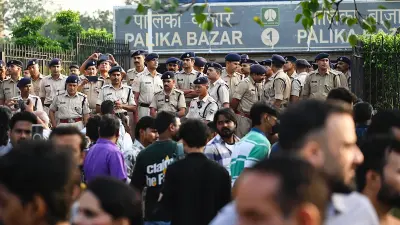
The political landscape of West Bengal shuddered late Tuesday night as a police team, accompanied by central security forces, arrived at Abhishek Banerjee's residence in Kolkata and conducted a four-hour raid. The operation, which stretched into the early hours, has sent shockwaves through the Trinamool Congress (TMC) at a moment when the party is already grappling with its most severe internal crisis in years.
Rebel ranks swell to 64: A party under siege
The raid comes as the rebel faction within the TMC has reportedly swelled to 64 MLAs, a number that represents a significant chunk of the party's legislative strength. This growing rebellion, led by disgruntled leaders, threatens to fracture the party that Mamata Banerjee built from the ground up. For context, the TMC has 222 MLAs in the 294-member West Bengal assembly, meaning the rebels now account for nearly 29% of the party's lawmakers.
Why the raid matters beyond the headlines
For ordinary Bengalis, this is not just a political drama. The stability of the state government is now in question. If the rebel faction formalizes a split, Mamata Banerjee's government could face a trust vote, potentially triggering early elections or a period of political uncertainty. For businesses, investors, and daily life, such instability can stall development projects and disrupt governance.
Timeline of a deepening crisis
The TMC's internal strife has been brewing for months. It began with murmurs of discontent over leadership style and candidate selection for the 2024 Lok Sabha elections. By early 2025, the rebel group had coalesced around a few key figures, demanding a larger say in party affairs. The raid on Abhishek Banerjee's home, however, marks a dramatic escalation. Abhishek, the party's national general secretary and Mamata Banerjee's nephew, is seen as her political heir. Targeting his residence sends a clear signal of the intensity of the power struggle.
Who is affected and how
Beyond the political class, the crisis affects millions. TMC workers and supporters are anxious about the party's future. Voters who backed the party in the 2021 assembly elections are watching to see if their mandate will be respected. The raid also raises questions about the use of central forces in a state where the ruling party has often accused the BJP-led central government of political vendetta.
Official response and silence
As of now, neither the TMC leadership nor the police have issued an official statement explaining the raid's purpose. Sources suggest it may be linked to an ongoing investigation, but no details have been confirmed. Mamata Banerjee has not commented publicly, and Abhishek Banerjee's office has remained tight-lipped. This silence has only fueled speculation and anxiety.
What the raid means for the power struggle
The timing is critical. The rebel faction, now 64 strong, could be emboldened by the raid, viewing it as a sign of vulnerability in the leadership. Alternatively, it could rally the loyalist base around Abhishek Banerjee, portraying him as a victim of political persecution. Either way, the TMC's internal dynamics have shifted irreversibly.
Confirmed facts vs what remains unclear
Confirmed: A police team with central security forces conducted a four-hour raid at Abhishek Banerjee's Kolkata residence late Tuesday night. The rebel faction within TMC has grown to 64 MLAs. Unclear: The exact reason for the raid. Whether the raid is linked to the internal rebellion or a separate legal matter. The identity of the rebel leaders and their immediate plans. All speculation about a formal split or trust vote remains unconfirmed.
Risks and balanced view
While the raid and rebel numbers suggest a party in crisis, it is important to note that internal dissent is not new to the TMC. Mamata Banerjee has survived previous rebellions. However, the scale of this one—64 MLAs—is unprecedented. Critics argue that the party's centralized decision-making has alienated regional leaders. Supporters counter that the rebels are opportunists seeking power, not principled dissent. The truth likely lies somewhere in between.
Wider pattern: Central-state tensions in Bengal
The raid also fits a broader pattern of friction between the West Bengal government and central agencies. The TMC has repeatedly accused the BJP of using investigative agencies to target its leaders. The use of central security forces in a state police operation adds another layer to this ongoing narrative.
What should readers do now
For those following Bengal politics, the next 48 hours are crucial. Watch for official statements from the TMC and police. Monitor news of any further defections or a formal split. For investors and businesses in the state, it may be prudent to assess political risk. For ordinary citizens, stay informed but avoid panic—political crises in India have often been resolved through negotiation.
Future outlook: What could happen next
The most likely scenario is a period of intense negotiation. Mamata Banerjee may try to placate the rebels with concessions. If that fails, the rebel faction could form a separate political outfit or merge with another party, potentially the BJP. A trust vote in the assembly is possible but not imminent. The raid could also lead to legal proceedings that further complicate the political landscape.
Our Take
This is not just a story about a raid or a rebellion. It is about the fragility of political power in India's complex federal system. The TMC, once a formidable force, is now fighting for its soul. The raid on Abhishek Banerjee's home, whether motivated by law or politics, has become a symbol of a party in turmoil. For West Bengal, the stakes are high—governance, development, and stability hang in the balance. The coming days will test whether Mamata Banerjee's political acumen can once again steer her party through a storm.
Frequently Asked Questions
Why was Abhishek Banerjee's residence raided?
The exact reason for the raid has not been officially confirmed. It may be linked to an ongoing investigation, but no details have been released by police or TMC sources.
How many MLAs have joined the rebel faction in TMC?
Reports indicate that the rebel group now includes 64 MLAs, representing nearly 29% of the TMC's strength in the West Bengal assembly.
Could this lead to a change of government in West Bengal?
If the rebel faction formalizes a split and withdraws support, Mamata Banerjee's government could face a trust vote. However, such a scenario is not imminent and depends on the rebels' next steps.
What does the raid mean for the TMC's future?
The raid, combined with the growing rebellion, represents the most serious internal crisis the TMC has faced. It could lead to a party split, a leadership change, or a period of political instability in West Bengal.