SpaceX, the private space exploration company founded by Elon Musk, has officially declared its intention to raise a staggering $74.4 billion through its Initial Public Offering (IPO). The announcement, which targets a share price of $135, is set to create the most valuable publicly traded company on the planet, potentially surpassing a trillion-dollar valuation and shattering all previous IPO records.
This is not just another stock market debut. This is a seismic event that could redefine the landscape of public investing, bringing one of the most ambitious and secretive private companies in the world to the open market.
The Scale of the SpaceX IPO: A Trillion-Dollar Ambition
The numbers are almost incomprehensible. By targeting a $74.4 billion raise at $135 per share, SpaceX is signaling a valuation that could exceed $1 trillion. To put that in perspective, this single IPO would be larger than the entire market capitalization of most companies on the S&P 500. The move confirms what many analysts have long suspected: that SpaceX sees itself not just as a rocket company, but as a multi-trillion-dollar infrastructure and transportation enterprise.
The company plans to sell 555.6 million shares to achieve this target. If underwriters fully exercise their options, the total haul could reach $85.7 billion, according to reports from MarketWatch.
Why This IPO Matters for Investors and the Public
For years, SpaceX has been the holy grail of private market investing. Only a select group of institutional investors and high-net-worth individuals have had access to its shares. This IPO changes everything. It opens the door for ordinary retail investors to own a piece of a company that is building the Starship, launching the Starlink satellite internet constellation, and ferrying astronauts to the International Space Station.
The public offering is not just a financial event; it is a cultural and technological milestone. It signals that the era of space as a purely government or ultra-wealthy domain is ending. SpaceX is betting that millions of people want to invest in the future of humanity beyond Earth.
What SpaceX Plans to Do With $74.4 Billion
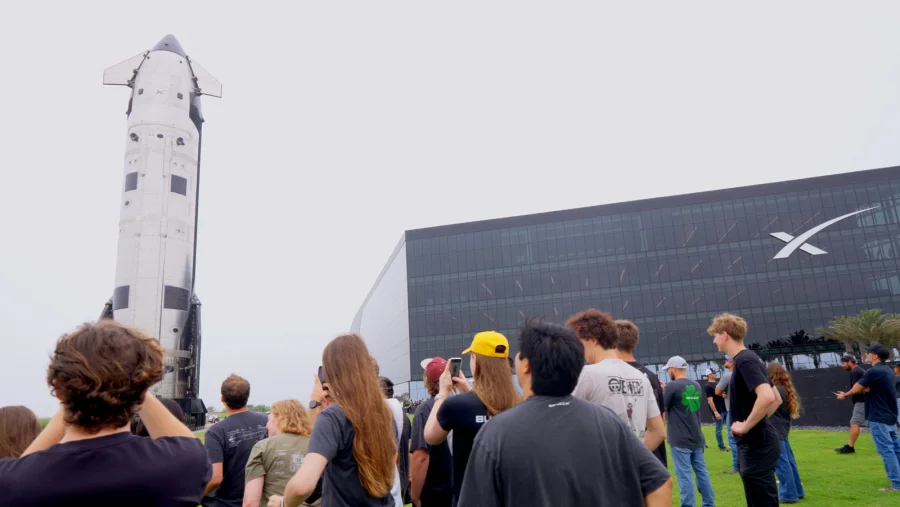
The sheer size of the capital raise suggests that SpaceX has massive, capital-intensive plans. The most obvious use of funds is the continued development and production of Starship, the fully reusable rocket system designed for missions to the Moon and Mars. Starship is the most powerful rocket ever built, and its development has required billions of dollars in private funding.
Beyond Starship, the Starlink satellite internet business is a cash-hungry operation. While it is already generating revenue, expanding the constellation to cover the globe and upgrading to second-generation satellites will require enormous investment. The IPO proceeds could give SpaceX the financial firepower to dominate the global broadband market.
Other potential uses include building out launch infrastructure, developing new spacecraft, and potentially expanding into other areas like point-to-point Earth transport.
Confirmed Details vs. What Remains Unclear
What is confirmed is the official announcement of the $74.4 billion target and the $135 per-share price. The company has formally declared its intention to proceed with the IPO.
What remains unclear is the exact timeline. While the announcement is public, the specific date of the IPO listing has not been confirmed. Additionally, the final valuation will depend on investor demand, which could push the price higher or lower than the target. The role of Elon Musk post-IPO, including his voting control and future involvement, is also a subject of intense speculation.
Risks and Balanced View: Is the Valuation Justified?
A trillion-dollar valuation is breathtaking, and it comes with significant risks. SpaceX operates in a highly volatile and capital-intensive industry. The success of Starship is not guaranteed, and any major failure could set the company back years. Starlink faces intense competition from other satellite constellations and terrestrial internet providers.
Furthermore, the valuation is based on future potential, not current profitability. While SpaceX has been profitable in recent quarters, the company's long-term earnings power is unproven at this scale. Critics argue that the IPO price is pricing in decades of perfect execution, leaving little room for error.
On the other hand, supporters point to SpaceX's unique competitive advantages: its reusable rocket technology, its dominant position in the launch market, and its first-mover advantage in satellite internet. They argue that the company is not just a rocket company but a multi-industry monopoly in the making.
The Wider Trend: The Rise of Mega-IPOs
The SpaceX IPO is part of a broader trend of massive, high-profile public offerings. In recent years, companies like Arm, Rivian, and Saudi Aramco have raised billions in their debuts. However, the SpaceX offering dwarfs them all. It signals a shift in the market where investors are willing to place enormous bets on transformative, long-term technologies.
This trend also reflects a growing appetite for "moonshot" investments. Investors are increasingly looking beyond traditional industries and betting on companies that promise to reshape the future, from space travel to artificial intelligence.
What Investors Should Know Now
For those looking to participate in the SpaceX IPO, the process will likely be handled by major investment banks. Retail investors may need to have an account with a brokerage that offers IPO access. It is crucial to read the company's S-1 filing, which will contain detailed financial information and risk factors.
Investors should also be prepared for volatility. Given the hype and the massive size of the offering, the stock could experience significant price swings in its first days of trading. A long-term perspective is essential.
Future Outlook: What Happens After the IPO
Once public, SpaceX will face the scrutiny of quarterly earnings reports and the pressure of shareholder expectations. The company's ability to execute on its ambitious plans will be under a microscope. The IPO could also accelerate the timeline for a Mars mission, as the company will have access to a much larger pool of capital.
The success of the IPO could also have a ripple effect across the space industry, making it easier for other space startups to go public and attract investment. It could mark the beginning of a new era of commercial space exploration.
Our Take
The SpaceX IPO is more than a financial event; it is a bet on the future of humanity. The $74.4 billion raise is a staggering sum, but it reflects the scale of the ambition. SpaceX is not just trying to build a better rocket; it is trying to build a multi-planetary civilization. Whether that vision is worth a trillion dollars is a question that only the market can answer. But one thing is certain: this IPO will be the most consequential stock market debut in history.
FAQs
What is the target price for the SpaceX IPO?
SpaceX is targeting a price of $135 per share for its Initial Public Offering.
How much money is SpaceX trying to raise in its IPO?
The company aims to raise $74.4 billion in net proceeds from the IPO, which could increase to $85.7 billion if underwriters exercise their options.
What will SpaceX be valued at after the IPO?
The IPO is expected to value SpaceX at over $1 trillion, making it a trillion-dollar company and the most valuable publicly traded entity in the world.
When will the SpaceX IPO happen?
While the company has officially announced its intention to go public, the exact date of the IPO listing has not been confirmed yet.