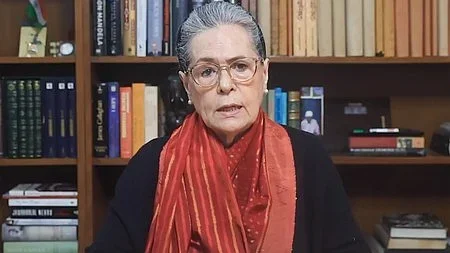
Congress Parliamentary Party Chairperson Sonia Gandhi has launched a blistering attack on the Narendra Modi government, accusing it of maintaining a “stony silence” over what she described as Israel’s “genocide” in Gaza. In an article published in The Indian Express, Gandhi argued that the government’s stance is “indefensible” both morally and strategically, and warned that it is hurting India’s long-term interests in the Middle East.
Why Sonia Gandhi’s Gaza attack matters for India’s foreign policy
Gandhi’s intervention is significant because it comes from the Congress party’s highest leadership and directly challenges the Modi government’s carefully calibrated position on the Israel-Palestine conflict. She did not mince words, calling the silence “shameful” and a “height of moral cowardice.” The article is not just a critique of policy but a broader indictment of how India’s traditional diplomatic relationships are being eroded.
How India’s silence on Gaza is reshaping Middle East alliances
Gandhi specifically warned that India’s silence has alienated the country from its traditional partners in Palestine, Iran, and the wider Middle East. She argued that this vacuum has allowed Pakistan to step in and project itself as a regional mediator, directly undermining India’s influence. “The Modi government’s continued silence simply cannot be explained away,” she wrote, adding that it is a strategic error that future governments will have to undo.
The timeline of India’s evolving stance on Gaza
Since the outbreak of the Israel-Hamas war in October 2023, India has maintained a position that calls for restraint and a two-state solution, but has stopped short of explicitly condemning Israel’s military operations. The government has also deepened defense and technology ties with Israel, including PM Modi’s recent visit to the country. Gandhi’s article is the most direct political challenge to this approach, linking it to a broader pattern of what she sees as a pro-Israel tilt at the expense of traditional allies.
Who is affected by India’s Gaza policy shift
For ordinary Indians, the debate may seem distant, but the implications are real. India’s foreign policy directly impacts energy security, remittances from the Gulf, and the safety of millions of Indian workers in the Middle East. Gandhi’s argument is that by alienating key players like Iran and Palestine, India risks losing leverage in a region that is critical for its economic and strategic interests. The Congress leader also pointed out that the government’s silence undermines India’s moral standing as a voice for the Global South.
Modi government’s response to Sonia Gandhi’s Gaza criticism
As of now, the government has not issued an official response to Gandhi’s article. However, the ruling BJP has previously defended its stance, arguing that India maintains a balanced approach and has consistently called for a ceasefire and humanitarian aid. The government has also highlighted its strong ties with both Israel and Arab nations, including Saudi Arabia and the UAE. Gandhi’s attack is likely to be met with counter-accusations of politicizing foreign policy for domestic gain.
What Sonia Gandhi’s article reveals about India’s foreign policy dilemma
Gandhi’s critique goes beyond the Gaza conflict itself. She questioned PM Modi’s visit to Israel shortly before US-Israel military action against Iran, calling it a “bewildering strategic decision.” This suggests that the Congress party sees the government’s Middle East policy as not just passive but actively damaging. The article reflects a growing concern among opposition parties that India is losing its traditional non-aligned posture and becoming too closely identified with one side in a volatile region.
Confirmed facts vs what remains unclear in the Gaza policy debate
Confirmed: Sonia Gandhi published an article in The Indian Express accusing the government of silence on Gaza. She described Israel’s actions as “genocide” and warned of strategic costs. She also criticized PM Modi’s visit to Israel before strikes on Iran. Unclear: Whether the government will formally respond to her specific allegations. It is also unclear if her criticism will lead to any shift in policy, given the BJP’s majority. The claim that Pakistan has successfully positioned itself as a mediator remains a matter of diplomatic assessment, not a confirmed fact.
Why India’s traditional Middle East partnerships matter
India has historically maintained strong ties with Palestine, Iran, and Arab nations, rooted in the Non-Aligned Movement and energy dependence. These relationships have provided India with diplomatic support on issues like Kashmir and access to Gulf markets. Gandhi’s argument is that by tilting too far toward Israel, the Modi government is risking these decades-old partnerships without gaining commensurate strategic benefits. The Congress leader’s critique is rooted in a belief that India’s foreign policy should be multipolar and independent.
Risks and balanced view on India’s Gaza stance
Supporters of the government’s approach argue that India’s deepening ties with Israel have brought tangible benefits in defense, technology, and counter-terrorism. They also point out that India has maintained good relations with Arab nations, including hosting the UAE as a Republic Day guest. Critics, however, say that the government’s silence on civilian casualties in Gaza has damaged India’s moral authority and alienated Muslim-majority nations. Gandhi’s article represents the strongest opposition view, but it is not without its own political motivations, as the Congress party seeks to regain relevance on foreign policy.
The wider pattern: India’s foreign policy under Modi
Gandhi’s attack is part of a broader opposition narrative that the Modi government has abandoned India’s traditional foreign policy principles. From the Ukraine war to the Gaza conflict, critics argue that India has become more transactional and less principled. The government counters that it is pursuing a pragmatic, interest-based foreign policy that serves India’s national security and economic goals. The Gaza debate is a microcosm of this larger ideological divide.
What Indians should understand about the Gaza foreign policy debate
For readers following this story, the key takeaway is that India’s stance on Gaza is not just a moral question but a strategic one. The outcome of this debate could shape India’s relationships with key energy suppliers, trade partners, and diplomatic allies. Citizens should pay attention to how the government balances its ties with Israel against its traditional partnerships, as this will have long-term implications for India’s global standing.
What could happen next in India’s Gaza policy
If the Gaza conflict continues, domestic political pressure on the Modi government is likely to increase. The Congress party and other opposition groups may use the issue to challenge the government’s foreign policy credentials. However, given the BJP’s majority and its strong base, a major policy shift is unlikely unless regional dynamics change dramatically. The government may instead try to balance its stance by increasing humanitarian aid to Gaza while maintaining defense ties with Israel.
Our Take
Sonia Gandhi’s article is a significant political intervention, but it also reflects a genuine foreign policy dilemma for India. The Modi government has successfully deepened ties with Israel, but at a potential cost to relationships with Palestine, Iran, and parts of the Muslim world. Whether this trade-off is worth it depends on one’s strategic calculus. What is clear is that India’s silence on Gaza is no longer tenable as a domestic political position, and the debate is only going to intensify. The government would do well to articulate a clearer, more proactive stance that addresses both moral concerns and strategic realities.
Frequently Asked Questions
What did Sonia Gandhi say about India’s stance on Gaza?
Sonia Gandhi accused the Modi government of maintaining a “stony silence” on Israel’s military campaign in Gaza, which she called a “genocide.” She argued that this silence is morally indefensible and strategically damaging to India’s interests in the Middle East.
Why is Sonia Gandhi criticizing the Modi government’s Gaza policy?
Gandhi believes that India’s silence has alienated traditional partners like Palestine and Iran, while allowing Pakistan to position itself as a regional mediator. She also criticized PM Modi’s visit to Israel before US-Israel strikes on Iran as a “bewildering strategic decision.”
How has the Modi government responded to criticism on Gaza?
The government has not officially responded to Gandhi’s article. Previously, the BJP has defended its stance by saying India maintains a balanced approach, calling for a ceasefire and humanitarian aid while deepening ties with both Israel and Arab nations.
What are the implications of India’s Gaza policy for ordinary citizens?
India’s foreign policy in the Middle East affects energy security, remittances from Gulf countries, and the safety of millions of Indian workers. A shift in alliances could have economic and diplomatic consequences that impact everyday life.