When a comedian's decades-old punchline starts sounding like today's news, something has clearly gone wrong. That is the message Sonam Wangchuk delivered after talks between Ladakh's representatives and the Ministry of Home Affairs ended without movement — and without a date for the next round.
A Bhatti Clip, And A Point Sharper Than Any Statement
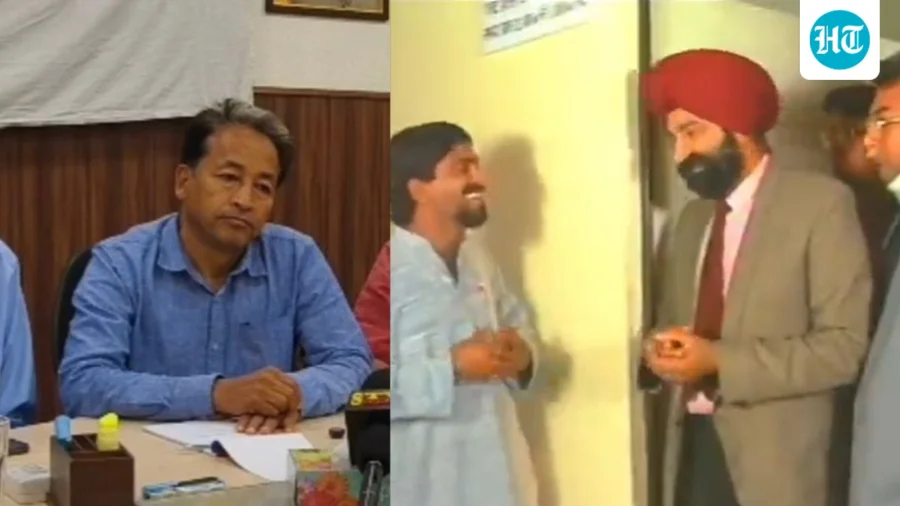
Wangchuk shared a clip of the late Jaspal Bhatti — India's most beloved satirist of bureaucratic absurdity — to underline what he sees as the government's habit of promising meetings without committing to outcomes. The phrase he attached, "next meeting ki date fix," captures the frustration in three words.
It is a familiar Bhatti trope: officials nod, smile, and schedule another round. For Ladakh's negotiators, that loop has now become the story itself.
Why the Deadlock in Delhi Matters in Leh and Kargil
Ladakh has been governed as a Union Territory since 2019, when Article 370 was revoked and the region was carved out of Jammu and Kashmir. Since then, two dominant local bodies — the Leh Apex Body (LAB) and the Kargil Democratic Alliance (KDA) — have pressed for statehood and inclusion under the Sixth Schedule, which would grant greater autonomy over land, resources, and local governance.
For residents, these are not abstract constitutional demands. They shape who controls land, how environmental protections are enforced, and how much say local communities have in decisions made in Delhi.
How the Talks Unfolded
The MHA convened the meeting as part of an ongoing dialogue with Ladakhi stakeholders. According to participants quoted in reports, the discussions did not produce the forward movement they had hoped for. Both LAB and KDA described the outcome as "very disappointing."
No joint statement from the government has been verified. No date for the next round has been announced — which is precisely the point Wangchuk's post was making.
Who Feels This Most
Ladakh's demands are rooted in decades of local activism, environmental stewardship, and a distinct cultural identity. Students, farmers, monks, and small business owners across Leh and Kargil have followed these talks closely, hoping for clarity on land rights and administrative autonomy.
Every stalled round pushes that clarity further out — and deepens the sense that the region's voice is being heard but not acted upon.
What the Government Has Said — And What It Hasn't
At the time of writing, no verified statement from the MHA or senior government officials has clarified the reasons behind the lack of progress. Without an official readout, the picture remains incomplete.
What is clear is that the dialogue channel remains open, even if the momentum has stalled.
Reading the Silence
Wangchuk's decision to use satire rather than a formal statement is itself a signal. It suggests that after years of engagement, patience in Ladakh is thinning — and that the region's leadership is willing to escalate its public messaging.
Satire travels further than press notes. Bhatti's clip, reshared today, will reach far more people than any joint communiqué.
Confirmed Facts vs What Remains Unclear
Confirmed: Talks were held; LAB and KDA called them disappointing; no next date has been announced; Wangchuk shared the Bhatti clip criticising the government.
Unclear: The government's internal position, the specific sticking points, and whether a fresh round is being planned. Any claim beyond this should be treated as speculation.
Why Ladakh's Demands Carry Weight
Unlike many regional movements, Ladakh's case rests on a coherent constitutional ask — statehood and Sixth Schedule protection — backed by two organisations that, despite differences, have largely stayed aligned. That unity gives the demand durability, even when talks stall.
Risks and the Other Side
The government has not publicly explained its position, and it is possible that internal consultations, security considerations, or broader regional dynamics are slowing progress. Critics of the statehood demand argue that UT status has brought administrative efficiency and central investment.
Supporters counter that efficiency without local consent is not governance — it is administration. Both views deserve airing.
A Pattern Across India's Peripheries
Ladakh is not alone. From the Northeast to tribal belts in central India, similar tensions over autonomy, land, and Sixth Schedule protections have resurfaced in recent years. The common thread: communities want decisions made closer to home.
What Readers in Ladakh Should Watch For
Keep an eye on whether the MHA issues an official readout, whether LAB and KDA announce a joint next step, and whether Wangchuk or other leaders escalate beyond satire. Any of these would signal a shift.
What Comes Next
Without a confirmed date, the next round remains uncertain. But the pressure is unlikely to fade — and the Bhatti clip has already done its job of putting that pressure in the public domain.
Our Take
This is a story about the gap between dialogue and decision. Talks that end without a date are not negotiations — they are placeholders. Wangchuk's choice of a comedy clip is not frivolity; it is a precise editorial act. It says: we have been patient, we have been reasonable, and we are still waiting.
Frequently Asked Questions
What did Sonam Wangchuk share and why?
He shared a Jaspal Bhatti comedy clip to criticise the government for holding talks on Ladakh's demands without committing to a next meeting date.
What are Ladakh's main demands?
Statehood for Ladakh and inclusion under the Sixth Schedule of the Constitution, which would grant greater autonomy over land and local governance.
Who represents Ladakh in these talks?
The Leh Apex Body (LAB) and the Kargil Democratic Alliance (KDA) are the primary stakeholder groups engaging with the Ministry of Home Affairs.
Has the government responded to the criticism?
No verified official statement has been issued at the time of writing. The next round of talks has not been scheduled.