It was an image that refuses to fade. A woman's severed hand, fingers locked tight, frozen in a gesture that seemed to beg for help. For Dr HP Sanghvi, a senior forensic scientist who led the identification team at the Air India AI-171 crash site near Ahmedabad, that single sight has stayed with him more than any other.
The forensic team's 15-day ordeal at the crash site
Sanghvi and his team of 38 forensic scientists arrived at the scene within hours of the crash on June 12, 2025. What they found was not a typical accident site but a scattered field of human remains, debris, and personal belongings. For 15 consecutive days, the team worked in shifts, sifting through biological samples to identify victims. "Every piece we recovered told a story of a life cut short," Sanghvi recalled in an interview marking one year since the tragedy.
Why the severed hand image haunts the forensic expert
Among the thousands of fragments recovered, one stood out. "There was a severed hand of a woman, with fingers locked tight, as if she was pleading for help," Sanghvi said. "That image is impossible to forget. It captures the terror of those final moments." The hand, he explained, was not just evidence but a human story — a last gesture frozen in time. For the forensic team, such sights are part of the job, but some leave a permanent mark.
How the AI-171 crash unfolded near Ahmedabad airport
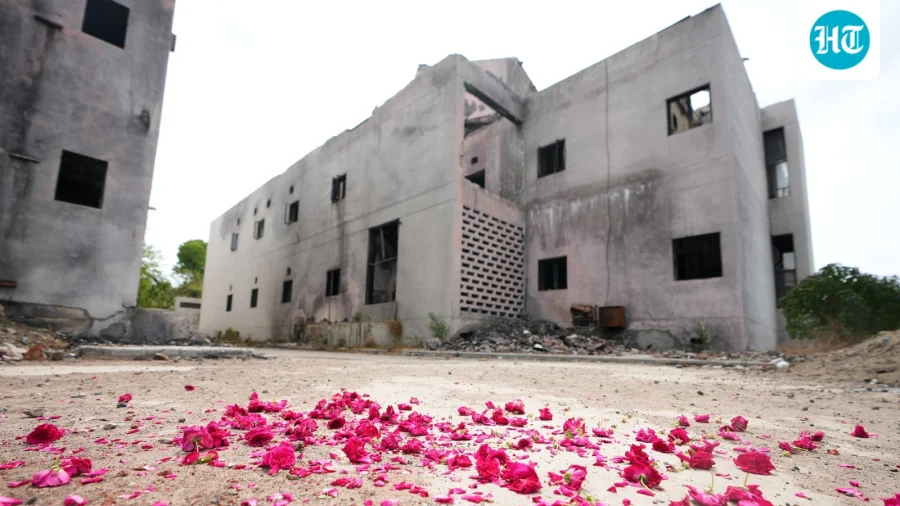
Air India flight 171 was on a scheduled route when it lost altitude shortly before landing at Ahmedabad airport. According to the investigation report, the aircraft first struck several trees and an incineration chimney before crashing. Just 89 metres after hitting the trees, the aircraft struck the northwest wall of a structure, disintegrating on impact. All passengers and crew onboard were killed instantly.
The human cost behind the forensic work
For Sanghvi's team, the task was not just scientific but deeply emotional. Each biological sample had to be carefully catalogued, matched with DNA profiles, and returned to grieving families. "We were handling the remains of mothers, fathers, children. You cannot detach yourself completely," Sanghvi said. The 15-day operation required round-the-clock work, with forensic scientists often working through the night under floodlights.
Official response and investigation findings
The crash investigation report, released months later, detailed the sequence of events leading to the tragedy. It cited a combination of technical failure and human error as contributing factors. The airline and aviation authorities have since implemented new safety protocols. However, for forensic teams like Sanghvi's, the focus remains on the human dimension — the victims and their families who continue to seek closure.
What the forensic evidence reveals about the crash's final moments
The condition of the remains, including the severed hand, suggests that passengers experienced extreme forces during the impact. Forensic analysis of the injuries helped investigators reconstruct the crash dynamics. "The position of the hand, the way the fingers were locked — it indicates a reflexive response to imminent danger," Sanghvi explained. Such details, while grim, are crucial for understanding what happened in the final seconds.
Confirmed facts vs what remains unclear about the crash
What is confirmed: The aircraft struck trees and a chimney before crashing; all onboard died; forensic teams identified victims through DNA analysis; the investigation report cited technical and human factors. What remains unclear: The exact sequence of cockpit actions in the final moments; whether any last-second communication occurred; the full extent of systemic issues that may have contributed. Speculation about pilot error or maintenance lapses has not been officially confirmed.
Risks and balanced view of the forensic account
While Sanghvi's account is deeply human, some critics argue that focusing on graphic details may retraumatise families. Forensic experts themselves acknowledge the emotional toll but stress the importance of documenting such evidence for investigation and accountability. The balance between public interest and sensitivity to victims' families remains a delicate one.
Wider pattern: The emotional burden on disaster forensic teams
Sanghvi's experience is not unique. Forensic scientists who work on mass casualty events — from plane crashes to natural disasters — often carry psychological scars. Studies show high rates of PTSD among disaster response teams. The AI-171 crash is a reminder that behind every investigation report are human beings who witness the worst of tragedy to bring closure to others.
Practical guidance for families of crash victims
For families affected by such tragedies, forensic experts recommend seeking professional counselling and support groups. The process of victim identification can take weeks or months, and patience is essential. Families should stay in contact with official authorities for updates and avoid relying on unverified information from social media.
Future outlook: What the forensic lessons mean for aviation safety
The forensic evidence from AI-171 has already influenced how investigators approach future crashes. Improved DNA sampling techniques and faster identification protocols are being adopted. However, the ultimate goal remains prevention. "Every crash teaches us something," Sanghvi said. "But we would rather not have to learn these lessons at all."
Our Take
The AI-171 crash is not just a statistic or an investigation report. It is a human tragedy that continues to affect those who witnessed its aftermath. Sanghvi's recollection of the severed hand is a powerful reminder that behind every forensic detail lies a life, a story, and a family left to grieve. As aviation authorities implement new safety measures, the human cost of failure must never be forgotten. The forensic team's 15-day ordeal was not just about identifying bodies — it was about restoring dignity to the dead and providing answers to the living.
Frequently Asked Questions
What happened to Air India flight AI-171?
Air India flight AI-171 crashed near Ahmedabad airport on June 12, 2025, killing all passengers and crew onboard. The aircraft lost altitude and struck trees and a chimney before disintegrating.
Who is HP Sanghvi and what did he do at the crash site?
Dr HP Sanghvi is a senior forensic scientist who led a team of 38 experts in identifying victims of the AI-171 crash. They worked for 15 days sifting through biological samples to match remains with families.
Why did the forensic expert recall a severed hand specifically?
Sanghvi described a woman's severed hand with fingers locked tight, which he said appeared to be pleading for help. The image has stayed with him as a haunting symbol of the victims' final moments.
What was the cause of the AI-171 crash?
The investigation report cited a combination of technical failure and human error. The exact details of cockpit actions in the final moments remain unclear, and speculation about specific causes has not been officially confirmed.