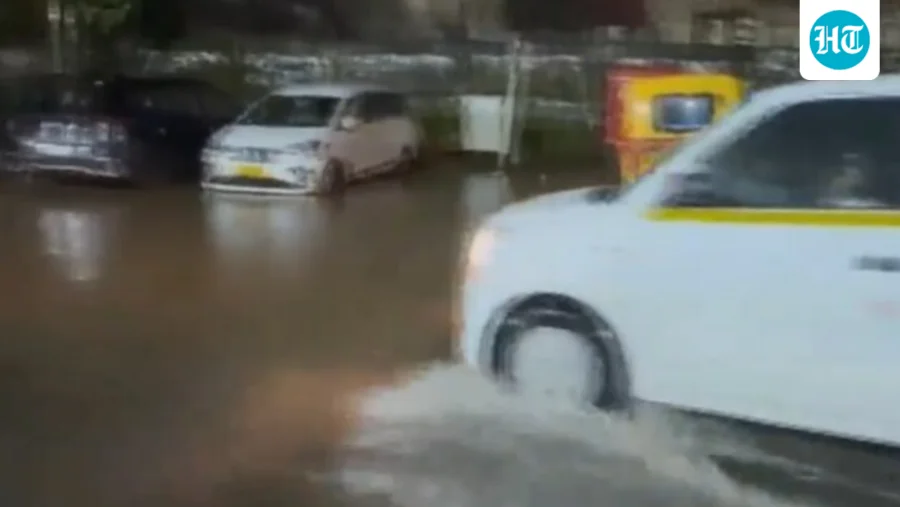
The first sign of trouble was the water. By Sunday afternoon, roads leading to Mumbai's Chhatrapati Shivaji Maharaj International Airport were submerged, turning a routine commute into a struggle for thousands. For a city that prides itself on its resilience, the sight of passengers wading through knee-deep water near one of India's busiest aviation hubs was a stark reminder of Mumbai's fragile monsoon defences.
What Happened: Rain, Waterlogging, and a City on Edge
Heavy rainfall lashed Mumbai on Sunday, triggering severe waterlogging in several low-lying areas, including the approach roads to the airport. Visuals emerging from the area showed vehicles stranded and pedestrians navigating flooded streets. The India Meteorological Department (IMD) had already sounded a yellow alert for Mumbai, Thane, and Palghar, indicating the likelihood of continued showers.
Why This Matters: The Airport Is Not Just a Transit Point
For Mumbai, the airport is more than a travel hub—it is the city's economic lifeline. Waterlogging near the airport doesn't just inconvenience passengers; it disrupts cargo movement, delays flights, and affects the livelihoods of thousands who work in and around the aviation ecosystem. When the airport area floods, the ripple effects are felt across the city and beyond.
How We Got Here: A Recurring Monsoon Story
Mumbai's relationship with the monsoon is complicated. Every year, the city braces for heavy rain, and every year, images of flooded streets and stranded commuters make headlines. The problem is not new. Rapid urbanisation, inadequate drainage systems, and encroachment on natural water channels have compounded the city's vulnerability. The yellow alert issued by IMD is a standard precautionary measure, but for residents, it signals yet another day of uncertainty.
Who Is Affected: The Daily Wage Earner and the Business Traveller
The impact of waterlogging is never uniform. For a daily wage worker commuting from the suburbs, a flooded road means lost wages. For a business traveller, it means missed flights and cancelled meetings. For the elderly or differently-abled, it means navigating a hostile environment. The airport area, with its mix of travellers and local workers, becomes a microcosm of the city's broader struggles.
Official Response: IMD's Yellow Alert and What It Means
The IMD's yellow alert is a signal to "be updated" rather than a cause for panic. It indicates that while the weather is not expected to be extreme, it is likely to cause some disruption. Authorities have not issued any advisory to avoid travel, but commuters are advised to check flight statuses and plan their journeys accordingly. The Brihanmumbai Municipal Corporation (BMC) has not released a specific statement on the waterlogging near the airport at the time of writing.
Confirmed Facts vs What Remains Unclear
Confirmed: Heavy rain occurred on Sunday. Waterlogging was reported near the airport. IMD issued a yellow alert for Mumbai, Thane, and Palghar.
Unclear: The exact extent of flight delays or cancellations. Whether the waterlogging has receded. Any specific advisory from the airport operator or BMC. These details are awaited and should not be assumed.
Risks and Balanced View: The Limits of Preparedness
While the IMD's alert system is robust, the ground reality often outpaces official warnings. Mumbai's drainage system, designed for a different era, struggles to cope with intense bursts of rain. Critics argue that short-term fixes like pumping out water are not enough; long-term investment in infrastructure is needed. However, it is also true that the city's emergency services often respond swiftly, and the situation could improve as the rain subsides.
Wider Trend: Monsoon Mayhem in Urban India
Mumbai is not alone. From Bengaluru to Chennai, Indian cities are grappling with similar monsoon challenges. Climate change is making rainfall patterns more erratic, and urban planning has not kept pace. The waterlogging near Mumbai airport is a local story with a national resonance—a reminder that India's cities need to be built for the weather of the future, not the past.
Practical Reader Guidance: What You Should Do Now
If you are travelling to or from Mumbai airport today, check your flight status before leaving. Allow extra time for your journey. Avoid waterlogged routes if possible. If you are in a low-lying area, keep emergency contacts handy and avoid stepping into moving water. Stay updated with official IMD bulletins.
Future Outlook: What Could Happen Next
The IMD has not indicated when the rain will ease. If the intensity continues, more areas could be affected. The BMC is likely to deploy pumps and monitor the situation. However, without a significant break in the weather, the risk of further waterlogging remains. Readers should prepare for a wet and unpredictable day.
Our Take: A Test of Mumbai's Spirit and Systems
Mumbai's spirit is legendary, but spirit alone cannot keep a city dry. The waterlogging near the airport is not just a weather event; it is a stress test of the city's infrastructure and its ability to protect its people. As the rain continues, the question is not whether Mumbai will bounce back—it always does—but whether it will finally build a drainage system that doesn't need to.
Frequently Asked Questions
Is Mumbai airport closed due to waterlogging?
There is no official confirmation that the airport is closed. However, waterlogging on approach roads may cause delays. Passengers are advised to check with their airlines.
What is a yellow alert?
A yellow alert from IMD means "be updated." It indicates that the weather may cause some disruption, but it is not an emergency. It is a precautionary measure.
Which areas are affected by the rain?
The IMD has issued a yellow alert for Mumbai, Thane, and Palghar. Waterlogging has been reported near the airport and other low-lying areas.
Will it rain tomorrow?
The IMD has not issued a forecast for tomorrow at the time of writing. Readers should check the latest IMD bulletin for updates.