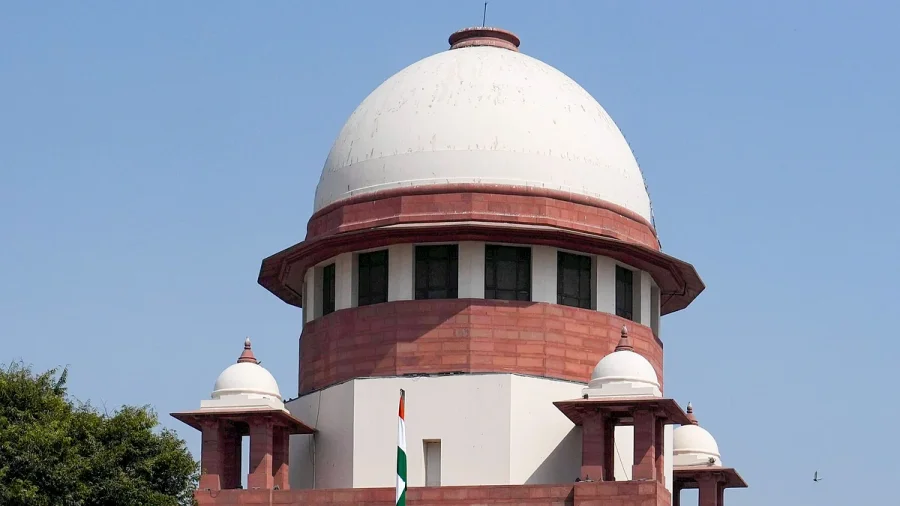
For five years, a Sri Lankan national sat in an Indian prison, convicted under the stringent UAPA for allegedly trying to revive the banned LTTE. But on Wednesday, the Supreme Court delivered a stunning reversal — ruling that he was never the man investigators were looking for. The court called it a clear case of mistaken identity, setting aside his conviction and five-year sentence, and raising serious questions about how the justice system can sometimes go terribly wrong.
Supreme Court acquits Sri Lankan national in LTTE revival case, citing false implication
A three-judge bench of the Supreme Court, comprising Justices Vikram Nath, Sandeep Mehta, and Vijay Bishnoi, delivered the verdict on Wednesday. The court held that the prosecution had failed to establish its case against the appellant, a Sri Lankan national who had been convicted under the Unlawful Activities (Prevention) Act (UAPA) for alleged involvement in efforts to revive the banned Liberation Tigers of Tamil Eelam (LTTE). The bench observed that the evidence on record clearly indicated that the accused was not the absconding suspect known as "Sri," whom investigators had been trying to trace in connection with the case.
Why This Matters Right Now
This verdict is not just about one man's freedom. It strikes at the heart of concerns over the misuse of stringent anti-terror laws like UAPA, which have been criticized for their low conviction rates and potential for false implication. For the Sri Lankan Tamil community in India, and for human rights advocates, this case underscores the vulnerability of individuals caught in the crosshairs of national security investigations. The ruling also raises urgent questions about the reliability of identification procedures and the burden of proof in cases involving serious charges. For the common citizen, it serves as a reminder that even in a robust legal system, mistakes can happen — and when they do, the consequences can be devastating.
How the Case Unfolded: From Arrest to Acquittal
The appellant was arrested and later convicted by a trial court for allegedly being part of a conspiracy to revive the LTTE in India. The prosecution's case relied heavily on the claim that the accused was the same person as "Sri," an absconding suspect wanted in connection with the same case. However, during the appeal before the Supreme Court, the defense argued that there was a clear case of mistaken identity. The bench, after examining the evidence, agreed. The court noted that the prosecution had failed to produce any credible evidence linking the appellant to the alleged conspiracy or establishing that he was indeed the person known as "Sri." The conviction and five-year sentence were set aside, and the appellant was acquitted of all charges.
Who Is Affected and What Officials Are Saying
The immediate impact is on the appellant himself, who has spent years behind bars for a crime he did not commit. His family, likely in Sri Lanka, will now grapple with the emotional and financial toll of a wrongful conviction. For the National Investigation Agency (NIA) and other investigating agencies, this verdict is a significant setback, highlighting potential flaws in their investigation and identification processes. Legal experts and human rights organizations have welcomed the judgment, with many calling it a much-needed check on the misuse of UAPA. While no official statement from the NIA or the government has been released yet, the verdict is expected to fuel further debate on the need for reforms in the application of anti-terror laws.
What We Know So Far — and What Remains Unclear
What we know: The Supreme Court has definitively ruled that the appellant was falsely implicated due to mistaken identity. The court has set aside his conviction and sentence, acquitting him of all charges under UAPA. The key evidence that led to this conclusion was the failure of the prosecution to prove that the accused was the absconding suspect "Sri."
What remains unclear: The full identity and whereabouts of the actual suspect "Sri" remain unknown. It is also unclear whether any action will be taken against the investigating officers or agencies responsible for the false implication. The details of the compensation, if any, that the appellant may receive for the years he spent in prison have not been disclosed. Furthermore, the broader question of how many other cases may involve similar mistaken identities under UAPA remains unanswered.
Risks, Concerns, and the Balanced View
While the verdict is a victory for justice, it also exposes significant risks. The case highlights the potential for wrongful convictions under stringent laws like UAPA, where the burden of proof can sometimes shift unfairly onto the accused. Critics argue that the low conviction rate in UAPA cases — often cited as below 5% — points to a pattern of overreach and poor investigation. On the other hand, supporters of the law argue that it is a necessary tool to combat terrorism and that isolated cases of mistaken identity should not undermine its overall purpose. The balanced view is that while the law is essential for national security, robust safeguards, better training for investigators, and stricter judicial oversight are needed to prevent miscarriages of justice.
Why Similar Concerns About UAPA Are Growing
This case is part of a broader trend of judicial scrutiny over the application of UAPA. In recent years, the Supreme Court and various High Courts have acquitted several individuals in UAPA cases due to lack of evidence or procedural lapses. Data from the National Crime Records Bureau (NCRB) shows that the conviction rate under UAPA has remained consistently low, often below 5%, raising serious questions about the quality of investigations. Human rights organizations have repeatedly flagged concerns about the misuse of the law against minorities, activists, and journalists. This verdict is likely to add momentum to calls for a comprehensive review of the UAPA framework.
- The Supreme Court has previously criticized the casual use of UAPA in cases lacking credible evidence.
- Several states have reported a high number of UAPA cases where charges were not substantiated during trial.
- Legal experts argue that the law's stringent bail provisions often lead to prolonged pre-trial detention, even in weak cases.
"It is, therefore, clearly a case where the appellant has been falsely implicated by being assigned the identity of..." — Supreme Court Bench (Justices Vikram Nath, Sandeep Mehta, Vijay Bishnoi)
What Readers, Users, or Investors Should Know Now
For the general public, this case is a reminder of the importance of a fair trial and the presumption of innocence. For legal professionals and activists, it provides a strong precedent to challenge weak UAPA cases based on mistaken identity. For the Sri Lankan Tamil community in India, it offers a glimmer of hope that the justice system can correct its errors. If you or someone you know is facing similar charges, it is crucial to ensure that the identification process is rigorously challenged and that all evidence linking the accused to the alleged crime is thoroughly scrutinized.
What Could Happen Next
The appellant is now a free man, but his legal battle may not be entirely over. He could potentially seek compensation for the years he spent in wrongful imprisonment. The verdict may also prompt the NIA to review other cases where similar identification issues exist. On a broader level, this judgment could influence future Supreme Court rulings on UAPA cases, potentially leading to stricter standards for evidence and identification. There is also a possibility that the government may face renewed pressure to amend the UAPA to include stronger safeguards against false implication.
Our Take: Why This Story Matters Beyond One Incident
This is not just a story of one man's acquittal. It is a story about the fragility of justice when the state's investigative machinery fails. The Supreme Court's verdict is a powerful reminder that the law must protect the innocent, even when the charges are as grave as terrorism. It underscores the need for constant vigilance, judicial oversight, and a commitment to due process. In an era where national security concerns often dominate public discourse, this judgment serves as a crucial check on the potential for overreach. It reaffirms that no law, however stringent, should be used to punish the wrong person.
FAQs
Why did the Supreme Court acquit the Sri Lankan national in the LTTE revival case?
The Supreme Court acquitted the Sri Lankan national because it found that he was falsely implicated due to mistaken identity. The court ruled that the prosecution failed to prove that he was the absconding suspect known as "Sri," and the evidence clearly showed he was not the person investigators were looking for.
What is the UAPA law under which the Sri Lankan national was convicted?
The Unlawful Activities (Prevention) Act (UAPA) is a stringent anti-terror law in India. It allows for prolonged detention without charge and has a high bar for bail. The law has been criticized for its low conviction rate and potential for misuse, as highlighted by this case of mistaken identity.
What happens to the Sri Lankan national after the Supreme Court acquittal?
Following the Supreme Court's verdict, the Sri Lankan national is a free man. His five-year prison sentence has been set aside, and he has been acquitted of all charges. He may now seek compensation for the time he spent wrongfully imprisoned, though the details of any such process are not yet clear.
Does this Supreme Court verdict set a precedent for other UAPA cases?
Yes, this verdict could set an important precedent for other UAPA cases, particularly those involving claims of mistaken identity or weak evidence. The Supreme Court's strong observation that the appellant was falsely implicated may encourage lower courts to scrutinize identification procedures and evidence more rigorously in future cases.