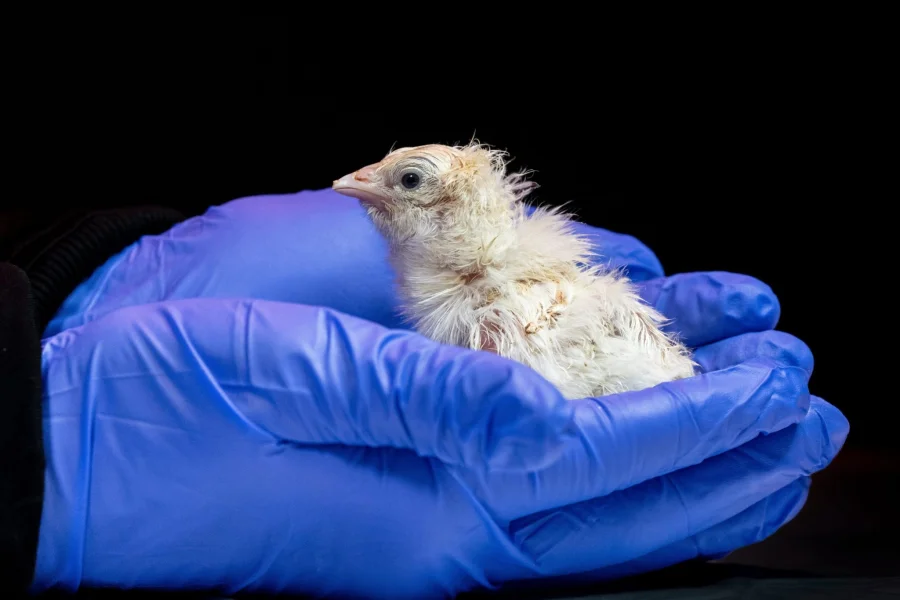
Twenty-six tiny chicks — some just days old, others a few months — have been born not inside a natural egg, but inside a 3D-printed lattice structure designed to mimic an eggshell. The announcement from Colossal Biosciences, a biotech company with a mission to resurrect lost creatures, has reignited a debate that once belonged only in science fiction: Are we really on the verge of bringing back the woolly mammoth, the dodo, or even the dire wolf?
For now, the answer is still complicated. But the line between Jurassic Park and reality just got a little thinner.
What Colossal Biosciences Has Actually Achieved
Colossal said Tuesday that it successfully hatched 26 live chickens using an artificial eggshell made from a 3D-printed lattice structure. The chicks range from a few days to several months old, and the company says they are healthy. This is not about resurrecting a chicken — it's about proving that a complex biological process can be replicated outside a natural egg.
According to Colossal's CEO Ben Lamm, the artificial egg technology could eventually be scaled up to genetically modify living birds to resemble extinct species, such as New Zealand's giant moa. The company has already made headlines for genetically engineering mice with long, woolly mammoth-like hair and wolf pups that resemble the extinct dire wolf.
Why This Matters Right Now
This is not just a science experiment. The ability to hatch a living creature from an artificial environment has profound implications for conservation, genetic engineering, and the future of biodiversity. If Colossal can perfect this technology, it could one day be used to revive species that humans drove to extinction — or even to protect endangered birds by creating artificial incubation systems.
But it also raises uncomfortable questions. Are we playing God? Should we be spending millions on de-extinction when existing species are still disappearing? And what happens if a resurrected species doesn't fit into the modern ecosystem?
How the Breakthrough Unfolded
Colossal's journey toward this moment has been years in the making. The company, founded by entrepreneur Ben Lamm and geneticist George Church, has been working on multiple fronts: editing the genes of living animals to express traits of extinct species, and developing the artificial environments needed to birth them.
The artificial eggshell is a key piece of the puzzle. Birds develop inside eggs that provide nutrients, protection, and a specific chemical environment. Replicating that in a lab is extraordinarily difficult. The 3D-printed lattice structure Colossal used is designed to mimic the porosity and structural integrity of a natural eggshell, allowing the embryo to breathe and grow.
The 26 chicks are proof that the concept works — at least for chickens.
Who Is Affected and What Scientists Are Saying
The scientific community has reacted with a mix of excitement and caution. Some researchers see the artificial egg as a breakthrough for avian biology and conservation. Others remain deeply skeptical about the broader de-extinction mission.
Critics argue that even if Colossal can create an animal that looks like a woolly mammoth or a dodo, it will not be a true genetic replica. The behavior, social structures, and ecological role of the original species cannot be recreated in a lab. There are also ethical concerns about the welfare of the genetically modified animals and the potential for unintended consequences.
Colossal's supporters counter that the technology could be a powerful tool for conservation, helping to restore lost biodiversity and even combat climate change by reintroducing species that once shaped their ecosystems.
What We Know So Far — and What Remains Unclear
What we know: Colossal has hatched 26 live chicks using a 3D-printed artificial eggshell. The company has also created genetically engineered mice with woolly mammoth-like hair and wolf pups resembling dire wolves. CEO Ben Lamm says the artificial egg technology could be scaled for de-extinction projects.
What remains unclear: Whether the chicks are fully healthy and capable of normal development. Whether the artificial egg can be adapted for other bird species, especially extinct ones. And crucially, whether the public and regulators will accept the release of genetically modified animals into the wild.
Risks, Concerns, and the Balanced View
The risks are significant. De-extinction technology is expensive, unproven at scale, and ethically fraught. There is no guarantee that a resurrected species would survive in the modern world, and there is a real possibility of unintended ecological disruption.
On the other hand, the technology could have immediate benefits. Artificial egg incubation could help save critically endangered bird species. The genetic tools Colossal is developing could also be used to make living animals more resilient to climate change or disease.
The balanced view is this: The science is impressive, but the mission is still speculative. Colossal is making progress, but we are years — possibly decades — away from seeing a woolly mammoth walking the tundra.
Why De-Extinction Technology Is Gaining Momentum
Colossal is not alone. Several other labs and startups are working on de-extinction projects, from the passenger pigeon to the Tasmanian tiger. Advances in gene editing, synthetic biology, and artificial incubation are making what was once impossible seem increasingly plausible.
The trend is driven by a combination of scientific curiosity, conservation urgency, and investor interest. Colossal has raised hundreds of millions of dollars from venture capitalists who see de-extinction as both a noble goal and a potentially lucrative market.
- Colossal has raised over $225 million in funding
- The company is working on projects for the woolly mammoth, dodo, and thylacine (Tasmanian tiger)
- Artificial egg technology could be applied to conservation of endangered birds
"De-extinction is no longer a question of if, but when. The technology is moving faster than the ethics." — Dr. Beth Shapiro, paleogenomics expert (paraphrased from public commentary)
What Readers Should Know Now
If you are excited about the possibility of seeing a woolly mammoth in your lifetime, this is a step in that direction. But it is important to manage expectations. The chicks hatched by Colossal are not extinct species — they are proof-of-concept animals that show the technology works.
For investors, the space is high-risk and high-reward. For conservationists, the technology offers both hope and a warning: We cannot rely on de-extinction to fix problems we are creating now.
What Could Happen Next
Colossal will likely continue refining its artificial egg technology and scaling it for larger birds. The company is also working on editing the genes of living elephants to express woolly mammoth traits, with the goal of creating a cold-resistant elephant that could be introduced to the Arctic.
Regulatory hurdles remain significant. Any attempt to release genetically modified animals into the wild would require approval from multiple government agencies and likely face legal challenges from environmental groups.
Our Take: Why This Story Matters Beyond One Incident
This is not just about chickens or even mammoths. It is about humanity's growing ability to manipulate the building blocks of life. The same technology that could bring back the dodo could also be used to create new species, alter ecosystems, or even edit human embryos.
The conversation around de-extinction is a proxy for a much larger debate about the limits of science and the responsibilities of those who wield it. Colossal's chicks are a reminder that the future is arriving faster than our ethical frameworks can keep up.
FAQs
What exactly did Colossal Biosciences achieve?
Colossal hatched 26 live chicks using a 3D-printed artificial eggshell that mimics the structure and function of a natural egg. This is a proof-of-concept for artificial incubation technology that could eventually be used for de-extinction projects.
Is Colossal actually bringing back extinct species like the woolly mammoth?
Not yet. Colossal is working on genetically engineering living animals to express traits of extinct species. The artificial egg technology is one step in that process, but a full woolly mammoth or dodo is still years away.
What are the ethical concerns with de-extinction technology?
Critics worry about animal welfare, ecological disruption, and the diversion of resources from conservation of existing species. There are also philosophical questions about whether we should be "playing God" by resurrecting extinct animals.
Could this technology help save endangered species today?
Yes. The artificial egg incubation technology could be used to help breed critically endangered bird species in captivity, potentially increasing their chances of survival. This is one of the most immediate and least controversial applications of Colossal's work.