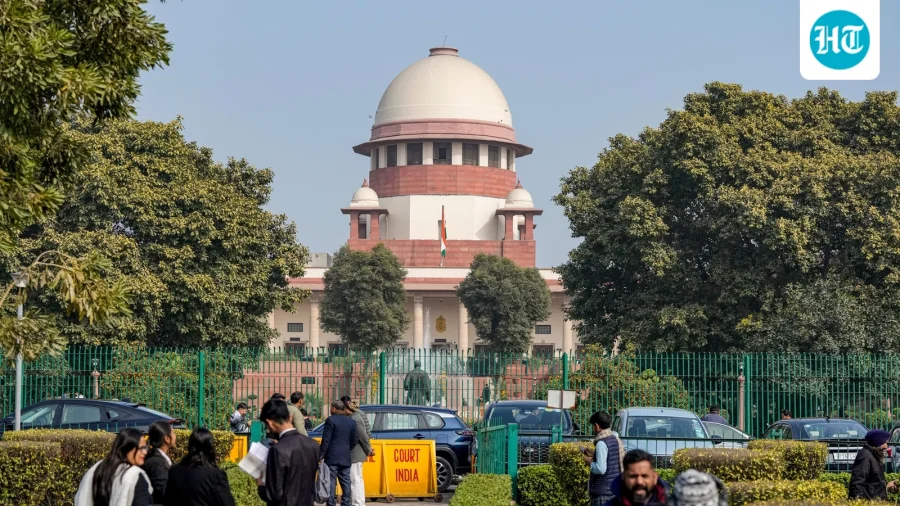
For millions of Indians who value the freedom to travel abroad, the Supreme Court has delivered a crucial clarification: that right is not unlimited. In a judgment that could reshape how courts handle travel permissions for accused persons, the apex court ruled that the fundamental right to travel abroad under Article 21 of the Constitution "cannot be viewed in isolation."
What the Supreme Court actually said about travel rights
The bench hearing Seesa Santosh vs The State of Telangana (2026 INSC 628) made it clear that while Article 21 guarantees personal liberty — including the right to travel abroad — this liberty must coexist with other constitutional guarantees. "A balance must be struck between the individual liberty of the respondent," the court observed, referring to the need to weigh the accused's travel rights against the victim's right to a speedy trial.
Why this judgment matters for every accused person
This ruling directly affects thousands of Indians who face criminal charges and seek court permission to travel overseas — for work, education, medical treatment, or family emergencies. Until now, many accused persons assumed their right to travel was near-absolute under Article 21. The Supreme Court has now made it clear: courts must consider the impact on victims and the justice system before granting such permission.
How the case reached the Supreme Court
The case originated from a Telangana matter where an accused person sought permission to travel to the United States. The state opposed the request, arguing that adequate medical facilities existed in India and that travel could delay trial proceedings. The Supreme Court was asked to determine whether the right to travel abroad could override concerns about trial delays and victim rights.
Who is affected by this ruling
The judgment primarily impacts accused persons in criminal cases who need to travel abroad. This includes business professionals, students, medical patients, and individuals with family obligations abroad. Victims of crimes also gain stronger grounds to oppose travel requests that could delay justice. The ruling reinforces that the justice system must protect both the accused's liberty and the victim's right to timely resolution.
How the court balanced competing rights
The Supreme Court's reasoning reflects a nuanced understanding of constitutional law. The bench acknowledged that personal liberty is a fundamental right but emphasized that no fundamental right exists in a vacuum. When an accused person's travel could delay a trial, the victim's constitutional right to a speedy trial — also rooted in Article 21 — must be given equal weight. This balancing approach is now the legal standard.
What this means for future travel applications
Legal experts expect lower courts to apply this balancing test more rigorously. Accused persons seeking travel permission will now need to demonstrate that their travel will not unduly delay proceedings or prejudice the victim's interests. Courts may impose stricter conditions, such as fixed return dates, surety bonds, or regular reporting requirements.
Confirmed facts vs what remains unclear
What is confirmed: The Supreme Court has ruled that the right to travel abroad under Article 21 cannot be viewed in isolation and must be balanced against other rights. The judgment was delivered in Seesa Santosh vs The State of Telangana. What remains unclear: The full text of the judgment and specific guidelines for lower courts have not been publicly released in detail. The exact conditions under which travel may be denied or granted will depend on case-by-case application.
Risks and balanced view of the judgment
Supporters of the ruling argue it protects victims' rights and prevents accused persons from using travel as a delay tactic. Critics, however, warn that the judgment could be misused to arbitrarily deny travel permissions, especially in cases where the accused has legitimate reasons to travel. Human rights advocates caution that the balancing test must not become a blanket restriction on personal liberty. The court's intent appears to be creating a fair framework, but implementation will determine its real-world impact.
Wider trend: Courts tightening travel permissions
This judgment is part of a broader judicial trend where Indian courts are increasingly scrutinizing travel requests by accused persons. In recent years, courts have denied travel permissions in high-profile cases involving economic offences, money laundering, and serious crimes. The Supreme Court's latest ruling provides a constitutional foundation for this approach, moving beyond case-by-case discretion to a principled balancing framework.
What accused persons should do now
If you are an accused person needing to travel abroad, consult a criminal lawyer immediately. Your application must now clearly address how your travel will not delay the trial or harm the victim's interests. Gather evidence of the urgency and necessity of travel — medical reports, work contracts, admission letters. Be prepared for stricter conditions and a more rigorous court review.
What could happen next
Legal analysts expect the Supreme Court to issue detailed guidelines in future cases, clarifying how lower courts should apply this balancing test. The judgment may also influence pending cases where travel permissions are contested. Victims' rights groups are likely to cite this ruling more frequently. The broader impact on India's criminal justice system will depend on how consistently courts apply the new standard.
Our Take
This judgment is a necessary correction to the assumption that fundamental rights are absolute. The Supreme Court has done what courts must do — balance competing constitutional values. The right to travel abroad remains a vital freedom, but it cannot come at the cost of another person's right to justice. The real test will be in implementation: courts must apply this balancing test fairly, without prejudice against accused persons. If done right, this ruling strengthens both liberty and accountability in India's legal system.
Frequently Asked Questions
Can the Supreme Court stop an Indian citizen from travelling abroad?
Yes, in specific circumstances. The Supreme Court has ruled that the right to travel abroad under Article 21 is not absolute. Courts can restrict travel if it would delay a criminal trial or harm the victim's right to a speedy trial. Each case is decided on its merits.
What is Article 21 of the Indian Constitution?
Article 21 guarantees the fundamental right to life and personal liberty. The Supreme Court has interpreted this to include the right to travel abroad. However, this right is subject to reasonable restrictions imposed by law and by court orders in criminal cases.
Does this judgment apply to all accused persons in India?
Yes, the principle applies to all accused persons seeking court permission to travel abroad. However, the specific outcome depends on the facts of each case — the nature of the offence, stage of trial, urgency of travel, and impact on the victim.
What should I do if my travel application is rejected after this judgment?
Consult a criminal lawyer to understand the specific reasons for rejection. You may be able to file a fresh application with stronger evidence of necessity and assurances that travel will not delay proceedings. The judgment does not ban travel — it requires a balanced approach.