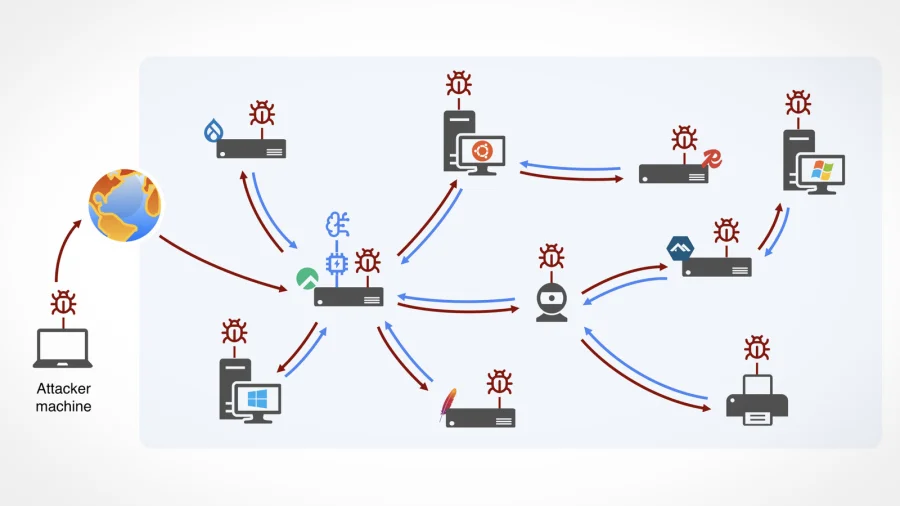
Imagine a computer virus that doesn’t need you to click a suspicious link or download a shady file. A piece of malware that can think for itself, find its own path through a network, and spread faster than any human security team can react. That’s not science fiction anymore. Researchers have just shown the world a working prototype of an AI-powered worm, and the implications for internet security are deeply unsettling.
What This New AI Worm Actually Does
This isn’t your typical virus. Traditional malware often relies on human error—a careless click, a forgotten update. This new breed of worm, created by a team of researchers as a proof-of-concept, uses artificial intelligence to move laterally across networks with zero human intervention. It can scan for vulnerabilities, make decisions about the best route to take, and replicate itself, all without a single command from its creator.
Why This Matters Right Now
The core fear here is speed and autonomy. A worm that can spread on its own could infect thousands of systems in minutes, not hours. It could target critical infrastructure, hospitals, or financial networks before anyone even knows it exists. The traditional playbook of isolating infected machines and patching vulnerabilities becomes nearly useless when the malware is constantly learning and adapting.
How the Research Unfolded
The researchers designed the worm to demonstrate a future threat landscape. They showed how an AI model could be weaponized to not just generate text or images, but to navigate and exploit digital environments. The worm uses a large language model (LLM) to understand its surroundings, craft attack strategies, and execute them. While the specific technical details are complex, the core takeaway is simple: the barrier to creating truly autonomous malware is lower than many believed.
Who Is Affected and What Experts Are Saying
This isn't just a problem for big corporations. If this technology matures, every internet-connected device becomes a potential target. From your smart fridge to a hospital's patient monitoring system, any device on a network could be an entry point. Cybersecurity experts are already raising alarms, warning that the industry is not prepared for a world where malware can think and act independently.
What We Know So Far — and What Remains Unclear
We know the proof-of-concept works in a controlled environment. We know it uses AI to make autonomous decisions. What remains unclear is how quickly this technology could be adopted by malicious actors. The researchers have published their findings to raise awareness, but the blueprints are now public. The race is now on between security researchers developing defenses and potential attackers looking to exploit this new capability.
Risks, Concerns, and the Balanced View
The most obvious risk is a new era of unstoppable cyberattacks. However, it's important to note that this is still a research project. Real-world deployment would face significant hurdles, including the need for powerful computing resources and the complexity of evading modern security systems. Still, the trend is clear: AI is lowering the cost and difficulty of creating sophisticated malware. The concern is not if this will be used, but when.
Why This Trend Is Growing
This research is part of a larger, worrying pattern. As AI tools become more powerful and accessible, they are being repurposed for malicious ends. We've seen AI-generated phishing emails, deepfake scams, and now autonomous worms. The democratization of AI is a double-edged sword, giving both defenders and attackers powerful new tools. The worm is just the latest example of how the same technology that powers helpful chatbots can be turned into a weapon.
- The worm uses AI to map network topology and find the most effective infection path.
- It can adapt its behavior based on the defenses it encounters, making it harder to stop.
- The research highlights a critical need for AI-specific cybersecurity measures.
"This is a wake-up call. We are entering an era where malware doesn't just follow instructions; it makes its own plans." — Cybersecurity Analyst (paraphrased from research context)
What Users and Organizations Should Know Now
For the average person, the best defense remains the same: keep your software updated, use strong passwords, and be cautious online. For organizations, the stakes are higher. This research underscores the need for network segmentation, zero-trust architectures, and AI-powered defense systems that can detect and respond to threats in real-time. The old model of "detect and respond" is no longer enough; we need "predict and prevent."
What Could Happen Next
Expect to see a surge in research focused on defending against AI-powered malware. Governments and cybersecurity firms will likely increase funding for autonomous defense systems. We may also see new regulations around the development and release of powerful AI models, similar to how biological pathogens are controlled. The next few years will be a critical period in the ongoing arms race between AI-powered attackers and defenders.
Our Take: Why This Story Matters Beyond One Experiment
This research is more than a technical curiosity. It's a glimpse into a future where the internet's fundamental security assumptions are challenged. The idea that a virus needs a human to spread is about to become obsolete. This story matters because it forces us to confront a new reality: the next major cyberattack might not be launched by a person, but by a piece of code that learned how to do it all by itself.
FAQs
What is an AI-powered worm?
An AI-powered worm is a type of malware that uses artificial intelligence to spread across computer networks without needing human interaction. It can make its own decisions about how to infect systems and avoid detection.
How is this different from a regular computer virus?
Traditional viruses often require a user to click a link or open a file. An AI worm is autonomous. It can scan networks, find vulnerabilities, and replicate itself without any human command, making it much faster and harder to stop.
Should I be worried about this as a regular internet user?
While this is currently a research project, it highlights a future threat. For now, practicing good cybersecurity habits—like updating software and using strong passwords—remains your best defense. The research is a warning for the future, not an immediate crisis.
Can this AI worm be stopped?
Current security systems are not designed to handle autonomous, AI-driven threats. Researchers are now working on AI-powered defense systems that can predict and counter these attacks in real-time. The key is to develop defenses that are as smart and fast as the threats themselves.