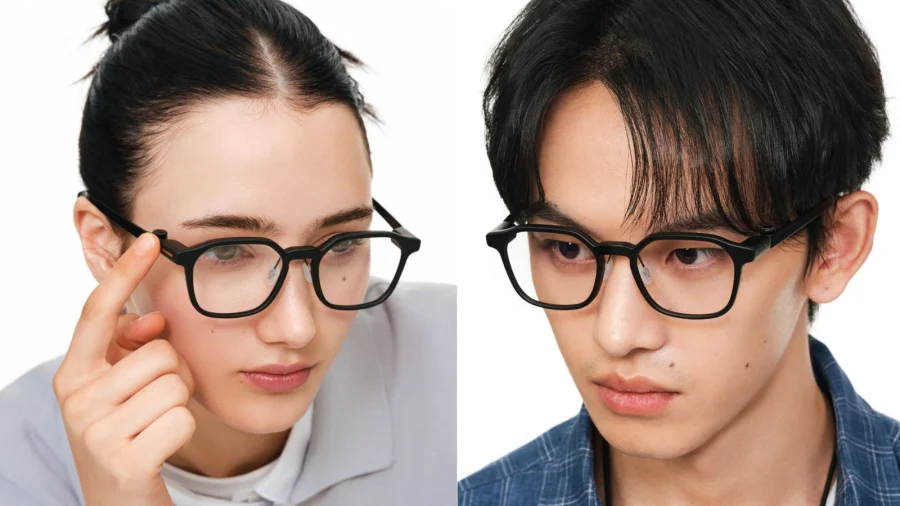
RayNeo appears to be playing both ends of the AR spectrum with its next generation of smart glasses. According to early reports, the company is developing two very different models — one that disappears into your daily look, and another that proudly wears its technology on its sleeve. It is a strategy that could define how AR eyewear reaches mainstream consumers.
A Tale of Two Designs in RayNeo’s AR Lineup
The core of the report is simple: RayNeo is going both minimalist and maximalist. One pair of glasses is expected to be discreet, lightweight, and designed for users who want AR features without drawing attention. The other is said to be a feature-packed device aimed at tech enthusiasts who want the full experience, even if it means a bulkier frame.
This dual approach is unusual but logical. It acknowledges that AR glasses have two very different potential buyers — those who see them as a fashion accessory and those who see them as a gadget.
Why the Split Strategy Matters for AR Adoption
For years, smart glasses have struggled to break into the mainstream. One major barrier has been design — many early models looked too futuristic or bulky for everyday wear. RayNeo’s minimalist model could address that concern directly, offering a subtle entry point for cautious consumers.
On the other hand, the maximalist model serves a different purpose. It gives enthusiasts a reason to upgrade, offering more features, better displays, and a richer AR experience. Together, the two models could help RayNeo capture both ends of the market in one generation.
What We Know About the Two RayNeo Models So Far
Details are still thin. The report does not specify exact specifications, pricing, or release dates for either model. What is clear is the strategic direction — RayNeo is betting that one size does not fit all in the AR glasses market.
This is consistent with the company’s history of pushing innovation in consumer AR. RayNeo has previously focused on making AR more accessible, and this dual-model approach appears to be a natural next step in that mission.
Who Is Each RayNeo Model Designed For?
The minimalist model is likely aimed at professionals and everyday users who want notifications, navigation, or quick information without looking like they are wearing a computer. Think of it as the AR equivalent of a classic pair of spectacles.
The maximalist model, meanwhile, is for the "nerdy" crowd — users who want immersive displays, advanced sensors, and the kind of features that make AR glasses feel like a true next-gen device. These are the early adopters who drove the first wave of smart glasses interest.
RayNeo’s Position in the Competitive AR Market
RayNeo is not alone in this space. Competitors like Meta, Google, and various Chinese tech firms are all exploring AR eyewear. However, RayNeo’s willingness to launch two contrasting models in the same generation could give it a unique edge — the ability to test which approach resonates more with consumers in real time.
This is a smart move for a company looking to establish itself as a leader in consumer AR. By covering both ends of the spectrum, RayNeo increases its chances of finding a winning formula.
Confirmed Details vs What Remains Unclear
What is confirmed is limited to the headline itself — that RayNeo is pursuing both minimalist and maximalist designs for its latest AR glasses. What remains unclear includes the specific features of each model, their price points, and when they will be officially unveiled.
Readers should treat early reports with caution. Until RayNeo makes an official announcement, the exact nature of these two models is speculative.
Why RayNeo’s Dual Approach Could Be a Game Changer
The AR glasses market has long faced a chicken-and-egg problem. Consumers do not buy because the devices are not compelling enough, and companies do not invest heavily because the market is small. RayNeo’s split strategy could help break this cycle by offering something for both casual users and hardcore enthusiasts.
If the minimalist model succeeds, it could normalise AR glasses as an everyday accessory. If the maximalist model succeeds, it could prove there is a strong market for advanced AR features. Either outcome would be a win for the industry.
Risks and Balanced View on RayNeo’s Strategy
There are risks to this approach. Developing two models simultaneously increases costs and complexity. There is also the danger that neither model fully satisfies its target audience — the minimalist version might be too basic for enthusiasts, while the maximalist version might be too intimidating for casual users.
Critics might also argue that RayNeo is spreading itself too thin. A more focused approach — perfecting one model before moving to the next — could be safer. However, in a fast-moving market, speed and experimentation often matter more than caution.
The Broader Trend: AR Glasses Are Splitting Into Two Camps
RayNeo’s strategy reflects a wider shift in the AR industry. Some companies are betting on lightweight, glasses-like devices that blend into daily life. Others are pushing toward powerful headsets that offer immersive experiences. RayNeo is unique in trying to do both at once.
This could signal a future where AR glasses are not a single product category but two — one for everyday utility and one for immersive experiences. If that happens, RayNeo will be well-positioned as a pioneer of both.
What Should Consumers Watch For Next?
For those interested in RayNeo’s upcoming AR glasses, the key is to wait for official announcements. Look for details on battery life, display quality, weight, and compatibility with existing apps. These factors will determine whether either model is worth the investment.
For now, the most important takeaway is that RayNeo is serious about making AR glasses work for everyone — not just early adopters. That is a promising sign for the future of the technology.
Future Outlook: What Could RayNeo’s Next Move Be?
If the dual-model strategy pays off, RayNeo could emerge as a major player in consumer AR. The company may follow up with more refined versions of both designs, or it might double down on whichever model performs better in the market.
There is also the possibility of partnerships with content creators or app developers to make the maximalist model more compelling. The next few months could bring significant updates from RayNeo.
Our Take
RayNeo’s decision to pursue both minimalist and maximalist designs is a bold and sensible bet. It acknowledges that AR glasses are not a one-size-fits-all product and that different users have very different needs. By covering both ends of the spectrum, RayNeo is giving itself the best chance to find a foothold in a competitive and uncertain market.
The real test will be execution. A great strategy means nothing if the products fail to deliver. But if RayNeo can pull off both designs successfully, it could set the template for how AR glasses are brought to the mainstream.
Frequently Asked Questions
What are RayNeo’s new AR smart glasses?
RayNeo is reportedly developing two new AR smart glasses models — one minimalist and discreet, and one maximalist with advanced features. The dual approach targets both casual users and tech enthusiasts.
When will RayNeo release its new AR glasses?
No official release date has been announced. The report is based on early information, and RayNeo has not confirmed when the new models will be unveiled.
What is the difference between the minimalist and maximalist RayNeo models?
The minimalist model is expected to be lightweight and subtle, designed for everyday wear. The maximalist model is expected to be feature-heavy, offering a more immersive AR experience for enthusiasts.
Why is RayNeo launching two different AR glasses models?
RayNeo appears to be targeting two distinct audiences — users who want discreet AR functionality and users who want the full range of features. This strategy helps the company cover more of the market in a single generation.