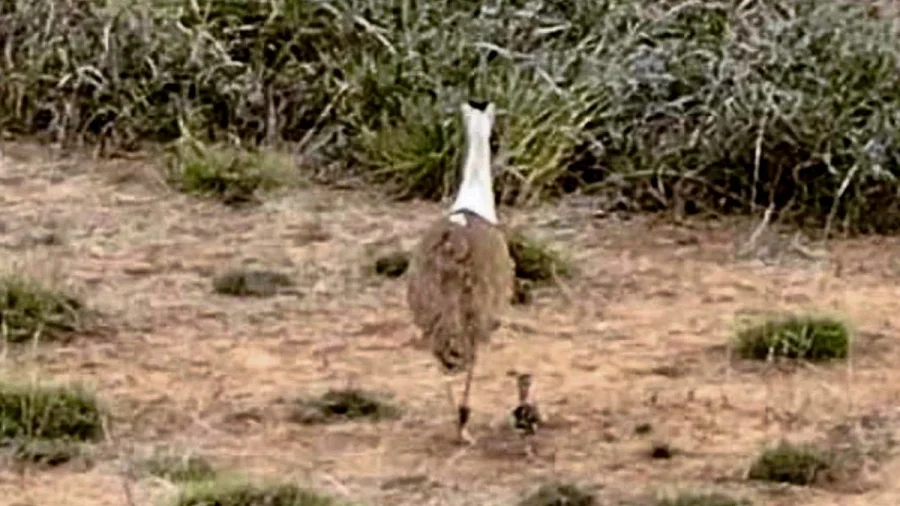
Fifty years ago, a single photograph in a morning newspaper changed the course of Indian wildlife history. Congress leader Jairam Ramesh recalled on Sunday how then prime minister Indira Gandhi, while flying to Udaipur on 21 June 1976, stumbled upon a front-page image of the Great Indian Bustard — a bird she had never heard of before. That chance encounter set in motion one of India’s most significant conservation efforts.
The photograph that moved a prime minister
Indira Gandhi was travelling to Haldighati to mark the 400th anniversary of the legendary battle that immortalised Maharana Pratap. But it was an unexpected wildlife story in that morning’s newspaper that would leave a lasting environmental legacy. Sharing a copy of the front page, Ramesh described how the image of the critically endangered bird caught her attention mid-flight.
Why a single image mattered so much
In 1976, the Great Indian Bustard was already vanishing from India’s grasslands. Few people knew about the bird, and even fewer cared. The photograph, published prominently on the front page, brought the species into national consciousness. For Indira Gandhi, it was a moment of discovery that translated into immediate political will.
From a flight to a conservation mission
According to Ramesh, the prime minister did not just glance at the photo and move on. She asked questions, sought details, and ordered action. Within months, conservation measures were initiated, including habitat protection in Rajasthan and Gujarat. The bird, which had been silently disappearing, suddenly had the highest office in the country watching over it.
The human story behind the conservation
For wildlife biologists and conservationists, this story is not just about a bird. It is about how a single moment of attention from a leader can alter the fate of an entire species. The Great Indian Bustard’s survival today — though still precarious — owes much to that 1976 intervention. Ramesh’s recollection serves as a reminder of how personal initiative can shape public policy.
What Indira Gandhi’s response meant for the species
Ramesh, who served as environment minister years later, has often highlighted the importance of political will in conservation. The 1976 episode is a textbook example: a front-page photo, a curious prime minister, and a swift government response. It also underscores how media can play a role in environmental awareness, long before the age of viral campaigns.
Where the Great Indian Bustard stands today
Despite five decades of conservation efforts, the Great Indian Bustard remains critically endangered. According to the latest estimates, fewer than 150 individuals survive in the wild, mostly in Rajasthan and Gujarat. Habitat loss, power lines, and human encroachment continue to threaten the species. Captive breeding programs are underway, but the bird’s future remains uncertain.
Confirmed facts vs what remains unclear
What is confirmed: Indira Gandhi saw the photograph on 21 June 1976, during a flight to Udaipur, and subsequently ordered conservation action. Jairam Ramesh shared the original front page on social media to mark the 50-year milestone. What remains unclear: the exact sequence of policy decisions that followed, and whether the same level of political attention exists today for the species.
Why this story matters beyond nostalgia
Ramesh’s recollection is not merely a historical anecdote. It raises uncomfortable questions about current conservation priorities. While the Great Indian Bustard received prime ministerial attention in 1976, today it struggles for survival despite decades of effort. The story is a reminder that conservation requires sustained commitment, not just a moment of inspiration.
Risks and balanced view
Some critics argue that the 1976 intervention, while well-intentioned, did not lead to long-term structural changes. The bird’s population has continued to decline. Others point out that conservation efforts have been hampered by bureaucratic delays and lack of funding. The story, while inspiring, also highlights the gap between political attention and effective implementation.
The wider pattern: media, politics, and wildlife
This episode fits into a broader pattern where media coverage has driven conservation action in India. From the Save the Tiger campaign to the fight for the Ganges, photographs and news reports have often catalysed government response. The Great Indian Bustard story is one of the earliest examples of this dynamic at work.
What readers should take away
For those interested in wildlife conservation, this story offers a lesson in how change can begin with a single image. It also underscores the importance of staying informed and engaged. For policymakers, it is a reminder that personal attention from leadership can make a difference — but only if followed by consistent action.
What could happen next
Conservationists hope that Ramesh’s recollection will renew public interest in the Great Indian Bustard. With captive breeding programs showing some success, there is cautious optimism. However, without stronger habitat protection and political will, the species may still face extinction. The next 50 years will determine whether the 1976 moment was a turning point or just a footnote.
Our Take
This story is a powerful reminder that conservation is not just about science — it is about attention, timing, and leadership. A newspaper photograph, seen at the right moment by the right person, changed the fate of a species. But it also shows that inspiration alone is not enough. The Great Indian Bustard’s survival today depends on whether we can match that 1976 moment with sustained action in 2026 and beyond.
Frequently Asked Questions
How did a newspaper photo help save the Great Indian Bustard?
In 1976, then prime minister Indira Gandhi saw a front-page photograph of the critically endangered Great Indian Bustard while flying to Rajasthan. She ordered immediate conservation action, leading to habitat protection and breeding programs that helped the species survive.
Who recalled this story and why?
Congress leader and former environment minister Jairam Ramesh shared the story on social media, marking 50 years since the episode. He posted a copy of the original front page to highlight the role of political will in wildlife conservation.
Is the Great Indian Bustard still endangered?
Yes, the Great Indian Bustard remains critically endangered with fewer than 150 individuals left in the wild. Conservation efforts continue, but the species faces threats from habitat loss, power lines, and human encroachment.
What can be done to save the Great Indian Bustard today?
Conservationists recommend stronger habitat protection, underground power lines to prevent collisions, and continued captive breeding programs. Public awareness and political commitment remain crucial for the species’ survival.