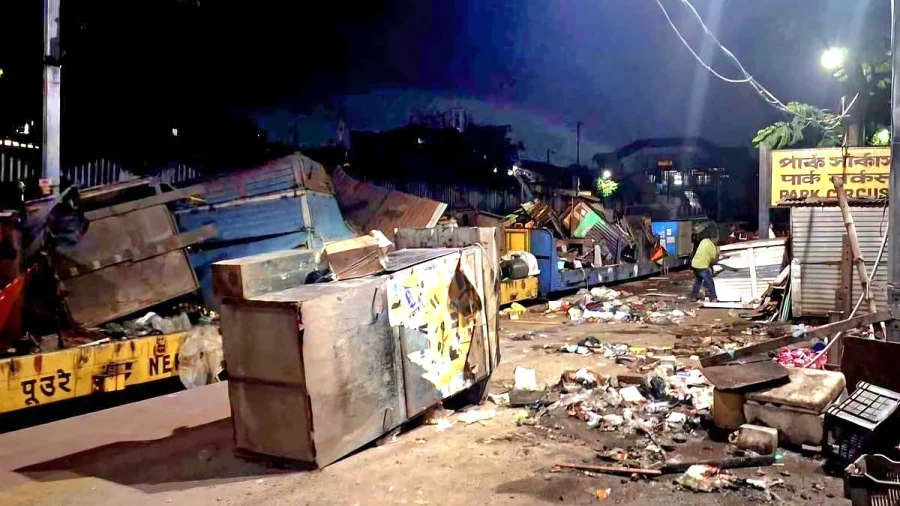
Late on Saturday night, the rumble of bulldozers replaced the usual hum of commuters at Park Circus railway station in Kolkata. The Indian Railways had arrived — not with a train, but with an eviction order and heavy machinery.
What happened at Park Circus station during the demolition drive
The eviction drive targeted several alleged illegal shops built on railway land at Park Circus station, located in the Sealdah South Section of the Eastern Railway. According to railway officials, notices had been served to shop owners and vendors earlier this month, directing them to vacate the premises. When the occupants failed to comply, authorities launched the demolition operation using bulldozers.
Why the railway eviction drive matters for Kolkata commuters
For daily passengers using the Park Circus route, the encroachments had become a familiar sight — rows of shops spilling onto railway land, narrowing pathways and raising safety concerns. The clearance is expected to improve pedestrian movement and reduce risks near the tracks. However, for the shop owners and their families, the demolition means lost livelihoods and uncertainty.
How the eviction operation unfolded under heavy security
The operation lasted around two-and-a-half hours and was conducted under heavy security. Personnel from the Railway Protection Force (RPF), local police, and the Rapid Action Force (RAF) were deployed to maintain law and order. The presence of multiple security forces indicated the authorities anticipated resistance or unrest.
Who is affected by the Park Circus station eviction
The immediate impact falls on the shop owners and vendors who operated from the demolished structures. Many of these small businesses served local commuters and residents, providing everything from tea and snacks to mobile recharge services. For them, the demolition is not just about losing a shop — it is about losing a source of daily income with little warning.
Eastern Railway's official response to the demolition drive
Railway officials confirmed that the eviction notices were legally served to occupants in the Sealdah South Section. The drive was described as a routine anti-encroachment measure to reclaim railway land and ensure operational safety. No official statement has been released regarding alternative arrangements for the affected vendors.
Why the Railways targeted illegal shops at Park Circus now
The timing of the drive appears linked to a broader push by Indian Railways to clear encroachments across its network. Similar operations have been reported in other parts of the country, including Howrah and Dum Dum stations. The Park Circus eviction fits into a pattern of increased enforcement against illegal structures on railway property.
Confirmed facts vs what remains unclear about the Kolkata eviction
What is confirmed: Notices were issued earlier this month. The demolition took place late Saturday. RPF, police, and RAF were present. Bulldozers were used. What remains unclear: The exact number of shops demolished. Whether any arrests were made. Whether the affected vendors received compensation or relocation offers. Whether legal challenges were filed before the drive.
Risks and concerns emerging from the railway demolition drive
While the Railways has the legal authority to clear its land, the sudden demolition raises questions about due process and humanitarian considerations. Critics argue that eviction notices alone may not be sufficient for vulnerable vendors who depend on daily earnings. There is also concern about the lack of alternative livelihood support or designated vending zones near the station.
Wider trend: Indian Railways intensifies anti-encroachment drives
The Park Circus operation is not an isolated incident. In recent months, Indian Railways has conducted similar eviction drives at Howrah station, Tikiapara, and Dum Dum. These operations reflect a national push to reclaim railway land for safety, operational efficiency, and infrastructure development. The pattern suggests more such drives may follow across the Eastern Railway zone.
What affected vendors and commuters should know now
For vendors operating on railway land in Kolkata: Check if your area has received eviction notices. Seek legal advice if you believe your structure is not on railway property. For commuters: Expect improved walking space and reduced congestion at Park Circus station in the coming days. For local authorities: Consider designating legal vending zones near stations to prevent future encroachments.
What could happen next after the Park Circus eviction
Railway authorities are likely to continue monitoring the cleared area to prevent re-encroachment. Similar drives may be scheduled at other stations in the Sealdah South Section. Affected vendors may approach local courts or municipal authorities for relief. The broader anti-encroachment campaign across Eastern Railway is expected to continue in the coming months.
Our Take
The Park Circus eviction drive highlights a recurring tension in Indian cities: the need for public infrastructure versus the livelihoods of informal workers. While the Railways has a legitimate right to clear its land for safety and operations, the manner of enforcement matters. Eviction notices alone, without dialogue or alternative arrangements, risk alienating vulnerable communities. A balanced approach — combining legal enforcement with rehabilitation or designated vending zones — would serve both railway efficiency and social equity. This story is not just about demolished shops; it is about how urban India manages the space between the tracks and the street.
Frequently Asked Questions
Why did the Railways demolish shops at Park Circus station in Kolkata?
The Indian Railways demolished illegal shops built on railway land at Park Circus station after occupants failed to comply with eviction notices issued earlier this month. The drive aimed to clear encroachments for safety and operational reasons.
Was there any police or security presence during the eviction drive?
Yes, the operation was conducted under heavy security with personnel from the Railway Protection Force (RPF), local police, and the Rapid Action Force (RAF) deployed to maintain law and order during the demolition.
How long did the demolition drive at Park Circus station last?
The eviction drive lasted approximately two-and-a-half hours and involved the use of bulldozers to demolish the alleged illegal structures on railway land.
What should vendors do if they receive an eviction notice from the Railways?
Vendors should verify whether their structure is on railway land, seek legal advice if they believe the notice is incorrect, and explore options for relocation or alternative vending sites through local municipal authorities.