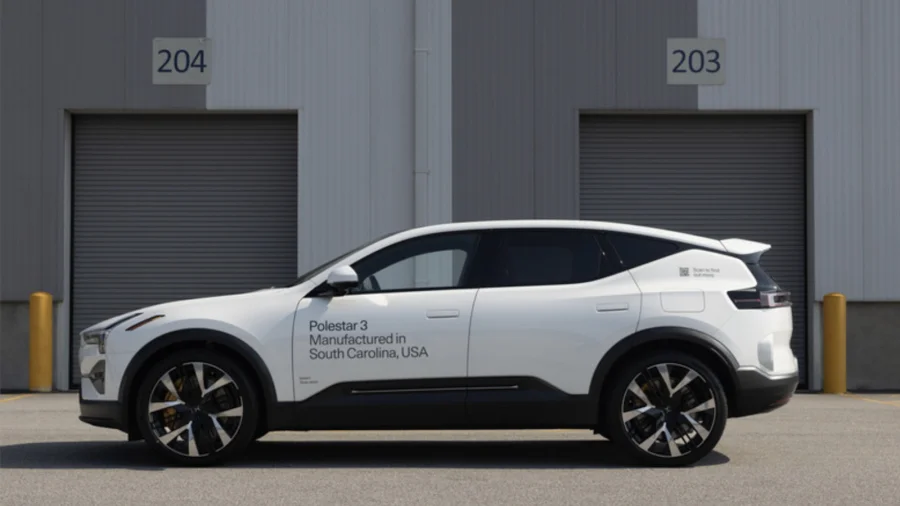
Polestar, the electric vehicle maker known for its sleek Scandinavian design, has been dealt a devastating blow in its most important growth market. The US Department of Commerce's Bureau of Industry and Security has denied the company permission to sell new vehicles in the United States, starting with the 2027 model year. For a brand that bet big on American buyers, this is not just a regulatory hurdle — it's an existential threat to its North American ambitions.
Why the US Market Door Just Slammed Shut for Polestar
The ban, first reported by Car and Driver, stems from a ruling by the Bureau of Industry and Security (BIS), the agency responsible for export controls and national security-related trade restrictions. While the exact reasoning behind the denial has not been fully detailed, it is widely understood to be linked to Polestar's ownership structure. The company is a joint venture between Volvo Car Group (owned by China's Geely) and Geely itself, making it a Chinese-controlled entity in the eyes of US regulators. The ban effectively blocks Polestar from selling new cars in the US, its second-largest market after Europe.
What the Ban Means for American EV Buyers
For American consumers who have been eyeing a Polestar 2, Polestar 3, or the upcoming Polestar 4, the news is a cold shock. Starting with the 2027 model year, new Polestar vehicles will simply not be available for purchase in the US. This means that anyone hoping to buy a new Polestar after that point will have to look elsewhere — or buy used. The ban does not affect existing owners; they can continue to drive, service, and sell their Polestar vehicles. But the pipeline of new cars will be cut off, potentially affecting resale values and parts availability in the long run.
How Polestar's US Production Gambit Failed to Save It
Polestar had taken what seemed like a smart step to sidestep trade tensions: it moved some of its production to the United States. The Polestar 3, for example, is built at Volvo's plant in Ridgeville, South Carolina. The logic was clear — build cars in America, avoid tariffs, and appeal to patriotic buyers. But the BIS ruling shows that local production alone is not enough. The ownership and control structure of the company appears to have overridden the benefits of domestic manufacturing. This is a stark lesson for other foreign-owned automakers with Chinese ties: building in the US does not guarantee market access.
Who Is Affected by the Polestar Sales Ban
The ban hits a wide range of stakeholders. First, Polestar's US employees and dealership network face an uncertain future. The company has been expanding its retail presence across the country, and this ban could force layoffs or closures. Second, investors and shareholders in Polestar, which went public via a SPAC merger in 2022, will see the value of their holdings threatened. Third, American EV buyers lose a competitive option in a market already dominated by Tesla and increasingly crowded by legacy automakers. Finally, the broader EV industry watches closely: this could set a precedent for how the US treats Chinese-linked EV brands.
Commerce Department's Bureau of Industry and Security: The Authority Behind the Ban
The Bureau of Industry and Security (BIS) is the US government agency responsible for enforcing export controls and protecting national security. Its decision to deny Polestar the right to sell in the US is a significant move, signaling that the Biden administration is willing to use trade and security tools to limit the influence of Chinese-linked companies in the American automotive market. The BIS has not publicly detailed its full reasoning, but the decision aligns with broader US efforts to restrict Chinese access to sensitive technologies and markets. Polestar has not yet announced whether it will appeal the ruling.
Why the US Is Blocking a Swedish-Chinese EV Brand
At its core, the ban is about geopolitics, not just cars. Polestar is a Swedish brand in name and design, but its ownership is deeply Chinese. Geely, the Chinese automotive giant, controls both Polestar and Volvo. The US government has grown increasingly wary of Chinese-owned companies accessing American markets, especially in sectors like electric vehicles that are tied to national security, data privacy, and supply chain resilience. The BIS ruling is part of a broader pattern: the US has imposed tariffs on Chinese EVs, restricted Chinese tech in connected cars, and scrutinized Chinese investments in American auto startups.
Confirmed Facts vs What Remains Unclear
Confirmed: Polestar has been denied permission to sell new vehicles in the US starting with the 2027 model year. The ban was imposed by the US Department of Commerce's Bureau of Industry and Security. The ruling applies to new vehicle sales, not existing ownership or service.
Unclear: The exact legal or regulatory basis for the denial has not been publicly detailed. It is unclear whether Polestar will appeal the decision or seek a waiver. The impact on Polestar's US dealership network and workforce has not been specified. Whether this ban applies to all Polestar models or only certain ones is also not fully clarified.
Polestar's Moat: Design, Brand, and Volvo Partnership
Polestar's competitive advantage has always been its design-forward approach, its Swedish heritage, and its partnership with Volvo for manufacturing and safety technology. The brand carved out a niche as a premium, minimalist alternative to Tesla. Its cars are praised for their build quality, driving dynamics, and understated elegance. However, this moat is now under threat. Without access to the US market, Polestar loses its second-largest revenue stream. The brand's value proposition — a cool, European-designed EV — may not be enough to sustain its global ambitions if it cannot sell in America.
Risks and Balanced View: The Other Side of the Ban
Supporters of the ban argue that it is a necessary national security measure. Chinese-owned companies could potentially use connected car technology to collect sensitive data on American citizens or be subject to Chinese government influence. Critics, however, see the ban as protectionist and counterproductive. They argue that it reduces consumer choice, raises prices, and slows the transition to electric vehicles. Polestar itself has maintained that it is an independent company with Swedish roots, but the ownership structure makes it a target. The ban also raises questions about other Chinese-linked automakers, such as BYD, Nio, and XPeng, which have been eyeing the US market.
The Broader Pattern: US-China Trade War Hits the EV Industry
The Polestar ban is the latest chapter in an escalating trade war between the US and China over electric vehicles. The US has imposed 100% tariffs on Chinese-made EVs, restricted Chinese software and hardware in connected cars, and limited Chinese investments in American EV startups. China, in turn, has retaliated with its own trade barriers. The result is a fragmented global EV market where companies are forced to choose sides. Polestar, caught in the middle, is a casualty of this geopolitical struggle. The ban signals that even companies with Western branding and US production are not safe if their ownership is Chinese.
What Polestar Owners and Potential Buyers Should Do Now
If you already own a Polestar, there is no immediate cause for alarm. Your car remains legal to drive, and service and parts should continue to be available for the foreseeable future. However, you may want to monitor resale values, as the ban could reduce demand for used Polestar vehicles. If you were planning to buy a new Polestar in the US, you have until the 2027 model year to make a purchase. After that, you will need to consider alternatives such as the Volvo EX30, the Tesla Model Y, or the Hyundai Ioniq 5. For investors, the ban is a clear red flag; Polestar's US growth story is now in serious doubt.
What Happens Next for Polestar in America
Polestar faces a difficult road ahead. The company could appeal the BIS ruling, but such appeals are rarely successful. It could restructure its ownership to reduce Chinese control, but that would be complex and time-consuming. Alternatively, Polestar could focus on other markets, such as Europe and Asia, where it still has strong demand. The company could also pivot to selling only used cars or service parts in the US, but that would be a fraction of its original ambition. The most likely outcome is a prolonged legal and regulatory battle, with Polestar fighting to regain access to the American market.
Our Take
The Polestar ban is a sobering reminder that in the age of geopolitical tension, even well-designed, well-built cars can become pawns in a larger game. Polestar did everything right from a product perspective — it created desirable EVs, moved production to the US, and built a strong brand. But none of that mattered because of who owns the company. This ruling will have ripple effects across the EV industry. Other Chinese-linked automakers will think twice before entering the US market. American consumers will have fewer choices. And the dream of a global, open EV market will recede further. For Polestar, the road ahead is now uphill, and the destination is uncertain.
Frequently Asked Questions
Can I still buy a Polestar in the US?
Yes, you can still buy a new Polestar in the US for the 2024, 2025, and 2026 model years. The ban applies starting with the 2027 model year. After that, new Polestar vehicles will not be available for sale in the US.
Will my existing Polestar be affected by the ban?
No. The ban only applies to the sale of new vehicles. If you already own a Polestar, you can continue to drive, service, and sell it. Parts and service should remain available for the foreseeable future.
Why did the US ban Polestar from selling cars?
The ban was imposed by the US Department of Commerce's Bureau of Industry and Security. While the exact reasoning has not been fully detailed, it is believed to be linked to Polestar's ownership by China's Geely, raising national security concerns about Chinese control over connected car technology and data.
Can Polestar appeal the ban?
Polestar has not yet announced whether it will appeal. Appeals of BIS rulings are possible but rarely successful. The company could also seek a waiver or restructure its ownership to address US concerns.