In a high-stakes diplomatic move that could redefine India’s eastern frontier strategy, Prime Minister Narendra Modi held bilateral talks with Myanmar President U Min Aung Hlaing at Hyderabad House in New Delhi on Monday. The meeting, which comes less than two months after Aung Hlaing assumed the presidency following Myanmar’s elections, is being closely watched by regional powers and global observers alike.
For India, the timing couldn’t be more critical. With instability simmering along the Myanmar border, China’s growing influence in the region, and the ongoing humanitarian crisis in Myanmar’s conflict zones, this meeting isn’t just a routine diplomatic courtesy — it’s a strategic necessity.
What the Modi-Aung Hlaing Meeting at Hyderabad House Means for India-Myanmar Ties
The bilateral talks between PM Modi and Myanmar President U Min Aung Hlaing at Hyderabad House focused on strengthening the India-Myanmar partnership across multiple fronts. According to official sources, the discussions covered security cooperation, economic collaboration, and regional stability — all critical areas where both nations share mutual interests.
Myanmar shares a long border with India’s northeastern states, making it a key player in India’s Act East policy. The meeting at Hyderabad House signals New Delhi’s intent to maintain a stable and cooperative relationship with its eastern neighbour, even as Myanmar navigates its own internal challenges.
Why This Matters Right Now
This meeting matters because the India-Myanmar relationship directly impacts India’s national security, regional trade, and geopolitical standing. Myanmar is a gateway to Southeast Asia, and any instability there can spill over into India’s northeastern states, affecting everything from border security to refugee flows.
Moreover, China has been deepening its ties with Myanmar, investing heavily in infrastructure projects like the Kyaukphyu port and oil pipelines. For India, maintaining a strong bilateral relationship with Myanmar is essential to counterbalance China’s influence in the region. The Modi-Aung Hlaing talks at Hyderabad House are a clear signal that New Delhi is not stepping back from this strategic competition.
How the Diplomatic Engagement Unfolded
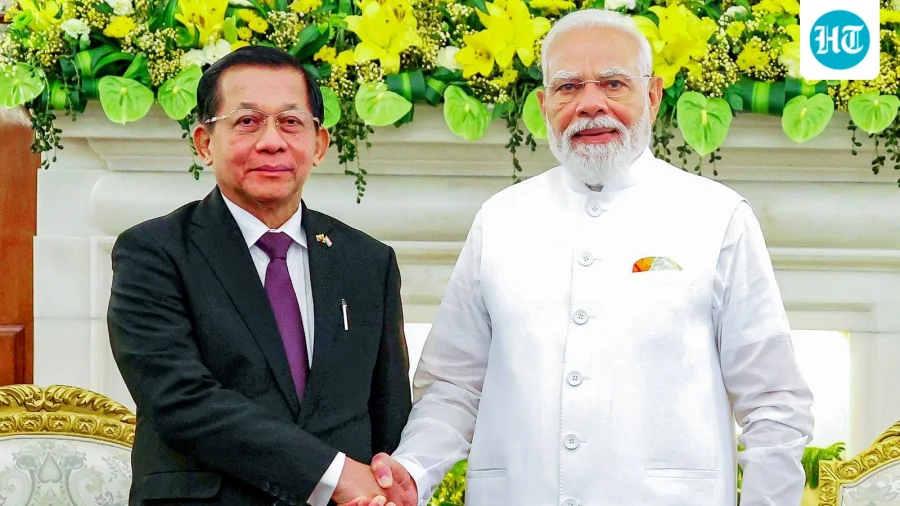
The meeting between PM Modi and Myanmar President U Min Aung Hlaing took place at Hyderabad House, the iconic venue for high-level diplomatic talks in New Delhi. The leaders were seen shaking hands and engaging in what officials described as “productive and forward-looking” discussions.
Aung Hlaing’s five-day visit to India is his first since becoming president after Myanmar’s elections. The trip includes meetings with other Indian officials and visits to key sites, but the Hyderabad House talks with PM Modi remain the centrepiece of the visit.
Who Is Affected and What Officials Are Saying
The outcome of these talks will have direct implications for people living along the India-Myanmar border, including communities in Manipur, Nagaland, and Mizoram. These regions have seen cross-border movement, trade, and occasional conflict, and any shift in bilateral relations could affect their daily lives.
Officials from both sides have described the meeting as “warm and constructive.” The Ministry of External Affairs (MEA) in New Delhi confirmed that the leaders discussed ways to enhance cooperation in security, trade, and development projects. Myanmar’s state media also highlighted the importance of the visit for strengthening bilateral ties.
“PM @narendramodi holds bilateral talks with Myanmar President U Min Aung Hlaing at Hyderabad House in New Delhi.” — AIR News Alerts
What We Know So Far — and What Remains Unclear
What we know: PM Modi and Myanmar President U Min Aung Hlaing met at Hyderabad House for bilateral talks. The discussions covered security, economic cooperation, and regional stability. Aung Hlaing is on a five-day visit to India, his first since becoming president.
What remains unclear: The specific agreements or outcomes from the meeting have not been fully disclosed. It is also unclear whether the talks addressed sensitive issues like the Rohingya crisis, border tensions, or China’s growing footprint in Myanmar. Observers are waiting for a joint statement or official readout from the MEA.
Risks, Concerns, and the Balanced View
While the meeting signals diplomatic engagement, it also comes with risks. Myanmar’s internal political situation remains fragile, and India must balance its strategic interests with concerns about human rights and democratic governance. Critics argue that engaging with Myanmar’s current leadership could be seen as legitimising a regime that has faced international criticism.
On the other hand, proponents of the engagement say that isolating Myanmar would only push it closer to China, which would be far more damaging for India’s interests. The Modi government’s approach appears to be pragmatic: maintain dialogue while pushing for stability and cooperation.
Bull vs Bear view: Optimists see this meeting as a step towards deeper India-Myanmar ties, with potential benefits for trade, security, and regional connectivity. Pessimists warn that without addressing core issues like border security and democratic reforms, the relationship could remain fragile.
Why Similar Diplomatic Engagements Are Growing in Importance
India’s diplomatic outreach to Myanmar is part of a broader trend. As China expands its influence across Southeast Asia, India has been stepping up its engagement with neighbouring countries. From hosting ASEAN leaders to signing connectivity projects, New Delhi is trying to reassert its role as a regional power.
The Hyderabad House meeting is not an isolated event. It reflects a pattern of high-level diplomacy aimed at securing India’s eastern flank and countering China’s Belt and Road Initiative (BRI). Similar talks have been held with leaders from Bangladesh, Sri Lanka, and Nepal in recent months.
- Myanmar shares a 1,643 km border with India, making it a critical neighbour for security and trade.
- India has invested in several development projects in Myanmar, including the Kaladan Multi-Modal Transit Transport Project.
- China is Myanmar’s largest trading partner and investor, creating a strategic challenge for India.
What Readers, Investors, and Regional Observers Should Know Now
For those following India-Myanmar relations, the key takeaway is that India is actively working to maintain its influence in Myanmar despite regional competition. Investors and businesses should watch for any announcements on trade agreements or infrastructure projects that could emerge from this visit.
For residents of India’s northeastern states, the talks could lead to better border management and reduced cross-border tensions. However, the lack of transparency on specific outcomes means that the real impact may only become clear in the coming weeks.
What Could Happen Next
Following the Hyderabad House meeting, both sides are expected to issue a joint statement outlining areas of cooperation. Future visits by Indian officials to Myanmar are also likely, as both nations work to implement any agreements reached during the talks.
In the longer term, the success of this engagement will depend on whether India can offer Myanmar a compelling alternative to Chinese investment and influence. If New Delhi can deliver on infrastructure projects and security cooperation, the Modi-Aung Hlaing meeting could mark the beginning of a stronger bilateral partnership.
Our Take: Why This Meeting Matters Beyond One Diplomatic Event
The PM Modi-Myanmar President meeting at Hyderabad House is more than just a photo opportunity. It is a strategic move in a complex geopolitical chessboard where India, China, and Southeast Asian nations are all vying for influence. For India, maintaining a stable and cooperative relationship with Myanmar is not optional — it is essential for national security and regional leadership.
While the meeting may not resolve all the challenges in the bilateral relationship, it keeps the door open for dialogue and cooperation. In a region where silence can be costly, talking is always the better option.
FAQs
Why did PM Modi meet Myanmar President Aung Hlaing at Hyderabad House?
PM Modi met Myanmar President U Min Aung Hlaing at Hyderabad House in New Delhi to discuss bilateral relations, including security cooperation, economic ties, and regional stability. The meeting is part of Aung Hlaing’s five-day visit to India, his first since becoming president.
What is the significance of the Hyderabad House meeting for India-Myanmar relations?
The meeting is significant because it signals India’s commitment to maintaining strong ties with Myanmar amid regional competition with China. It also addresses shared concerns like border security and trade connectivity, which are critical for India’s northeastern states.
What topics were discussed during the Modi-Aung Hlaing bilateral talks?
According to official sources, the talks covered security cooperation, economic collaboration, and regional stability. Specific details on agreements or outcomes have not been fully disclosed, but the discussions were described as productive and forward-looking.
How does this meeting impact India’s strategic position in Southeast Asia?
The meeting strengthens India’s diplomatic engagement with Myanmar, a key gateway to Southeast Asia. It helps counterbalance China’s growing influence in the region and supports India’s Act East policy, which aims to deepen ties with ASEAN countries.