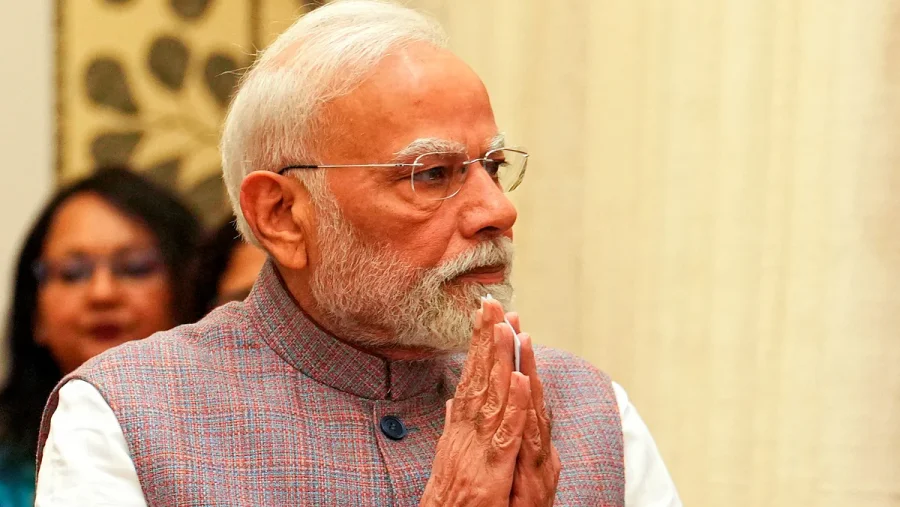
It was supposed to be a routine diplomatic visit. But when Prime Minister Narendra Modi landed in Norway and the Netherlands last week, something unexpected happened — and it wasn’t about trade deals or climate pacts. It was about a question that never got asked. Or rather, a question that was never allowed to be asked.
After a press briefing in Oslo, local journalists waited for the Prime Minister to take their questions. They waited in vain. The refusal sparked an “embarrassing stand-off,” according to the Editors Guild of India (EGI), which has now issued a stark warning: this wasn’t an isolated incident. It’s part of a decade-long pattern.
Editors Guild Calls Out a Decade of Silence
In a strongly worded statement released on Sunday, the Editors Guild of India said it was “deeply concerned” by the growing hostility toward media questioning. The Guild pointed out that PM Modi has not held a single open press conference — where journalists can ask unscripted questions — since taking office in 2014.
“The face-off with the European media was triggered by the Prime Minister's refusal to take questions from local journalists after a press briefing,” the statement read. The Guild argued that this behavior reflects a broader pattern of intolerance toward scrutiny and accountability within the Indian government.
Why This Matters Right Now
This isn’t just about one trip or one Prime Minister. The Editors Guild’s statement touches on a fundamental democratic principle: the right of the press to question those in power. When a leader refuses to engage with journalists — especially in a country that ranks low on global press freedom indices — it sends a signal that accountability is optional.
For Indian citizens, this matters because press freedom isn’t an abstract concept. It directly affects how much you know about your government’s decisions, policies, and failures. If the media can’t ask tough questions, the public can’t get honest answers.
How the Confrontation Unfolded
The trouble began during PM Modi’s visit to Norway, a country that consistently ranks among the top five in the World Press Freedom Index. Norwegian journalists, accustomed to direct access to their leaders, were reportedly taken aback when the Prime Minister declined to take questions after a joint press briefing with his Norwegian counterpart.
A similar scene played out in the Netherlands. In both cases, Indian officials reportedly intervened to prevent journalists from approaching the Prime Minister, leading to what the Guild described as “embarrassing stand-offs.”
The Guild drew attention to the irony: Norway, a country with one of the highest press freedom rankings in the world, was witnessing a leader from a country ranked much lower on the same index refusing to engage with the media.
Who Is Affected and What Officials Are Saying
The immediate impact is on the journalists who were denied the chance to ask questions. But the ripple effect is much wider. Indian journalists, who already face significant restrictions, see this as a validation of their concerns. The Editors Guild’s statement is a collective voice for hundreds of media professionals who feel their work is being undermined.
As of now, the Prime Minister’s office has not issued a formal response to the Guild’s statement. However, government officials have previously defended the Prime Minister’s media strategy, arguing that he engages with the public through other channels like rallies, social media, and town halls.
What We Know So Far — and What Remains Unclear
What we know:
- PM Modi has not held a single open press conference since 2014.
- During his recent Europe visit, he refused to take questions from local journalists in Norway and the Netherlands.
- The Editors Guild of India has publicly criticized this, calling it part of a pattern of hostility toward media scrutiny.
What remains unclear:
- Whether the government will respond to the Guild’s statement.
- Whether this will lead to any change in the Prime Minister’s media engagement strategy.
- How this incident might affect India’s already strained relationship with international press freedom organizations.
Risks, Concerns, and the Balanced View
Critics argue that the Prime Minister’s avoidance of open press conferences undermines democratic accountability. They point to global press freedom rankings where India has slipped in recent years, and say this incident is a symptom of a larger problem.
Supporters of the government, however, counter that PM Modi engages with the media in other ways — through interviews with select outlets, press releases, and his monthly radio address “Mann Ki Baat.” They argue that open press conferences are not the only measure of a leader’s transparency.
But the Editors Guild’s statement challenges this view directly. “Journalists have a democratic duty to question those in power,” the Guild said. “Refusing to engage with the press is not a sign of strength; it is a sign of fear of accountability.”
Why Similar Trends Are Growing
This incident is not happening in a vacuum. Over the past decade, several Indian governments — both at the center and in states — have been accused of curbing press freedom. From the use of sedition laws against journalists to the blocking of news websites, the trend has been consistent.
Internationally, India’s press freedom ranking has dropped significantly. In the 2025 World Press Freedom Index, India ranked 161st out of 180 countries, a sharp decline from its position a decade ago. The Editors Guild’s statement is a reminder that these rankings are not just numbers — they reflect real-world consequences for journalists and the public.
“The face-off with the European media was triggered by the Prime Minister's refusal to take questions from local journalists after a press briefing.” — Editors Guild of India statement
What Readers, Citizens, and Journalists Should Know Now
For ordinary citizens, this story is a reminder to question the information you receive. If leaders don’t face tough questions from journalists, how can you be sure you’re getting the full picture?
For journalists, the Guild’s statement is a call to solidarity. It urges media professionals to continue demanding accountability, even when the doors are closed.
For policymakers, the message is clear: press freedom is not a luxury. It is a cornerstone of democracy. Ignoring it doesn’t make the questions go away — it only makes them louder.
What Could Happen Next
The Editors Guild’s statement has already sparked debate on social media and in newsrooms. It is likely to be picked up by international media, further spotlighting India’s press freedom record.
Whether the government responds or not, the incident has added fuel to an ongoing conversation about the state of democracy in India. Some experts believe this could lead to increased scrutiny from global organizations like Reporters Without Borders and the Committee to Protect Journalists.
For now, the question remains: Will PM Modi ever hold an open press conference? The Editors Guild, and many others, are still waiting for an answer.
Our Take: Why This Story Matters Beyond One Incident
This isn’t just about a single trip or a single leader. It’s about the health of Indian democracy. When the head of government refuses to face unscripted questions from journalists — whether at home or abroad — it signals a discomfort with accountability that should concern every citizen.
The Editors Guild of India has done its duty by speaking out. Now, it’s up to the public to decide whether they want a leader who answers questions, or one who avoids them.
FAQs
Has PM Modi ever held an open press conference?
No. According to the Editors Guild of India, PM Modi has not held a single open press conference where journalists could ask unscripted questions since he became Prime Minister in 2014.
Why did the Editors Guild criticize PM Modi’s Europe visit?
The Guild criticized the Prime Minister for refusing to take questions from local journalists in Norway and the Netherlands after press briefings, calling it part of a broader pattern of hostility toward media scrutiny.
What does this mean for press freedom in India?
The incident highlights ongoing concerns about press freedom in India, which has slipped in global rankings. The Guild’s statement underscores the need for greater transparency and accountability from the government.
How have government officials responded to the criticism?
As of now, the Prime Minister’s office has not issued a formal response. However, government officials have previously defended the media strategy, citing other forms of public engagement like social media and town halls.