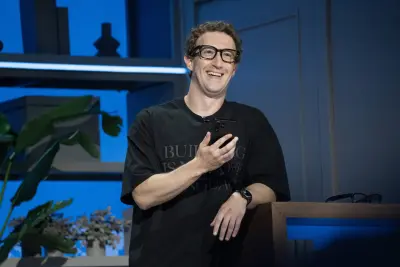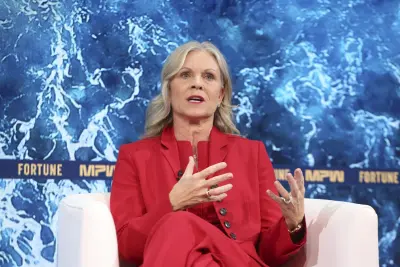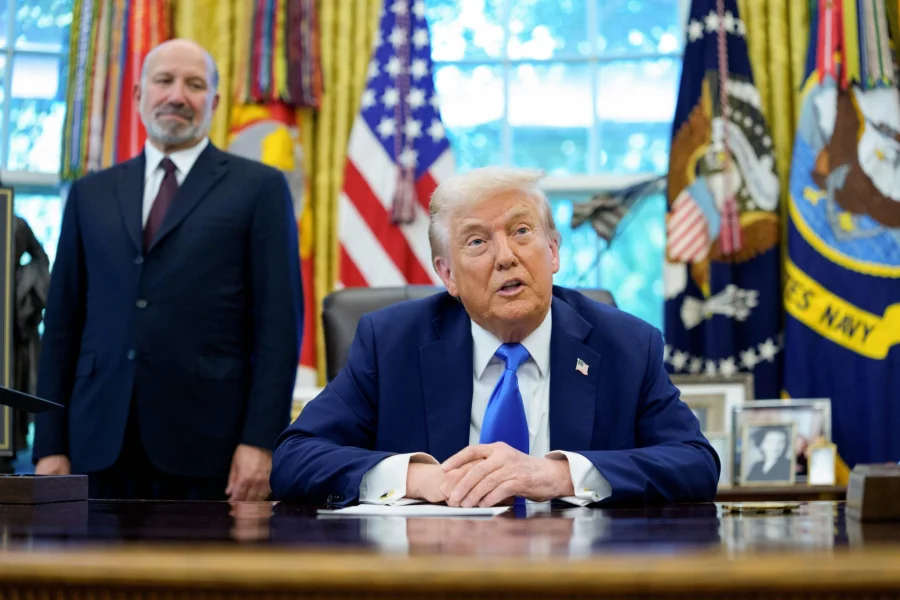
When President Donald Trump slapped a $100,000 fee on new H-1B visas last year, most of Silicon Valley braced for impact. But two CEOs didn’t flinch. Nvidia’s Jensen Huang told CNBC he was “glad to see President Trump making the moves he’s making.” OpenAI’s Sam Altman said aligning financial incentives around skilled immigration “seems good” to him.
Eight months later, that bet has split the tech industry in two — and a federal judge just upended the entire policy.
How the $100,000 fee reshaped H-1B filings
Nvidia’s certified H-1B applications rose 19% in the first quarter of 2026 compared with the same period last year, according to data reviewed by Fortune. OpenAI’s filings also climbed sharply. The companies that publicly supported the fee are now paying it — and paying it more than ever.
Meanwhile, Big Tech giants with far larger workforces — companies like Google, Meta, and Amazon — pulled back. The math was simple: at $100,000 per visa, the cost of hiring foreign talent became prohibitive at scale. For Nvidia and OpenAI, which compete fiercely for the world’s top AI researchers, the fee was a price worth paying.
Why AI companies see the fee as a bargain
For frontier AI companies, the calculus is different. A single top-tier AI researcher can generate millions in value. A $100,000 visa fee is a rounding error. “We need the smartest people,” Huang told CNBC at the time. “Immigration is key for the U.S. getting the brightest minds.”
Altman echoed the sentiment, framing the fee as a way to “outline financial incentives” for skilled immigration. The message was clear: these companies would pay whatever it took to win the global war for AI talent.
The federal judge who struck it down
On Monday, a federal judge ruled that the $100,000 fee was an unlawful tax — not a legitimate visa processing fee. The decision effectively kills the policy, at least for now. The ruling came after a lawsuit challenged the fee’s legality, arguing that the Trump administration exceeded its authority.
The judge agreed, calling the fee a “tax in disguise” that Congress never authorized. The ruling is a major victory for tech companies that opposed the fee — and a validation for those that quietly reduced their H-1B filings.
Who benefits from the ruling
The immediate winners are Big Tech companies that scaled back foreign-worker hiring. With the fee gone, they can now accelerate recruitment without the $100,000 penalty. But the ruling also benefits Nvidia and OpenAI — they can now hire even more aggressively, without the added cost.
For Indian tech workers, who make up the largest share of H-1B recipients, the ruling removes a significant financial barrier. Many had faced uncertainty as companies weighed the cost of sponsorship. Now, the path to U.S. employment is clearer — at least for now.
What Nvidia and OpenAI said — then and now
Huang’s and Altman’s public support for the fee was unusual. Most tech leaders quietly opposed it. But both CEOs framed it as a strategic move: pay more upfront to secure the best talent, while signaling alignment with the administration’s immigration goals.
Neither CEO has commented publicly since the judge’s ruling. But the data speaks for itself. Their companies’ H-1B filings surged even with the fee in place. The question now is whether they will accelerate further without it.
Confirmed facts vs what remains unclear
Confirmed: Nvidia’s certified H-1B applications rose 19% in Q1 2026. OpenAI’s filings also increased. Both CEOs publicly supported the $100,000 fee. A federal judge struck down the fee on Monday, calling it an unlawful tax.
Unclear: Whether the ruling will be appealed. How quickly Big Tech will resume H-1B hiring. Whether the Trump administration will introduce a new fee structure. The exact number of OpenAI’s H-1B filings — the company has not disclosed them publicly.
Why Nvidia and OpenAI could afford to pay
Nvidia’s market cap has soared past $3 trillion, driven by insatiable demand for its AI chips. OpenAI, valued at over $300 billion, is burning cash but raising capital at a staggering pace. For both companies, a $100,000 fee per visa is a fraction of the cost of losing a top researcher to a competitor.
Their moat is talent. Nvidia’s hardware advantage depends on the world’s best chip designers. OpenAI’s lead in large language models depends on the world’s best AI scientists. Both are willing to pay a premium — in visa fees, salaries, and stock — to keep that edge.
Risks and balanced view
Critics argue that the fee was a regressive policy that hurt smaller startups and mid-sized companies, which cannot absorb the cost. The divide between frontier AI companies and everyone else has only widened. Some also question whether the CEOs’ public support was genuine or a calculated move to avoid political backlash.
Others point out that the fee did little to address the root problem: the H-1B cap remains at 85,000 visas per year, far below demand. Even with the fee gone, the lottery system still leaves thousands of skilled workers in limbo.
A wider pattern: the AI talent war
The H-1B fee debate is just one front in a global battle for AI talent. Countries like Canada, the UK, and Singapore are aggressively courting researchers with fast-track visas and tax breaks. The U.S. remains the top destination, but the margin is shrinking.
Nvidia and OpenAI’s willingness to pay the fee signals how high the stakes are. If the U.S. makes it harder to hire foreign talent, the best minds will go elsewhere — and the companies that depend on them will follow.
What this means for Indian tech workers
For Indian professionals, the ruling is a relief. The $100,000 fee had made H-1B sponsorship cost-prohibitive for many employers. With the fee gone, more companies may resume filing. But the cap remains, and the lottery system still creates uncertainty.
If you are an Indian tech worker considering an H-1B, the immediate outlook is better — but the long-term picture depends on whether Congress reforms the system. For now, the best strategy is to target companies with a strong track record of H-1B filings, like Nvidia and OpenAI, which have shown they will pay whatever it takes.
What happens next
The ruling could be appealed by the Trump administration. If it stands, the fee is dead — but the administration may try to introduce a new fee structure through different legal channels. Congress could also step in with legislation that explicitly authorizes higher fees.
For now, the H-1B landscape is clearer than it was a week ago. But in the world of AI talent wars, clarity never lasts long.
Our Take
This story is not just about a visa fee. It is about the widening gap between the haves and have-nots in tech. Nvidia and OpenAI can afford to pay $100,000 per visa because they are winning the AI race. Smaller companies cannot. The judge’s ruling levels the playing field — but only until the next policy change.
The deeper question is whether the U.S. immigration system can keep pace with the AI revolution. The H-1B cap was set in 1990, when the internet was still a novelty. Until Congress updates it, companies will keep fighting over a fixed pool of talent — and the cost of entry will keep rising, one way or another.
Frequently Asked Questions
What was the $100,000 H-1B visa fee?
It was a fee imposed by the Trump administration on new H-1B visa applications, requiring employers to pay $100,000 per visa. A federal judge struck it down on Monday, calling it an unlawful tax.
Why did Nvidia and OpenAI support the fee?
Both CEOs publicly backed the fee, saying it aligned financial incentives with skilled immigration. They viewed it as a manageable cost to secure top AI talent, which is critical to their business.
How did the fee affect H-1B filings?
Nvidia’s certified H-1B applications rose 19% in Q1 2026. OpenAI’s filings also increased. In contrast, Big Tech companies with larger workforces reduced their filings due to the higher cost.
What does the judge’s ruling mean for Indian tech workers?
The ruling removes the $100,000 fee, making H-1B sponsorship more affordable for employers. However, the annual cap of 85,000 visas remains, so competition for spots will continue.
Can the Trump administration appeal the ruling?
Yes. The administration could appeal the decision or introduce a new fee structure through different legal channels. The long-term outcome remains uncertain.