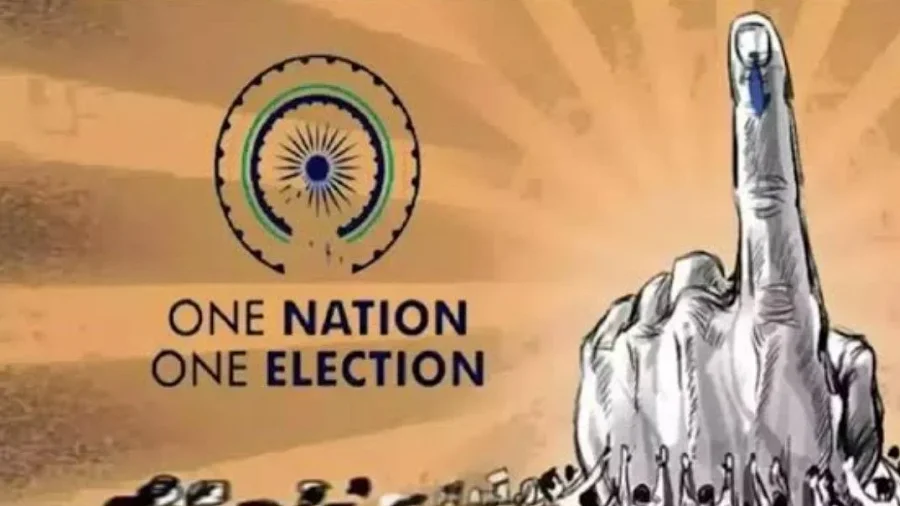
The Narendra Modi government's ambitious One Nation, One Election (ONOE) proposal could become a reality by 2029, according to the chairman of the joint parliamentary committee (JPC) examining the plan. The timeline, revealed on Friday, has ignited a fierce political battle, with Opposition parties warning that the move is a direct threat to India's federal structure and could decimate regional political forces.
JPC chairman sets 2029 target for simultaneous polls
Speaking to reporters on the sidelines of the JPC's two-day meeting in Goa, chairman P.P. Chaudhary said the panel was actively consulting stakeholders across the country to build a consensus on the proposed electoral reform. "The rollout is likely by 2029," Chaudhary stated, adding that the committee is working diligently to address concerns and gather support. He claimed that nearly 99 per cent of the civil society groups consulted so far had backed the idea, suggesting a broad base of support outside the political arena.
Why the 2029 timeline matters for Indian democracy
The proposed timeline is significant because it aligns with the next general election cycle. If implemented, ONOE would mean that voters across India cast their ballots for both the Lok Sabha and state assemblies on the same day, or in a phased manner within a short window. Proponents argue this would reduce election costs, improve governance, and end the cycle of perpetual campaigning. Critics, however, see it as a fundamental shift that could undermine the diversity of India's political landscape by making it harder for regional parties to compete against national behemoths like the BJP.
Opposition unites against what it calls a federal assault
The Opposition's response was swift and scathing. Representatives of the Congress, Goa Forward Party (GFP), and Aam Aadmi Party (AAP) appeared before the JPC and strongly opposed the proposal. They argued that ONOE would erode the federal principle that allows states to address local issues independently. "This is an attack on the very idea of India's diversity," a Congress leader said during the hearing. The Opposition's central argument is that simultaneous elections would nationalize state issues, forcing voters to choose based on national narratives rather than local governance records.
Even BJP allies fear a political wipeout, says Opposition
In a striking claim, Opposition leaders asserted that the fear of ONOE is not limited to their ranks. They alleged that even some allies of the ruling BJP are privately worried that the move could lead to a political wipeout for smaller, regional parties. "If elections are held simultaneously, regional parties will be crushed between the national machines of the BJP and Congress," an Opposition strategist said. This internal dissent, if true, could complicate the government's efforts to build the broad consensus needed for a constitutional amendment.
JPC's Goa meeting: A test of consensus-building
The two-day meeting in Goa is a critical step in the JPC's mandate to examine the constitutional and logistical implications of ONOE. The panel is hearing from a wide range of stakeholders, including political parties, election experts, and civil society groups. While Chaudhary highlighted the overwhelming support from civil society, the political opposition remains deeply entrenched. The committee's final report, expected later this year, will be a key document that could shape the future of Indian elections.
What the ONOE proposal actually entails
At its core, the One Nation, One Election proposal seeks to synchronize the electoral cycles of the Lok Sabha and all state legislative assemblies. Currently, elections are held at different times due to governments falling mid-term or being dissolved early. The government argues that this leads to a "permanent election mode" that hampers development. To implement ONOE, the government would need to amend the Constitution, which requires a two-thirds majority in both houses of Parliament and ratification by at least half of the state legislatures.
Confirmed facts vs what remains unclear
Confirmed: JPC chairman P.P. Chaudhary has stated that the ONOE rollout is likely by 2029. The JPC is holding consultations in Goa. Opposition parties including Congress, AAP, and GFP have opposed the proposal. Chaudhary claimed 99% of civil society groups support the idea.
Unclear: The exact legislative timeline for introducing the bill remains uncertain. The extent of opposition from BJP allies is based on claims from Opposition leaders and has not been independently verified. The specific constitutional amendments required and their exact content are still under discussion.
Why regional parties see an existential threat
For regional parties like the DMK, TMC, and AAP, ONOE represents an existential challenge. Their political strength often comes from focusing on state-specific issues like water sharing, local infrastructure, or regional identity. In a simultaneous election, these issues could be overshadowed by national debates on leadership, security, and economic policy—areas where national parties have a clear advantage. This could lead to a consolidation of votes around the two major national alliances, squeezing out smaller players.
Risks and balanced view: The case for and against ONOE
Supporters argue: ONOE will reduce the massive expenditure on frequent elections, free up administrative resources, and allow governments to focus on long-term policy without the distraction of constant polls. They also point to the logistical efficiency of deploying security forces and electronic voting machines once every five years.
Critics counter: The move is logistically nightmarish, requiring a massive number of EVMs and security personnel. More fundamentally, they argue it undermines federalism by making state elections a sideshow to the national contest. There are also concerns about what happens if a state government falls mid-term—would President's Rule become the norm?
Wider trend: A global shift towards electoral efficiency?
India is not alone in considering simultaneous elections. Countries like South Africa and Sweden already hold all elections on the same day. However, these are unitary states, not a vast federal democracy like India. The debate in India is therefore unique, balancing the desire for efficiency against the need to protect regional voices. The outcome of this debate will be closely watched by other large democracies grappling with similar issues.
What voters and citizens should watch for next
For the average Indian voter, the ONOE debate may seem abstract, but its implications are deeply personal. It will determine how often you go to the polls, which issues dominate the campaign, and who represents you in state and national legislatures. Citizens should pay attention to the JPC's final report and the subsequent parliamentary debate. Engaging with local MPs and MLAs on this issue is one way to ensure that diverse voices are heard.
Future outlook: What happens next in the ONOE journey
The immediate next step is the completion of the JPC's consultations and the submission of its report. If the report recommends proceeding, the government will need to introduce a constitutional amendment bill. Given the need for a two-thirds majority and state ratification, the path to 2029 is fraught with political hurdles. The timeline could slip if consensus proves elusive, or if the government decides to prioritize other legislative business.
Our Take
The One Nation, One Election debate is a classic clash between efficiency and federalism. While the idea of reducing election frequency has merit, the concerns raised by regional parties cannot be dismissed lightly. India's strength lies in its diversity, and any electoral reform must ensure that local voices are not drowned out by national narratives. The JPC's work is crucial, but the ultimate test will be whether the government can build a genuine consensus—not just a numerical majority. A rushed or forced implementation could do more harm than good to the democratic fabric.
Frequently Asked Questions
What is the One Nation, One Election proposal?
It is a proposal to hold elections for the Lok Sabha and all state legislative assemblies simultaneously, so that voters cast their ballots for both levels of government on the same day or in a short, synchronized period.
When could ONOE be implemented?
JPC chairman P.P. Chaudhary has indicated that the rollout is likely by 2029, pending the completion of consultations, a constitutional amendment, and ratification by state legislatures.
Why are Opposition parties against ONOE?
Opposition parties argue that ONOE would erode federalism by nationalizing state issues, making it harder for regional parties to compete. They also warn of logistical challenges and the risk of frequent President's Rule in states.
What is the JPC's role in this process?
The Joint Parliamentary Committee is tasked with examining the constitutional, legal, and logistical aspects of the ONOE proposal. It is consulting stakeholders and will submit a report to Parliament with its recommendations.