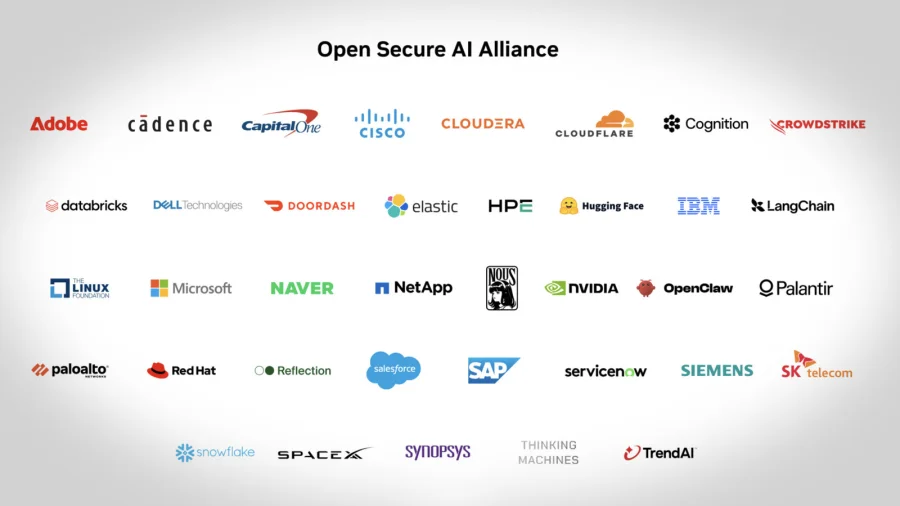
NVIDIA is assembling some of the world's largest technology companies under a new banner — the Open Secure AI Alliance — with a singular mission: to transform how organizations defend against cyber threats using artificial intelligence. The initiative signals a growing recognition that AI systems themselves need protection, even as they become powerful tools for security.
What the Open Secure AI Alliance aims to achieve
The alliance is designed to create open standards, frameworks, and tools that help enterprises secure their AI deployments while also leveraging AI to detect and respond to cyberattacks more effectively. By bringing together competitors and collaborators, NVIDIA hopes to establish a unified approach to AI security that benefits the entire industry.
This is not just about protecting NVIDIA's own technology. The initiative is explicitly open — meaning the tools and standards developed will be available to the broader cybersecurity community. That openness is critical, experts say, because cyber threats evolve faster than any single company can address alone.
Why this matters for enterprise security now
Cyberattacks are becoming more sophisticated, with adversaries increasingly using AI to automate attacks, evade detection, and exploit vulnerabilities faster than human defenders can respond. At the same time, AI systems themselves present new attack surfaces — from model poisoning to adversarial inputs that trick algorithms into making wrong decisions.
For Indian enterprises, which are rapidly adopting AI across banking, healthcare, manufacturing, and government services, this initiative could provide much-needed guardrails. The absence of standardized AI security practices has left many organizations vulnerable, unsure how to protect their AI investments.
How the alliance came together
NVIDIA has been building its cybersecurity credentials for years, with its GPUs powering AI workloads in security operations centers worldwide. The company's CUDA platform and AI frameworks are already used by cybersecurity firms to build threat detection models. The Open Secure AI Alliance formalizes and expands this ecosystem.
The initiative brings together hardware makers, cloud providers, cybersecurity firms, and enterprise software companies. While the full member list has not been detailed in available information, the scale of participation suggests broad industry support for a coordinated approach to AI security.
Who stands to benefit most
Enterprise security teams are the primary beneficiaries. They currently face a fragmented landscape of AI security tools, with no common standards for evaluating or deploying AI-based defenses. The alliance aims to change that by providing reference architectures, testing frameworks, and shared threat intelligence.
Small and medium businesses could also gain, as open-source tools lower the barrier to entry for advanced AI security capabilities that were previously available only to large corporations with deep pockets.
NVIDIA's role and industry response
NVIDIA is positioning itself as the convening force, leveraging its unique position at the intersection of AI hardware, software, and ecosystem development. The company has a track record of building open platforms — from CUDA to RAPIDS — that have become industry standards.
Industry analysts view the move as strategically important. By leading the alliance, NVIDIA strengthens its role in enterprise AI while addressing a critical pain point for customers. The initiative also helps NVIDIA differentiate its platform in an increasingly competitive AI hardware market.
What this means for the future of AI security
The Open Secure AI Alliance represents a shift from proprietary, siloed security approaches to collaborative, open frameworks. This mirrors earlier industry movements in cloud security and open-source software, where shared standards ultimately made the entire ecosystem stronger.
However, the success of the alliance will depend on adoption. Open standards only work if organizations actually implement them. NVIDIA and its partners will need to invest in education, documentation, and community building to ensure the tools are practical and widely used.
Confirmed facts vs what remains unclear
Confirmed: NVIDIA has launched the Open Secure AI Alliance with multiple major tech companies. The initiative focuses on improving cybersecurity through AI and open standards. The alliance is designed to be open and collaborative.
Unclear: The complete list of founding members has not been publicly detailed in available sources. Specific tools, timelines, and deliverables have not been announced. The exact governance structure of the alliance remains unspecified.
Risks and balanced view
Industry-wide alliances can face challenges. Competing companies may struggle to share sensitive threat intelligence. Open standards can take years to develop and may not keep pace with rapidly evolving threats. There is also the risk that the alliance becomes a marketing exercise rather than producing meaningful security improvements.
Critics might question whether NVIDIA's leadership creates a conflict of interest — could the standards favor NVIDIA's hardware or software ecosystem? The company has pledged openness, but the proof will be in the implementation.
Wider trend: Industry collaboration on AI safety
The Open Secure AI Alliance joins a growing list of industry collaborations focused on AI safety and governance. From the Partnership on AI to various government-led initiatives, there is increasing recognition that AI's risks require collective action. This alliance specifically targets the cybersecurity dimension, which has received less attention than AI ethics or bias.
What organizations should do now
Enterprise security leaders should monitor the alliance's developments closely. Early adopters of the open standards and tools may gain a competitive advantage in securing their AI deployments. Organizations already using NVIDIA's AI platforms are likely to find the most immediate value.
For Indian CISOs and security teams, this initiative offers an opportunity to participate in shaping global AI security practices. Engaging with the alliance's community and providing feedback on real-world use cases could help ensure the tools work in diverse environments.
What happens next
The alliance is expected to announce specific projects, working groups, and initial deliverables in the coming months. Technical documentation, reference implementations, and community forums will likely follow. The pace of progress will signal whether this is a genuine collaborative effort or a slower-moving industry group.
Our Take
The Open Secure AI Alliance addresses a genuine and growing need. AI security is too complex and too important for any single company to solve alone. NVIDIA's willingness to lead an open initiative rather than build a proprietary solution is encouraging. But the real test will be execution — whether the alliance produces tools that security teams actually use, and whether it can maintain momentum as AI threats evolve. For now, this is a positive step toward a more secure AI future, but the work is just beginning.
Frequently Asked Questions
What is the NVIDIA Open Secure AI Alliance?
It is a collaborative initiative led by NVIDIA, bringing together major technology companies to develop open standards, tools, and frameworks for improving cybersecurity using artificial intelligence. The alliance aims to both secure AI systems and use AI to defend against cyber threats.
Why did NVIDIA create this alliance?
NVIDIA recognized that AI security requires industry-wide collaboration. Cyber threats are evolving rapidly, and no single company can address them alone. By creating an open alliance, NVIDIA hopes to establish shared standards that benefit the entire cybersecurity ecosystem.
Who can join the Open Secure AI Alliance?
The alliance is designed to be open, meaning other organizations can participate. While initial members include major tech companies, the specific membership criteria and joining process have not been fully detailed in available information.
How will this affect enterprise cybersecurity?
If successful, the alliance will provide enterprises with open-source tools, best practices, and reference architectures for AI security. This could lower costs, improve threat detection, and help organizations protect their AI investments more effectively.