In a move that feels more like a geopolitical earthquake than a corporate announcement, Nvidia CEO Jensen Huang has declared that his company will invest a staggering $150 billion every year to keep Taiwan at the very heart of the AI revolution. The announcement, made in Taipei on Wednesday, is a direct and powerful rebuke to former President Donald Trump's ambitious plan to turn the United States into the world's dominant AI manufacturing hub. For millions watching the global tech race, the message is clear: Taiwan is not just irreplaceable — it's the engine room of the future.
Why This $150 Billion Bet on Taiwan Matters Right Now
This isn't just about one company's spending. It's about the future of artificial intelligence, global supply chains, and national security. For years, the US has tried to reduce its dependence on Taiwan for advanced chip manufacturing, especially amid rising tensions with China. Trump's "Make America an AI Hub" plan was the most aggressive push yet. But Nvidia's massive investment signals that, for the foreseeable future, the most critical parts of the AI supply chain — from chip design to packaging to supercomputer assembly — will remain firmly rooted in Taiwan. This has profound implications for American jobs, technological sovereignty, and the balance of power in the tech world.
How the Announcement Unfolded
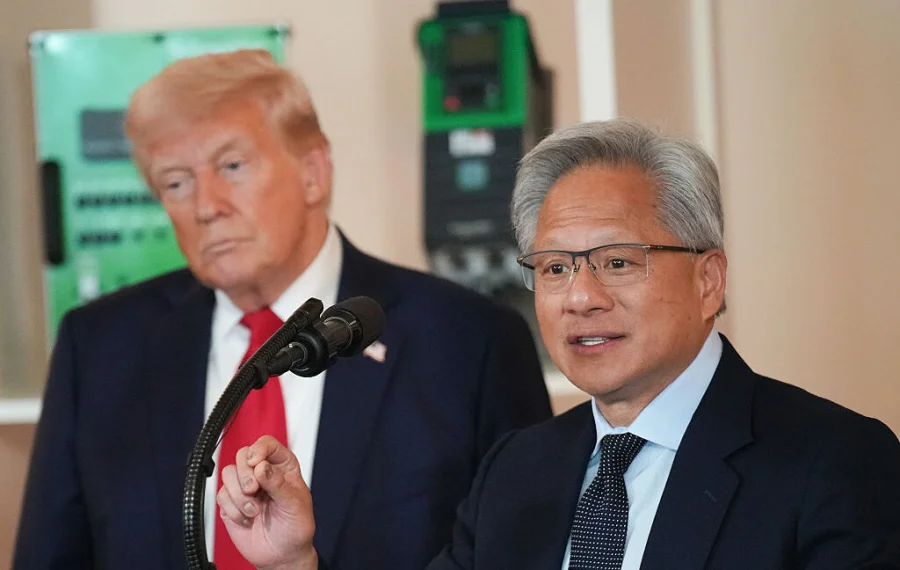
Speaking at a packed event in Taipei, Jensen Huang didn't mince words. "This is where the chips come, packaging comes, this is where the systems are made, this is where AI supercomputers were created," he said, according to Reuters. The $150 billion annual investment will fund a sprawling new Nvidia headquarters in Taiwan, designed to be the nerve center of the company's global AI operations. Huang emphasized the "incredible" number of partners Nvidia works with on the island, painting a picture of an ecosystem so deeply integrated that it cannot be easily replicated elsewhere.
Who Is Affected and What Officials Are Saying
The immediate impact is felt by everyone from American policymakers to Taiwanese factory workers. For the US, it's a stark reality check. Trump's vision of a self-sufficient American AI manufacturing base now looks more distant than ever. For Taiwan, it's a massive vote of confidence, but also a potential target. The island's central role in the global tech economy makes it an even bigger geopolitical prize. Taiwanese officials have welcomed the investment, seeing it as a lifeline for their economy and a shield against Chinese pressure. Meanwhile, US officials have expressed disappointment, with some calling for even stronger incentives to bring manufacturing home.
What We Know So Far — and What Remains Unclear
What we know: Nvidia will invest $150 billion annually in Taiwan. The money will fund a new headquarters and expand existing operations. Jensen Huang has explicitly stated that Taiwan will remain the "epicenter" of the AI revolution. What remains unclear: How this investment will affect Nvidia's existing operations in the US and other countries. It's also unknown whether the US government will respond with new tariffs, subsidies, or other measures to counter this trend. The long-term impact on US-Taiwan relations and the broader chip war with China is also uncertain.
Risks, Concerns, and the Balanced View
While the investment is a huge win for Taiwan, it carries significant risks. Geopolitical tensions could disrupt operations at any time. A Chinese blockade or invasion would cripple the global AI industry overnight. Critics also argue that Nvidia's decision is a blow to American workers and national security, making the US dangerously dependent on a single, vulnerable location. On the other hand, supporters of the move say it's simply a rational business decision. Taiwan has the talent, infrastructure, and supply chain that no other country can match right now. Trying to force a move to the US would be inefficient and could slow down AI innovation globally.
Why Similar Trends Are Growing
Nvidia's move is part of a larger pattern. Despite years of talk about "reshoring" chip manufacturing, the reality is that the most advanced semiconductor production remains concentrated in Taiwan and South Korea. The complexity of building a chip ecosystem — from raw materials to specialized machinery to skilled engineers — is immense. Companies like TSMC, Samsung, and now Nvidia are finding that it's easier and more profitable to double down on existing hubs rather than try to build new ones from scratch. This trend is likely to continue unless governments offer truly transformative incentives.
- Nvidia's investment is the largest single corporate commitment to Taiwan's tech sector.
- The new headquarters is expected to create thousands of high-skilled jobs in Taiwan.
- The announcement comes just weeks after the US government unveiled new subsidies for domestic chip manufacturing.
"This is where the chips come, packaging comes, this is where the systems are made, this is where AI supercomputers were created." — Jensen Huang, Nvidia CEO, as reported by Reuters
What Investors and Tech Enthusiasts Should Know Now
For investors, this is a clear signal that Nvidia's future is tied to Taiwan. Any geopolitical risk in the region should be factored into investment decisions. For tech enthusiasts, it means that the most cutting-edge AI hardware will continue to come from Taiwan for the foreseeable future. For policymakers, it's a wake-up call: if the US wants to be the AI hub, it needs to offer more than just rhetoric. It needs to build an ecosystem that can compete with what Taiwan has spent decades creating.
What Could Happen Next
Expect the US government to respond with a mix of pressure and incentives. There may be new tariffs on chips made in Taiwan, or expanded subsidies for domestic fabs. Nvidia may also face political backlash from American lawmakers who see this as a betrayal of national interests. In the long term, the US could accelerate its own chip-building efforts, but it will take years, if not decades, to catch up. Meanwhile, Taiwan's position as the AI manufacturing capital of the world is now more secure than ever.
Our Take: Why This Story Matters Beyond One Investment
This is not just a business story. It's a story about the limits of political power in the face of economic reality. Trump's plan to make the US an AI hub was bold, but it underestimated the sheer depth and complexity of Taiwan's tech ecosystem. Nvidia's $150 billion bet is a reminder that in the global race for AI supremacy, the most valuable asset isn't just money or policy — it's the decades of accumulated expertise, trust, and infrastructure that places like Taiwan have built. The US can either learn from this or keep fighting a losing battle.
FAQs
Why is Nvidia investing so much money in Taiwan?
Nvidia is investing $150 billion annually in Taiwan because the island has the world's most advanced chip manufacturing, packaging, and assembly ecosystem. CEO Jensen Huang believes Taiwan is irreplaceable for the AI industry's short-term and long-term goals.
How does this affect Trump's plan to make the US an AI hub?
This investment directly undermines Trump's plan by keeping the most critical parts of the AI supply chain in Taiwan. It shows that, despite political pressure, the private sector sees Taiwan as the most efficient and reliable location for AI manufacturing.
Is this investment risky for Nvidia given tensions with China?
Yes, it carries significant geopolitical risk. Any conflict in the Taiwan Strait could disrupt Nvidia's operations. However, the company believes the benefits of Taiwan's ecosystem outweigh the risks, and it is likely taking steps to diversify its supply chain over the long term.
What does this mean for the future of AI chip manufacturing?
It means that Taiwan will remain the dominant force in AI chip manufacturing for the foreseeable future. Other countries, including the US, will struggle to compete unless they make massive, sustained investments in building similar ecosystems from scratch.