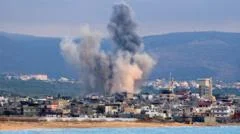
Thousands of families in southern Lebanon are now fleeing their homes after the Israeli military issued a sweeping evacuation order, declaring large areas south of the Zahrani River as active combat zones. The directive, which warns of imminent and intensified strikes against Hezbollah, has triggered a wave of panic and displacement across the region. For the civilians caught in the middle, the question is no longer about politics — it's about survival.
Israel Declares Southern Lebanon Combat Zones — What the New Evacuation Order Means
The Israeli military has officially designated areas south of the Zahrani River as "combat zones," ordering all remaining residents to evacuate immediately. According to reports, the directive specifically targets towns and villages in southern Lebanon, including the city of Nabatiyeh. Residents have been told to move north of the Litani River, with some orders specifying the Zahrani River as the boundary. This is one of the most extensive evacuation orders issued since the conflict with Hezbollah escalated, signaling that Israel is preparing for a significant military operation in the region.
Why This Matters Right Now
This evacuation order is not a routine warning. It represents a dramatic escalation in the Israel-Hezbollah conflict, with potentially devastating consequences for hundreds of thousands of civilians. The declaration of combat zones means that anyone remaining in these areas could be considered at extreme risk from airstrikes, ground operations, or crossfire. For the international community, this raises urgent questions about humanitarian access, civilian protection, and the risk of a broader regional war. For the people of southern Lebanon, it means leaving behind homes, livelihoods, and everything familiar — often with nowhere certain to go.
How the Evacuation Order Unfolded
The evacuation order was issued on Wednesday, March 4, 2026, as the Israeli military warned residents to immediately leave a swathe of south Lebanon. The directive was communicated through official military channels, social media, and local announcements. The areas affected include towns and villages south of the Zahrani River, a region that has seen intense fighting in recent weeks. The order comes amid a series of five forced evacuation orders issued by the IDF in southern Lebanon, signaling that a major operation could be imminent. The escalation follows months of cross-border skirmishes and rocket fire between Israel and Hezbollah, which have already displaced tens of thousands on both sides of the border.
Who Is Affected and What Officials Are Saying
The primary victims of this order are the civilian populations of southern Lebanon — families, farmers, shopkeepers, and elderly residents who have lived in these towns for generations. The city of Nabatiyeh, a major population center, is directly in the path of the evacuation zone. According to reports, the Israeli military has warned of fresh strikes against Hezbollah positions in these areas, but the civilian toll is already mounting. Local officials in Lebanon have condemned the order as a form of collective punishment, while international aid agencies have expressed deep concern about the humanitarian impact. The Israeli military has stated that the order is necessary to protect civilians from the dangers of combat zones, but critics argue that it amounts to forced displacement.
What We Know So Far — and What Remains Unclear
What we know: The Israeli military has officially declared areas south of the Zahrani River as combat zones. Residents have been ordered to evacuate north of the Litani River. The order affects multiple towns and villages, including Nabatiyeh. The IDF has issued five forced evacuation orders in southern Lebanon, indicating a potential major operation.
What remains unclear: The exact number of civilians affected by this order is not yet known. The timeline for the expected military operation is uncertain. It is unclear how long the evacuation order will remain in effect, or whether it will expand to include additional areas. The international response, including potential humanitarian corridors or ceasefire efforts, is still developing.
Risks, Concerns, and the Balanced View
The risks of this evacuation order are immense. For civilians, the immediate danger is from airstrikes, artillery fire, and potential ground combat. Those who cannot evacuate — the elderly, the sick, the disabled — face the highest risk. There are also concerns about the long-term displacement of entire communities, with many families having nowhere to go and limited resources. From a military perspective, Israel argues that the order is necessary to degrade Hezbollah's capabilities and prevent rocket attacks on Israeli civilians. Critics, however, warn that such broad evacuation orders could be seen as a precursor to a larger ground invasion, which could destabilize the entire region. The humanitarian situation is already dire, with the United Nations warning of a growing crisis.
Why Similar Evacuation Orders Are Becoming More Common
This is not the first time Israel has issued mass evacuation orders in southern Lebanon, but the scale and urgency of this directive are notable. The pattern of declaring combat zones and ordering civilians to leave has become a recurring tactic in the conflict with Hezbollah. Analysts suggest that this approach is designed to clear the battlefield for more aggressive military action, but it also reflects the difficulty of fighting an entrenched militant group that operates within civilian areas. The broader trend is one of escalation, with each round of violence pushing the region closer to a full-scale war. For the people of southern Lebanon, this cycle of displacement and destruction has become a grim reality.
- The evacuation order covers areas south of the Zahrani River, a significant geographic expansion of previous warnings.
- The city of Nabatiyeh, a key urban center, is directly affected by the order.
- The IDF has issued five forced evacuation orders in southern Lebanon, signaling a potential major ground operation.
"Israel warned residents to immediately leave a swathe of south Lebanon on Wednesday, ordering them to move north of the Litani River on the..." — Reuters
What Civilians and the International Community Should Know Now
For civilians in the affected areas, the priority is safety. Anyone still in the evacuation zone should seek to move north of the Litani River as quickly as possible, following official guidance. For the international community, the focus must be on humanitarian access, providing shelter, food, and medical aid to displaced families. Diplomatic efforts to de-escalate the situation are critical, but the immediate need is to prevent a humanitarian catastrophe. Aid organizations are urging all parties to respect international law and protect civilians.
What Could Happen Next
The evacuation order strongly suggests that Israel is preparing for a significant military operation in southern Lebanon. This could include intensified airstrikes, artillery barrages, or even a ground incursion. The response from Hezbollah is likely to be fierce, potentially involving rocket attacks deeper into Israeli territory. The risk of a broader regional conflict, involving Iran and other proxies, remains high. Diplomatic efforts, including potential ceasefire negotiations, may intensify, but the immediate outlook is grim. For the people of southern Lebanon, the coming days and weeks will be a test of survival.
Our Take: Why This Evacuation Order Matters Beyond One Incident
This evacuation order is not just a tactical military decision — it is a human tragedy unfolding in real time. It represents the failure of diplomacy, the cost of endless conflict, and the suffering of ordinary people caught in the crossfire. For the world, it is a stark reminder that the Israel-Hezbollah conflict is far from over, and that the potential for a devastating regional war is very real. For the families fleeing their homes, it is a story of loss, fear, and uncertainty. This story matters because it is about human lives, not just political lines on a map.
FAQs
Why did Israel issue an evacuation order for southern Lebanon?
Israel declared areas south of the Zahrani River as combat zones and warned of fresh strikes against Hezbollah. The order is intended to clear civilians from areas where intense military operations are expected, to reduce the risk of civilian casualties.
Which areas are affected by the evacuation order in southern Lebanon?
The evacuation order covers towns and villages south of the Zahrani River, including the city of Nabatiyeh. Residents have been told to move north of the Litani River.
What should civilians in southern Lebanon do now?
Civilians in the affected areas should evacuate immediately and move north of the Litani River, following official guidance. They should seek shelter with family, friends, or in designated safe zones, and stay informed through reliable news sources.
Is a ground invasion in southern Lebanon likely after this evacuation order?
The evacuation order, along with the IDF issuing five forced evacuation orders, strongly suggests that Israel is preparing for a significant military operation, which could include a ground incursion. However, the exact nature and timing of any operation remain unclear.