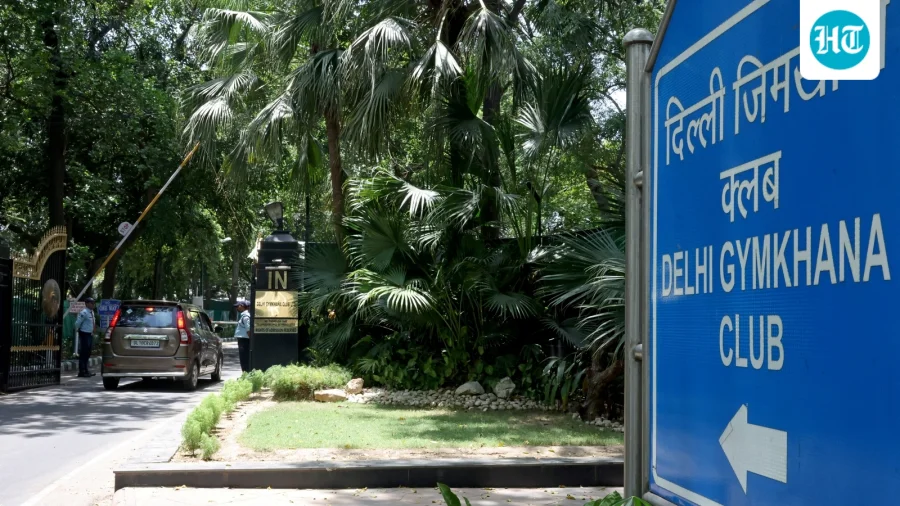
One of India's oldest and most exclusive clubs is fighting to keep its address. The Centre has told the Delhi High Court that its notice to the Delhi Gymkhana Club is not an acquisition — it is a "re-entry." The distinction matters, because it decides who gets to stay on a prime patch of Lutyens' Delhi.
What the Centre Told the Delhi High Court
The government's position is that the premises are needed for defence infrastructure, public security and governance requirements. According to the Centre, the notice is a re-entry into the property, not a takeover of a private institution.
That framing shifts the legal question from ownership to control — and it is the crux of the case now before the Delhi High Court.
Why a Club in Lutyens' Delhi Is a National Question
The Delhi Gymkhana Club sits on land in the heart of the capital, close to institutions tied to defence and administration. In that geography, land is never just land.
For the government, proximity to sensitive installations makes the site a security consideration. For members, it is a heritage institution built over more than a century.
How the Dispute Reached the High Court
The eviction notice triggered a legal challenge, and the matter moved to the Delhi High Court. In its reasoning, the court cited defence infrastructure, public security and governance needs for the premises.
The Centre's latest submission — that this is re-entry, not acquisition — is its attempt to place the notice within the framework of public interest rather than property transfer.
Who Is Actually Affected
The immediate impact falls on the club's members, its staff and the institution's day-to-day functioning. A change in possession would affect not just a membership list but livelihoods and decades of institutional memory.
Beyond the club, the case touches a wider question: how much say do private institutions have when the state cites security?
The Government's Stated Position
The Centre has anchored its argument in defence infrastructure, public security and governance. These are categories Indian courts have historically weighed carefully against private property rights.
The government has not framed the move as a land grab. Its language — re-entry — signals that it sees the action as restoring state control over premises it considers strategically relevant.
Reading the Legal Distinction: Re-Entry vs Acquisition
Acquisition usually implies a transfer of ownership, often with compensation and a defined legal process. Re-entry suggests the state is asserting a pre-existing right to the premises.
If the court accepts the re-entry framing, the club's legal room to resist narrows considerably. If it does not, the notice faces a harder test.
Confirmed Facts vs What Remains Unclear
Confirmed: The Centre has defended the notice as re-entry, not acquisition. The Delhi High Court cited defence infrastructure, public security and governance needs. The matter is before the High Court.
Unclear: The final outcome, the timeline for any possession change, and how members' interests will be addressed remain undecided. Any claim about compensation or a settlement at this stage is speculation.
Risks and the Balanced View
The government's case rests on security and governance — legitimate state concerns. Critics of such moves argue that "security" can become an elastic justification that is hard for private institutions to challenge.
Both readings can be true at once: the site may genuinely matter for defence, and the club may genuinely have a stake worth protecting. The court is being asked to weigh exactly that.
A Pattern Beyond One Club
This is not an isolated dispute. Across Indian cities, prime institutional land — clubs, trusts, societies — has increasingly drawn state attention when located near strategic or administrative zones.
The Delhi Gymkhana case could become a reference point for how such claims are tested in court.
What Members and Readers Should Watch
Watch the court's reasoning, not the headlines. The key question is whether the High Court accepts the re-entry framing or treats the notice as something closer to acquisition.
For members, the practical step is to follow the case through official court updates rather than unverified social media claims.
What Could Happen Next
The High Court's view on the notice will shape the next phase. A ruling favouring the Centre's framing would strengthen the government's position; a sceptical reading would push the matter toward deeper scrutiny.
Until then, the club remains at the centre of a legal argument about what the state can claim — and on what grounds.
Our Take
The word "re-entry" is doing a lot of work here. It reframes a contested eviction as a routine assertion of state control. Whether that holds depends entirely on how the Delhi High Court reads the security and governance claims against the club's rights. This is a case about language as much as land.
Frequently Asked Questions
Is the government acquiring the Delhi Gymkhana Club?
No. The Centre has told the Delhi High Court that the notice is a "re-entry," not an acquisition. The distinction is central to the case.
Why does the government want the premises?
The Centre cited defence infrastructure, public security and governance needs for the location in Lutyens' Delhi.
Which court is hearing the matter?
The Delhi High Court, which cited defence infrastructure, public security and governance needs while hearing the case.
What happens to club members now?
Nothing is final yet. The outcome depends on the High Court's view of the notice, and members' interests remain part of the broader legal question.