The White House meeting was supposed to produce a final answer. Instead, it ended with more uncertainty.
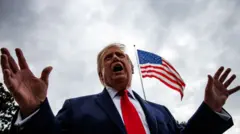
President Donald Trump convened his top national security advisers in the Situation Room on Friday, promising to make a "final determination" on a potential agreement with Iran. But after two hours of discussion, the president left without announcing a decision — leaving a three-month-old conflict hanging in the balance.
The outcome, or lack of one, has immediate consequences. A tentative framework for a deal had reportedly been agreed upon by U.S. and Iranian negotiators. But that framework now needs Trump's personal endorsement to move forward. And that endorsement did not come.
Why This Matters Right Now
This is not a routine delay. The Iran war has been running for three months, with significant human and economic costs. A deal — even a preliminary one — would represent a major shift. The fact that Trump walked out of his own "final determination" meeting without a decision suggests deeper divisions or unresolved conditions.
Trump himself laid out two non-negotiable demands on Truth Social: Iran "must agree" to never possess a nuclear weapon, and the Strait of Hormuz must be "immediately open" to unrestricted shipping. These are high bars, and the lack of a decision signals that the tentative framework may not fully satisfy them.
For global markets, energy prices, and regional stability, the uncertainty is the story. Every day without a decision prolongs the conflict and keeps the region on edge.
How the Situation Developed
The meeting was announced earlier in the day, with Trump stating he would be making his "final determination" during the White House session. The venue — the Situation Room — underscored the gravity of the discussion.
But when the meeting ended, there was no statement, no announcement, no thumbs-up or thumbs-down. A White House official, speaking on condition of anonymity, indicated that the president still has concerns with the tentative agreement brokered by U.S. and Iranian negotiators.
The official reiterated Trump's long-standing position: Iran must never possess a nuclear weapon. That red line appears to be the sticking point.
Who Is Affected and What Officials Are Saying
The immediate impact falls on the negotiators who crafted the tentative framework. They now face an uncertain wait. But the ripple effects extend much further.
Iranian leadership, regional allies like Israel and Saudi Arabia, and global energy markets are all watching closely. The Strait of Hormuz — a critical chokepoint for global oil shipments — remains a flashpoint. Trump's demand for its immediate reopening is a major condition that may be difficult to secure.
White House officials have not provided a timeline for when a final decision might come. The message from the administration is clear: the president is not satisfied yet.
What We Know So Far — and What Remains Unclear
What is confirmed:
- Trump held a two-hour meeting in the White House Situation Room on May 29.
- He did not announce a final determination on the Iran deal.
- A White House official confirmed the president still has concerns.
- Trump publicly demanded Iran never have a nuclear weapon and that the Strait of Hormuz be immediately opened.
What remains unclear:
- Whether a deal will ultimately be approved or rejected.
- What specific concerns Trump has with the tentative framework.
- When a final decision might come.
- What happens to the conflict in the meantime.
Risks, Concerns, and the Balanced View
The lack of a decision carries its own risks. Prolonged uncertainty can erode trust on both sides. Iranian negotiators may feel the U.S. is not serious. Hardliners in Tehran may use the delay to argue against any deal.
On the other hand, Trump's caution could be seen as prudent. A bad deal — one that does not fully address nuclear concerns or freedom of navigation — could be worse than no deal at all. The president's insistence on clear conditions may reflect a desire for a more robust agreement.
Critics, however, will point out that every day without a decision means the conflict continues. Lives are at stake. The humanitarian and economic toll is mounting.
Why Similar Trends Are Increasing
This pattern — high-stakes meetings followed by delayed decisions — is becoming more common in Trump's second term. The president has shown a willingness to keep adversaries and allies guessing, using uncertainty as a negotiating tool.
But the Iran situation is uniquely volatile. The combination of a nuclear program, regional proxy conflicts, and global energy dependence makes this one of the most consequential foreign policy decisions of the year.
"Iran must agree to never have a nuclear weapon, and the Strait of Hormuz must be immediately open to unrestricted shipping traffic." — President Donald Trump, on Truth Social
What Readers, Users, or Investors Should Know Now
For now, the situation remains fluid. No deal has been announced, but negotiations are not dead. The tentative framework still exists — it just lacks presidential approval.
Energy markets should brace for continued volatility. Any hint of a deal could send oil prices lower. Any escalation could push them higher.
For those following the story, the key variable is Trump's next move. Will he approve the framework with modifications? Reject it outright? Or continue to delay?
What Could Happen Next
Several scenarios are possible:
- Approval with conditions: Trump could approve the deal but attach additional demands, such as stricter verification measures.
- Rejection: The president could walk away entirely, leading to an escalation of the conflict.
- Further negotiations: The U.S. and Iran could go back to the table to address Trump's concerns.
- Continued delay: The administration could simply let the issue simmer without a clear decision.
Each path carries different risks and opportunities. The next few days will be critical.
Our Take: Why This Story Matters Beyond One Incident
This is not just about one meeting or one deal. It is about how the United States approaches complex foreign policy challenges in a volatile region. The Iran conflict has already lasted three months. Every delay in reaching a resolution prolongs the suffering and increases the risk of miscalculation.
Trump's caution may be justified, but the clock is ticking. The world is watching to see whether diplomacy can prevail — or whether the conflict will deepen.
For now, the answer remains unclear. And that uncertainty is the most dangerous outcome of all.
FAQs
Did Trump announce a final decision on the Iran deal?
No. President Trump ended a White House meeting on May 29 without announcing his "final determination" on a potential agreement with Iran.
What did Trump demand from Iran?
Trump stated on Truth Social that Iran must agree to never possess a nuclear weapon and that the Strait of Hormuz must be immediately opened to unrestricted shipping traffic.
What happens to the Iran war now?
The conflict continues. Without a final decision from Trump, the tentative framework agreed by negotiators cannot move forward, leaving the three-month-old war in limbo.
When will Trump make a final determination on Iran?
No timeline has been provided. A White House official indicated the president still has concerns with the tentative agreement, but no date for a follow-up decision has been announced.