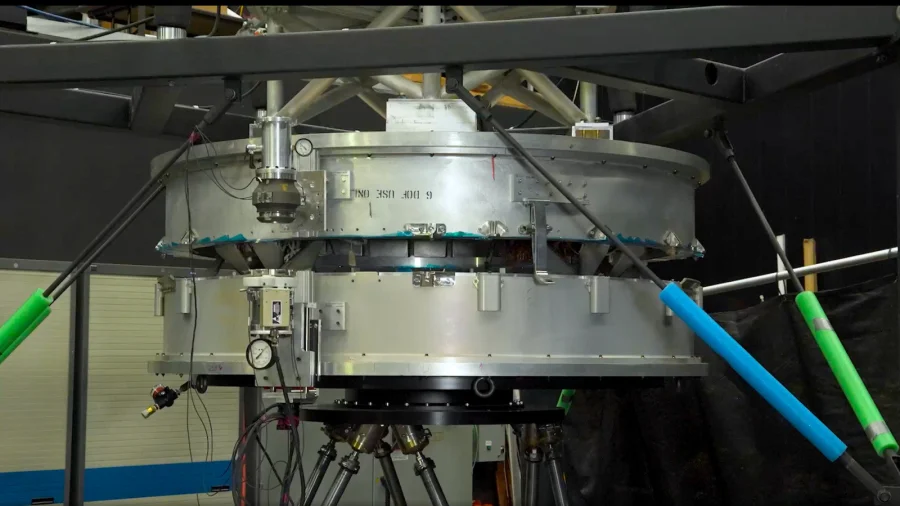
Imagine a gas station in space. That’s the vision NASA is testing with a new device called a cryocoupler, developed by L3Harris. This technology could one day allow spacecraft to refuel in orbit, unlocking the ability to travel farther—to the Moon, Mars, and beyond—without being limited by the fuel they launch with.
What is the Cryocoupler and How Does It Work?
The cryocoupler is designed to transfer cryogenic propellants—super-cold fuels like liquid hydrogen and oxygen—between spacecraft in orbit. Unlike traditional refueling on Earth, space presents unique challenges: the fuels must be kept at extremely low temperatures, and the transfer must happen in zero gravity. L3Harris developed the device to address these challenges, creating a leak-proof, temperature-controlled connection.
Why In-Orbit Refueling Matters for Deep Space Missions
Currently, spacecraft carry all their fuel from launch, which limits how far they can go. In-orbit refueling could change that. A spacecraft could launch with less fuel, then top up at an orbital depot before heading to the Moon or Mars. This reduces launch costs and enables longer missions. For NASA’s Artemis program, which aims to return humans to the Moon, and future Mars missions, this technology is seen as a game-changer.
How the Test Works: A Step-by-Step Look
NASA’s test involves using the cryocoupler to simulate refueling in a space-like environment. While specific details of the current test are limited, the device is being evaluated for its ability to handle the extreme temperatures and pressures of cryogenic propellants. Previous NASA missions, like the Robotic Refueling Mission (RRM), have demonstrated robotic refueling of satellites, but the cryocoupler focuses specifically on the transfer of super-cold fuels needed for deep space propulsion.
Who Benefits: Astronauts, Scientists, and the Space Economy
For astronauts, in-orbit refueling means longer stays on the Moon or Mars, with the ability to return home. For scientists, it opens the door to more ambitious robotic missions to the outer planets. For the commercial space industry, it could create a new market for orbital fuel depots and refueling services, much like gas stations on Earth.
NASA and L3Harris: The Partnership Behind the Technology
L3Harris, a major defense and aerospace contractor, developed the cryocoupler under contract with NASA. The company has expertise in cryogenic systems and space hardware. NASA’s testing is part of a broader effort to develop technologies for sustainable space exploration, including the Artemis program and the agency’s Moon to Mars architecture.
What This Means for the Future of Space Travel
In-orbit refueling is not just about convenience—it’s about feasibility. Without it, missions to Mars would require enormous amounts of fuel to be launched from Earth, making them prohibitively expensive. With it, spacecraft can be refueled in space, reducing the mass that needs to be launched. This could make crewed Mars missions a reality within the next two decades.
Confirmed Facts vs What Remains Unclear
Confirmed: NASA is testing a cryocoupler developed by L3Harris for in-orbit refueling. The technology is designed to transfer cryogenic propellants in space. Unclear: The exact timeline for operational use, whether the current test is on the ground or in orbit, and the specific performance metrics being evaluated. NASA has not released detailed results or a deployment schedule.
L3Harris’s Moat: Why This Company Matters
L3Harris has a strong track record in space systems, including satellite components, sensors, and propulsion. Its expertise in cryogenics and space-qualified hardware gives it a competitive edge. The company’s partnership with NASA on the cryocoupler positions it as a key player in the emerging in-orbit refueling market, which could be worth billions in the coming decades.
Risks and Balanced View
In-orbit refueling is still in its early stages. Technical challenges include maintaining fuel temperature, preventing leaks, and ensuring safe docking. Critics argue that the technology may not be ready for prime time, and that alternative approaches—like nuclear propulsion—could be more effective. There are also concerns about cost and the complexity of building orbital fuel depots.
The Bigger Picture: A New Era of Space Infrastructure
In-orbit refueling is part of a broader trend toward building infrastructure in space. From satellite servicing to orbital fuel depots, the space industry is moving beyond single-use spacecraft. This shift could enable a permanent human presence on the Moon, commercial space stations, and eventually, missions to Mars. The cryocoupler is a small but critical piece of that puzzle.
What This Means for You: The Reader’s Takeaway
For space enthusiasts, this test is a sign that deep space missions are getting closer. For students and researchers, it highlights the importance of cryogenics and robotics in space exploration. For investors, it signals a growing market for space infrastructure. For everyone else, it’s a reminder that the future of space travel is being built now—one test at a time.
What’s Next: The Road Ahead for In-Orbit Refueling
If the cryocoupler test is successful, NASA could integrate it into future missions, including the Artemis program. The agency may also partner with commercial companies to build orbital fuel depots. The next decade could see the first in-orbit refueling demonstration, followed by operational use on lunar and Mars missions.
Our Take
This test is a quiet but significant step toward making deep space exploration sustainable. In-orbit refueling addresses one of the biggest barriers to long-duration missions: fuel. While challenges remain, the cryocoupler represents a practical, engineering-driven solution. It’s not flashy, but it’s exactly the kind of technology that will make the difference between visiting the Moon and living there.
Frequently Asked Questions
What is a cryocoupler?
A cryocoupler is a device designed to transfer super-cold propellants, like liquid hydrogen and oxygen, between spacecraft in orbit. It is being developed by L3Harris for NASA.
Why is in-orbit refueling important for deep space missions?
It allows spacecraft to refuel after launch, reducing the amount of fuel they need to carry from Earth. This makes missions to the Moon and Mars more feasible and cost-effective.
When will NASA use this technology on a real mission?
No timeline has been announced. The cryocoupler is currently in testing. If successful, it could be integrated into future Artemis missions or Mars missions in the 2030s.
How does this differ from previous NASA refueling tests?
Previous tests, like the Robotic Refueling Mission, focused on satellite servicing. The cryocoupler is specifically designed for transferring cryogenic propellants needed for deep space propulsion, which is a more complex challenge.