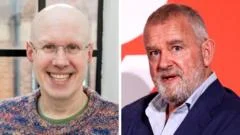
The sound of your voice could soon belong to you — legally, that is. British actors Matt Lucas and Hugh Bonneville have joined a growing chorus of performers demanding that the UK government recognise voice as a personal property right, protected by law from the reach of artificial intelligence.
Why actors are pushing for voice ownership legislation
The performers are asking the government to give every person in the UK a legal right to own their voice. The demand comes as AI tools become increasingly capable of replicating a person's voice with startling accuracy, often without consent or compensation.
For actors, the issue is existential. A voice is not just a tool — it is their instrument, their brand, and often their livelihood. When AI can mimic that voice in seconds, the commercial value of their work is at risk.
What a legal right to your voice would actually mean
Under the proposed framework, every UK citizen would hold a statutory right over their own voice. That means companies and individuals could not use someone's voice for commercial purposes without explicit permission.
This would extend beyond celebrities. A teacher, a podcaster, a radio presenter, or an ordinary person whose voice appears online would have legal standing to challenge unauthorised use.
How AI voice cloning became a pressing concern
Voice cloning technology has advanced rapidly. What once required hours of studio recording can now be achieved with a few seconds of audio. The entertainment industry has watched with growing alarm as synthetic voices appear in advertisements, audiobooks, and even political content.
Lucas and Bonneville are not alone in their concern. The campaign reflects a broader anxiety across the creative industries about the pace of AI adoption and the absence of clear legal protections.
Who is affected by the lack of voice protection
The absence of a legal right to one's voice leaves everyone vulnerable. Actors face direct competition from AI-generated performances. Public figures risk having their voices used in misleading or harmful contexts. Ordinary citizens may find their voices lifted from social media and repurposed without their knowledge.
The emotional weight of this issue is significant. A voice carries identity, personality, and trust. Losing control over it feels deeply personal, not just professional.
What the government has said so far
The actors are petitioning the government directly, but no formal legislative response has been announced. The UK has been exploring AI regulation more broadly, yet specific protections for voice rights remain undefined.
Officials have acknowledged the creative industries' concerns in general terms, but concrete action on voice ownership has not materialised. The campaign now depends on political will and public pressure.
Why this moment matters for the future of creative work
The demand for voice ownership rights is not just about actors. It is about establishing a principle: that human identity cannot be harvested by machines without permission. If the UK legislates on this, it could set a precedent for other nations grappling with the same question.
For the entertainment industry, the stakes are immediate. Without legal protection, the economic model that sustains performers could be undermined by synthetic alternatives that cost nothing and ask no consent.
Confirmed facts versus what remains unclear
What is confirmed: Matt Lucas and Hugh Bonneville are among actors calling for a UK law on AI voice cloning. The performers want every person to have a legal right to own their voice.
What remains unclear: the specific wording of the proposed law, the government's position, and the timeline for any legislative action. No official bill has been introduced, and the campaign's next steps have not been detailed.
Why the entertainment industry is uniquely exposed
Actors rely on the distinctiveness of their voice as a marketable asset. Unlike visual appearance, which has some legal protection through image rights in certain jurisdictions, the voice has historically been under-protected.
AI changes that calculation entirely. A cloned voice can be used in perpetuity, in any context, without the original speaker's involvement. The industry has no established framework to challenge this.
Concerns and counterarguments to voice ownership laws
Not everyone is convinced that voice ownership legislation is straightforward. Critics point to challenges in enforcement — how do you prove a voice belongs to a specific person in a world of synthetic generation?
There are also concerns about creative freedom. Parody, satire, and commentary often rely on imitation. A rigid legal right could create unintended restrictions on legitimate expression.
The broader pattern of artists resisting AI without consent
This campaign fits a wider movement. Musicians, writers, and visual artists have all pushed back against AI systems trained on their work without permission. The voice cloning demand is part of a larger reckoning about who benefits from artificial intelligence.
The creative industries are not anti-technology. They are asking for a framework where human contribution remains valued and protected.
What you should do if you are concerned about voice cloning
For individuals worried about their own voice being cloned, the practical steps are limited until the law changes. Be cautious about sharing high-quality audio recordings publicly. Monitor for unauthorised use of your voice in commercial content.
For those who support the campaign, engaging with parliamentary consultations and supporting performers' unions can amplify the message. Public awareness is a critical part of building political momentum.
What happens next in the fight for voice rights
The immediate future depends on the government's response to the actors' appeal. If the UK moves toward legislation, it would join a small but growing number of jurisdictions considering similar protections.
Without action, the gap between technological capability and legal protection will only widen. The question is no longer whether AI can clone voices — it is whether the law will catch up in time.
Our Take
The actors' demand is reasonable and timely. Voice is an extension of personhood, and its unauthorised replication raises questions that the law has not yet answered. The UK has an opportunity to lead on this issue, but leadership requires action, not acknowledgment.
This is not a niche concern for celebrities. It is a fundamental question about identity in the age of AI. The outcome of this campaign will shape how all of us — not just actors — understand the boundaries of our own digital selves.
Frequently Asked Questions
What is AI voice cloning?
AI voice cloning is technology that uses machine learning to replicate a person's voice from audio samples. It can generate speech that sounds like the original speaker, often with minimal input data.
Why are actors like Matt Lucas and Hugh Bonneville calling for a law?
They want the UK government to give every person a legal right to own their voice, protecting them from unauthorised AI cloning and commercial misuse of their vocal identity.
Does UK law currently protect a person's voice?
There is no specific statutory right to one's own voice in UK law. Existing protections are limited and do not adequately address the challenges posed by AI voice cloning.
How can someone protect their voice from AI cloning right now?
Until legislation is introduced, individuals should limit public sharing of high-quality audio, monitor for unauthorised use, and support advocacy efforts for stronger legal protections.