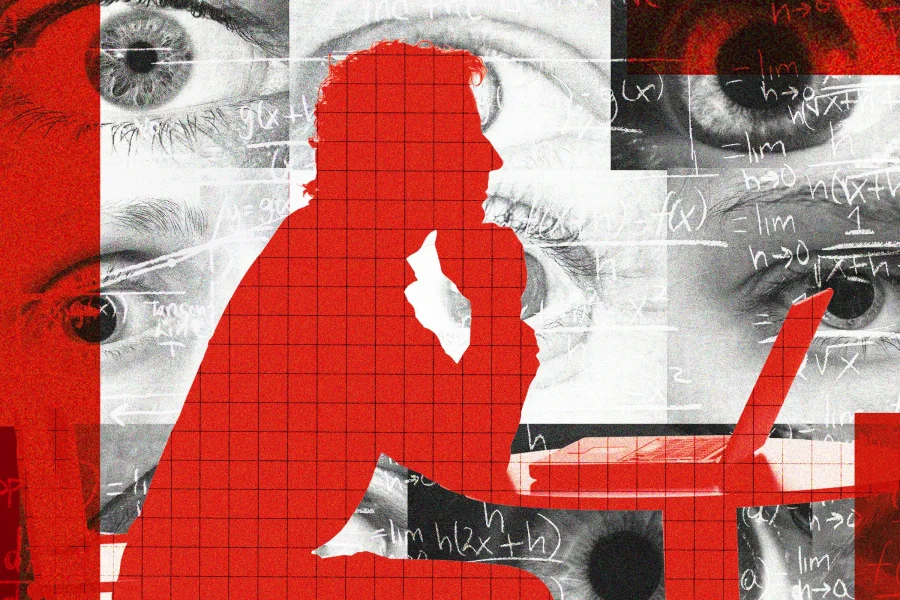
Mathematicians are caught in a trap of their own making. The same AI models they warn could hollow out their discipline have become indispensable to their daily work — and walking away is no longer an option.
A Discipline Divided Against Itself
The mathematical community is not known for dramatic infighting. But the rise of powerful AI models has exposed a fault line that runs through the heart of the field. On one side: researchers who see AI as a tool that can accelerate discovery, verify proofs, and explore mathematical spaces no human could navigate alone. On the other: those who believe the technology poses an existential risk — not just to jobs, but to the very meaning of mathematical work.
What makes the tension so acute is that both sides are right.
Why Mathematicians Can't Look Away
AI models have become remarkably good at certain kinds of mathematics. They can suggest proof strategies, identify patterns in vast datasets, and even generate conjectures worth testing. For researchers facing years of painstaking work, that's not a luxury — it's a lifeline.
The problem is that the same tools that make research faster also raise uncomfortable questions. If an AI can generate a proof, who gets credit? If it can verify one, does the human still need to understand it? And if the field becomes dependent on systems it doesn't fully control, what happens to mathematical knowledge itself?
The Existential Risk Nobody Wants to Name
The fear isn't that AI will replace mathematicians tomorrow. It's that the field will slowly lose its center of gravity. Funding, prestige, and talent could shift toward AI-driven approaches, leaving traditional mathematical reasoning as a niche pursuit.
Some researchers worry that the discipline's deepest value — the human capacity for abstraction, intuition, and creative leaps — could be sidelined in favor of what machines can compute. That's not just a professional concern. It's a philosophical one.
What the Debate Reveals About Modern Research
Mathematics has always been a field where tools matter. From the abacus to the computer, new instruments have reshaped what's possible. But AI is different. It doesn't just extend human capability — it can operate independently of human understanding.
That's what makes the current moment so disorienting. Mathematicians are not debating whether to use AI. They're debating what it means that they already do.
Confirmed Facts vs What Remains Unclear
Confirmed: AI tools are widely used in mathematical research, and their capabilities are expanding. Many mathematicians express both enthusiasm and concern about this trend.
Unclear: The long-term impact on the field's structure, funding, and culture. Whether AI will ultimately enhance or erode human mathematical expertise. How institutions will adapt.
Risks and Balanced View
The risks are real: over-reliance on AI could weaken foundational skills, create reproducibility problems, and concentrate power in the hands of a few tech companies. But the benefits are equally real: faster discovery, broader exploration, and new ways of understanding complex problems.
The challenge is not choosing between AI and tradition. It's figuring out how to use one without losing the other.
A Wider Pattern in Knowledge Work
Mathematics is not alone. Law, medicine, journalism, and software development are all grappling with similar tensions. AI is not just a tool — it's a force that reshapes professions from the inside out.
What makes mathematics unique is its purity. It's a field built on logic and proof, where truth is supposed to be absolute. If AI can participate in that process, what does it mean for the rest of us?
What Mathematicians Should Do Now
There are no easy answers. But a few practical steps are emerging: be transparent about AI use in research, invest in understanding how these tools work, and defend the value of human mathematical reasoning — not as nostalgia, but as a necessary counterbalance.
The field doesn't need to reject AI. It needs to decide what it's willing to become.
Future Outlook
The debate is far from settled. As AI models grow more capable, the pressure on mathematicians will only increase. Some predict a golden age of discovery. Others foresee a slow erosion of the discipline's identity.
What's certain is that the status quo is not sustainable. Mathematicians will have to choose — not once, but continuously — how to live with the tool they can't quit.
Our Take
This is not just a story about mathematics. It's a story about what happens when a profession's most powerful tool becomes its most serious threat. The mathematicians who are wrestling with this paradox are not being dramatic. They're being honest.
The rest of us should be paying attention.
Frequently Asked Questions
Why do mathematicians fear AI?
Many worry that AI could devalue human expertise, shift funding and prestige toward machine-driven research, and undermine the field's reliance on human intuition and proof.
How are mathematicians using AI now?
AI is used to suggest proof strategies, verify results, identify patterns, and explore mathematical spaces that would be impractical for humans to search manually.
Is AI actually good at mathematics?
It's increasingly capable in specific areas, especially pattern recognition and proof assistance. But it still struggles with deep abstraction and creative problem-solving.
What's the biggest risk of AI in mathematics?
The biggest risk is not replacement — it's dependency. If mathematicians rely on AI without fully understanding it, the field could lose both its autonomy and its identity.