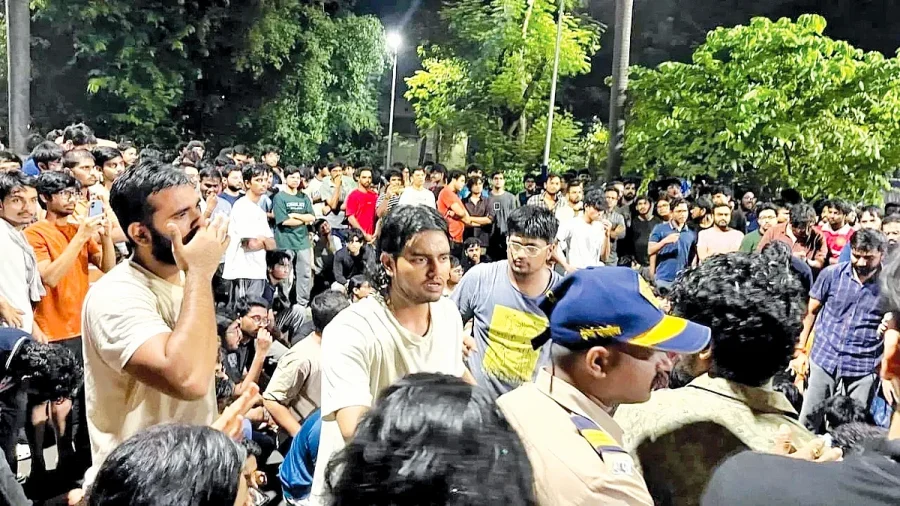
On 18 September, a second-year student at IIT Bombay died by suicide. Sahil Wakode's death, coming days after an exam incident where he was allegedly found using unfair means, has left his family searching for answers — and an institute defending its record.
What happened next has turned a personal tragedy into a public dispute over caste, institutional accountability, and the silence that often surrounds both.
The Exam, The Allegation, And The Days That Followed
According to the original account, Sahil Wakode was involved in an exam-related incident where he was allegedly using unfair means. The incident preceded his death on 18 September.
His family contends that the aftermath of that incident — which they describe as caste-based harassment — drove him to take his own life. The police are investigating the circumstances leading to his death.
Why This Case Is Being Watched Beyond One Campus
IIT Bombay is not just any institution. It is a symbol of aspiration for millions of Indian students, and a place where the stakes — academic, social, financial — are extraordinarily high.
When a student dies there, the questions raised are not confined to one family or one campus. They touch on how elite institutions handle allegations of discrimination, how they support students under pressure, and whether their grievance systems actually work for those who need them most.
What The Institute Says — And What The Family Alleges
The IIT-B administration has stated that the student never lodged a complaint of caste discrimination. A majority of the institute's faculty members have sided with the professor in question.
The family, meanwhile, sees the sequence of events as caste-based harassment that drove Sahil to suicide. These two positions — institutional denial and familial allegation — form the core of the dispute now under police investigation.
The Human Cost Behind The Institutional Position
For students from marginalised backgrounds, elite campuses can be isolating in ways that are hard to quantify. The fear of speaking up, the pressure to not be seen as a "complaint," and the weight of representing an entire community — these are real burdens.
Whether or not a formal complaint was filed, the question of whether a student felt safe enough to file one is a separate and equally important matter.
What Is Confirmed, And What Remains Unclear
Confirmed: Sahil Wakode was a second-year IIT Bombay student. He died by suicide on 18 September. An exam-related incident preceded his death. Police are investigating. The institute says no caste discrimination complaint was filed.
Unclear: The exact nature of the exam incident. Whether any informal complaints were made and to whom. What the police investigation will conclude. Whether the faculty's support for the professor reflects a formal position or individual sentiment.
Speculation about motives or institutional cover-ups should be treated as exactly that — speculation — until the inquiry concludes.
The Wider Pattern: 45 Suicides In Five Years
The original story notes a stark figure: between 2020-21 and 2024-25, there have been 45 student suicides across the IITs. That is not a statistic about one institution. It is a pattern.
It raises uncomfortable questions about academic pressure, mental health infrastructure, and whether the competitive culture at these institutes is outpacing the support systems meant to cushion it.
What This Means For Students And Families Right Now
For students facing similar pressures: institutional grievance mechanisms exist, but they are not always easy to navigate. Reaching out to student welfare bodies, mental health counsellors, or external support networks can matter.
For families: understanding the difference between formal complaints and informal grievances is important. A lack of a formal complaint does not automatically mean a lack of a problem.
What Comes Next
The police investigation will determine whether any charges follow. The institute may face renewed pressure to review its grievance and mental health systems.
And the larger question — whether IITs are doing enough to protect their most vulnerable students — will not be answered by one inquiry alone.
Our Take
This is a story with no easy villains. A young man is dead. A family is grieving and seeking accountability. An institution is defending its processes. A professor is facing public scrutiny.
What is needed now is a fair, transparent inquiry — one that examines not just what happened on the day of the exam, but what kind of environment made a student feel he had no other option. The 45 suicides across IITs in five years suggest that whatever is being done, it is not enough.
Frequently Asked Questions
Who was Sahil Wakode?
Sahil Wakode was a second-year student at IIT Bombay who died by suicide on 18 September, following an exam-related incident where he was allegedly found using unfair means.
What is the caste discrimination allegation in this case?
Sahil's family alleges that caste-based harassment following the exam incident drove him to suicide. The IIT Bombay administration says no formal complaint of caste discrimination was ever filed by the student.
What are the police doing?
Police are investigating the circumstances leading to Sahil Wakode's death. No charges have been publicly confirmed at this stage.
How many student suicides have occurred at IITs recently?
According to the original report, between 2020-21 and 2024-25, there have been 45 student suicides across the IITs — a figure that has intensified calls for better mental health support.