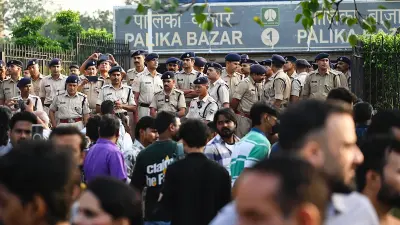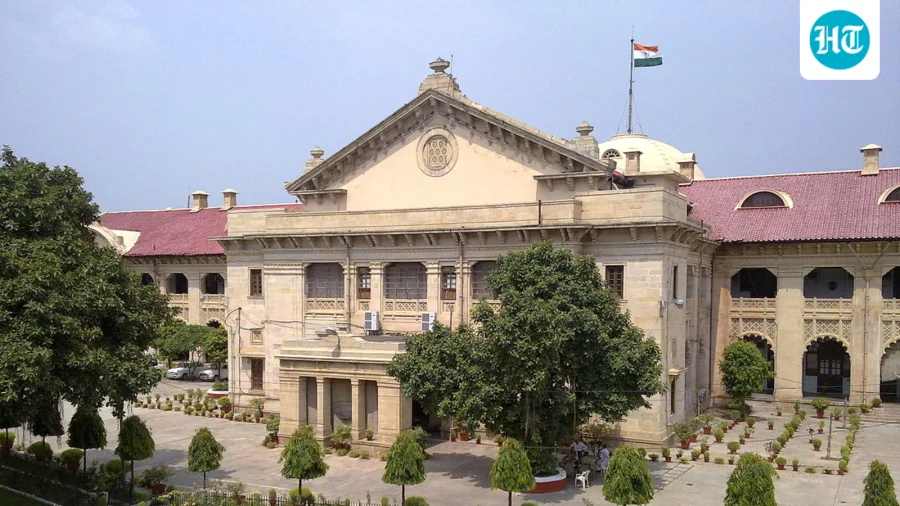
In a judgement that has sent shockwaves through Uttar Pradesh’s law enforcement apparatus, the Allahabad High Court has accused the state police of being “loyal to the government, not the Constitution.” Justice Diwakar, in a strongly worded order, flagged a pattern of encounter killings and selective crackdowns against individuals deemed inconvenient to the ruling establishment.
What the Allahabad High Court said about UP police loyalty
The court’s observation came as part of a broader critique of how the rule of law is being undermined in the state. “The police and bureaucracy in Uttar Pradesh have historically been a crucible of political hegemony, driven by a feudal mindset,” Justice Diwakar wrote. The judge noted that instead of upholding the Constitution, the police appear to act as an arm of the ruling party, targeting those who question authority.
Encounter killings and selective crackdowns: The core allegations
The judgement specifically called out encounter killings—extrajudicial killings by police—as a grave violation of constitutional rights. The court also flagged selective crackdowns on individuals, activists, and political opponents, suggesting that the state machinery is being weaponised to silence dissent. “The rule of law is treated as an inconvenience,” the court observed, adding that this undermines public trust in the justice system.
Why this judgement matters for Uttar Pradesh’s governance
Uttar Pradesh, India’s most populous state, has long been under scrutiny for its law and order record. The Allahabad High Court’s remarks are significant because they come from a constitutional court, not from political opponents. The judgement effectively puts the state government on notice, demanding accountability for police actions that violate fundamental rights. For ordinary citizens, this ruling reinforces the idea that the judiciary remains a check on executive overreach.
Historical context: Feudal mindset and political hegemony
Justice Diwakar’s reference to a “feudal mindset” is rooted in Uttar Pradesh’s political history. The state has often been described as a laboratory for strongman politics, where police force is used to project power. The court’s observation suggests that this culture persists, with the police acting as enforcers of political loyalty rather than guardians of the law. The judgement draws a direct line between this feudal legacy and the current pattern of encounter killings.
Who is affected by the court’s ruling
The immediate impact falls on the Uttar Pradesh police department, which now faces a judicial rebuke that could lead to internal reforms. Families of encounter victims may find legal grounds to seek justice. Civil rights activists and opposition leaders see the judgement as validation of their long-standing complaints. For the general public, the ruling raises uncomfortable questions about whether the police protect citizens or the ruling party.
Official response and legal implications
As of now, the Uttar Pradesh government has not issued an official response to the judgement. Legal experts suggest that the state may file a review petition or appeal, but the court’s language leaves little room for ambiguity. The judgement could also be cited in other cases involving police misconduct across India, setting a precedent for judicial scrutiny of encounter killings.
What the judgement means for the rule of law in India
This is not an isolated critique. Courts across India have increasingly questioned extrajudicial killings and the politicisation of police forces. The Allahabad High Court’s ruling adds to a growing body of judicial opinion that the Constitution must prevail over political convenience. The judgement serves as a reminder that the police’s primary duty is to the Constitution, not to any individual or party.
Confirmed facts vs what remains unclear
Confirmed: The Allahabad High Court has explicitly stated that UP police show loyalty to the government over the Constitution. The court flagged encounter killings and selective crackdowns. Justice Diwakar used the term “feudal mindset” to describe the state’s political culture.
Unclear: Whether the state government will take corrective action or appeal. The specific cases that prompted the judgement are not fully detailed in public reports. The timeline for any police reforms remains uncertain.
Risks and balanced view
While the judgement is a strong indictment of police conduct, critics may argue that it paints all officers with the same brush. Some police officials maintain that encounter killings are sometimes necessary in high-risk situations. However, the court’s point is that due process must be followed, and extrajudicial actions undermine the rule of law. The ruling does not call for disbanding the police but for reforming its culture.
Wider trend: Judicial pushback against executive overreach
The Allahabad High Court’s judgement is part of a broader judicial trend in India where courts are pushing back against what they see as executive overreach. From the Supreme Court’s scrutiny of the Pegasus spyware issue to high court rulings on sedition laws, the judiciary is increasingly asserting its role as a guardian of constitutional values. This case fits squarely into that pattern.
Practical guidance for citizens and activists
For those affected by police encounters or selective crackdowns, this judgement provides legal ammunition. Lawyers can cite it in bail pleas, human rights petitions, or cases seeking compensation for encounter victims. Activists should document instances of police misconduct and approach the courts with this ruling as a reference. Citizens should be aware that the judiciary is willing to hold the police accountable.
Future outlook: What could happen next
The Allahabad High Court’s judgement could lead to a series of follow-up actions. The state government may be forced to issue new guidelines on encounter procedures. The National Human Rights Commission (NHRC) might take suo motu cognisance. Opposition parties are likely to raise the issue in the state assembly. However, without sustained public pressure, meaningful reform may remain elusive.
Our Take
This judgement is not just about Uttar Pradesh—it is about the health of Indian democracy. When the police, the primary interface between the state and the citizen, begin to see themselves as servants of the ruling party rather than the Constitution, the entire edifice of democratic governance is weakened. The Allahabad High Court has done a service by calling this out in unambiguous terms. The real test now is whether this judicial rebuke translates into actual change on the ground.
Frequently Asked Questions
What did the Allahabad High Court say about UP police?
The court accused the UP police of being “loyal to the government, not the Constitution,” and flagged encounter killings and selective crackdowns against individuals deemed inconvenient to the ruling establishment.
What are encounter killings?
Encounter killings refer to extrajudicial killings by police, often justified as self-defence during confrontations. Courts have repeatedly questioned their legality and called for strict procedural oversight.
Who is Justice Diwakar?
Justice Diwakar is a judge of the Allahabad High Court who authored this critical judgement. He noted that Uttar Pradesh’s political culture is driven by a “feudal mindset” that undermines the rule of law.
Can this judgement lead to police reforms in UP?
While the judgement itself does not mandate reforms, it creates legal and political pressure. The state government may issue new guidelines, and courts may cite this ruling in future cases involving police misconduct.