SpaceX, Elon Musk’s rocket and satellite empire, just did what no private company has done before. Minutes after its stock market debut on Friday, shares surged past $165, pushing the company’s valuation beyond $2 trillion and making Musk the first person with a net worth above $1 trillion. For millions of retail investors who have waited 24 years, the moment is both exhilarating and nerve-wracking.
How SpaceX Stock Performed on Day One
SpaceX opened on the Nasdaq Global Select Market and Nasdaq Texas under the ticker SPCX at just above $150 per share at 11:46 AM ET. That was already above the target price of $135 set during the IPO. By noon, the stock was trading between $162 and $165, a gain of roughly 13% in the first hour. The company raised approximately $75 billion from the offering, according to reports from Reuters and Bloomberg.
Why This IPO Matters Beyond the Hype
This is not just another stock market listing. SpaceX’s debut is the largest IPO in history, dwarfing previous records set by companies like Alibaba and Saudi Aramco. The $2 trillion valuation makes SpaceX more valuable than most countries’ stock markets. For Indian investors and global retail traders, the question is whether this valuation is justified by SpaceX’s revenue from Starlink, launch services, and future Mars missions — or if it’s driven by Musk’s cult of personality.
The 24-Year Journey to Nasdaq
Founded in 2002, SpaceX spent nearly a quarter-century as the world’s most valuable private company. It survived early rocket failures, near-bankruptcy, and intense skepticism. The breakthrough came with reusable rockets, which slashed launch costs, and Starlink, which now serves over 4 million subscribers globally. The IPO was delayed multiple times as Musk focused on Starship development and Mars ambitions. Friday’s listing ends that private era.
Who Benefits and Who Pays the Price
Early investors — including venture capital firms, sovereign wealth funds, and Musk himself — are the biggest winners. Retail investors who bought at the IPO price of $135 are already sitting on paper gains. But those buying at $165 face higher risk. The stock is expected to be highly volatile in the coming weeks as institutional investors adjust positions and retail traders chase momentum. For the average Indian investor, this is a high-stakes bet on Musk’s vision.
Elon Musk’s Response and Employee Reactions
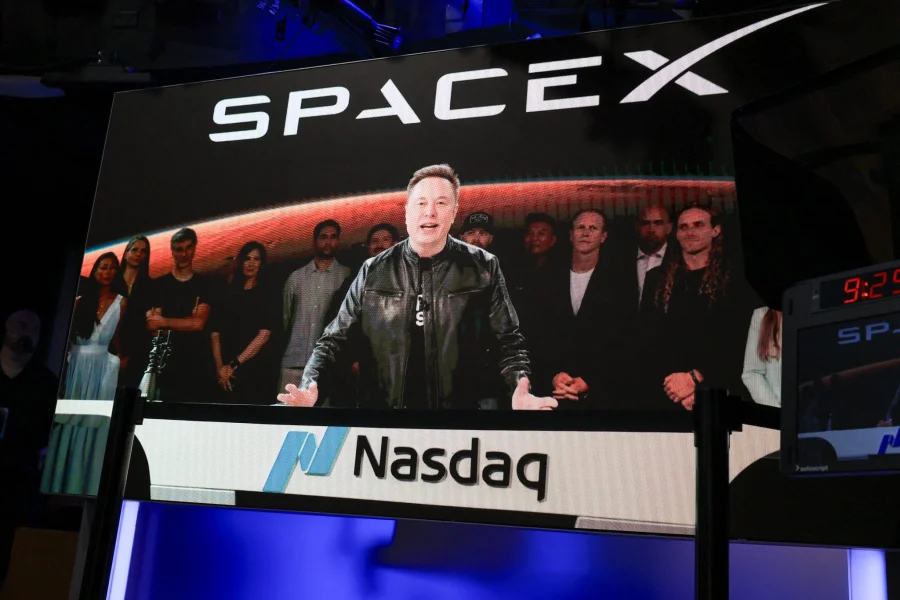
Musk addressed SpaceX employees shortly after trading began, though the full content of his remarks has not been released. Sources suggest he emphasized the company’s mission to make humanity multi-planetary and thanked employees for their patience. Many long-time employees, who held private shares for years, are now able to cash out. The mood inside SpaceX is described as celebratory but cautious.
What the $2 Trillion Valuation Really Means
A $2 trillion valuation implies that investors expect SpaceX to generate massive future profits. Currently, SpaceX’s main revenue drivers are Starlink’s subscription service and government launch contracts. Starlink alone is projected to generate $10–12 billion in revenue this year. But to justify a $2 trillion valuation, the company would need to grow earnings at an extraordinary pace — or successfully commercialize Starship for deep-space missions and point-to-point Earth travel.
Confirmed Facts vs What Remains Unclear
Confirmed: SpaceX opened above $150, reached $165 by noon, and raised $75 billion in the IPO. Confirmed: Musk’s net worth crossed $1 trillion. Unclear: Whether the stock will hold these levels after the first week. Unclear: The exact details of Musk’s employee address. Unclear: How much of the IPO was bought by retail vs institutional investors. All speculation about future Mars revenue or Starship profitability remains unverified.
Why SpaceX’s Moat Is Unlike Any Other Company
SpaceX’s competitive advantage rests on three pillars: reusable rocket technology that no competitor has matched, the Starlink satellite constellation with over 6,000 satellites in orbit, and a government partnership with NASA and the Pentagon that provides steady revenue. This combination of technology moat, infrastructure moat, and institutional moat makes SpaceX difficult to replicate. No other company has both launch capability and a global broadband network.
Risks and Balanced View
Critics argue that the $2 trillion valuation is disconnected from fundamentals. SpaceX is still a private company with limited financial disclosure. Regulatory risks include potential antitrust scrutiny of Starlink’s dominance and export controls on rocket technology. There is also the risk that Musk’s attention is divided among Tesla, X (formerly Twitter), xAI, and other ventures. Some analysts warn that the stock could see a sharp correction once the IPO euphoria fades.
What This IPO Says About the Market Right Now
The SpaceX IPO is happening at a time when global stock markets are volatile, with interest rates still elevated and tech stocks under pressure. The fact that investors are willing to pay $2 trillion for a company that has never reported public earnings signals a renewed appetite for high-risk, high-reward bets. It also reflects the growing influence of retail investors and meme-stock culture, where narrative often matters more than numbers.
What Investors Should Do Now
For those who bought at the IPO price, holding for the long term may be reasonable if you believe in Musk’s vision. For those considering buying at $165, wait for the initial volatility to settle. Set a stop-loss if you are risk-averse. Indian investors should check if their brokerage offers access to Nasdaq-listed stocks and be aware of currency risk and tax implications. Never invest more than you can afford to lose in a single stock.
What Happens Next for SpaceX Stock
The next few weeks will be critical. If the stock stabilizes above $150, it could attract institutional investors who were waiting for liquidity. If it drops below the IPO price, it may signal that the valuation was too aggressive. Key catalysts ahead include Starlink’s next earnings report, Starship test flights, and any new government contracts. The lock-up period for early investors will also be watched closely.
Our Take
The SpaceX IPO is a historic moment, but history is full of IPOs that soared on day one and then crashed. The company’s technology is genuinely revolutionary, but the valuation demands near-perfect execution for years to come. For now, the story is about human ambition and market euphoria. The real test will come when the headlines fade and the quarterly reports begin.
Frequently Asked Questions
What is the SpaceX stock price today?
SpaceX opened at $150 and rose to $165 by noon on its debut day, June 12, 2026.
What is the SpaceX IPO ticker symbol?
SpaceX trades under the ticker SPCX on both the Nasdaq Global Select Market and Nasdaq Texas.
How much did SpaceX raise in its IPO?
SpaceX raised approximately $75 billion from its IPO, making it the largest in history.
Is SpaceX stock a good investment for Indian investors?
It depends on your risk tolerance. The stock is highly volatile and valued at $2 trillion. Indian investors should consult a financial advisor and check brokerage access to Nasdaq before investing.