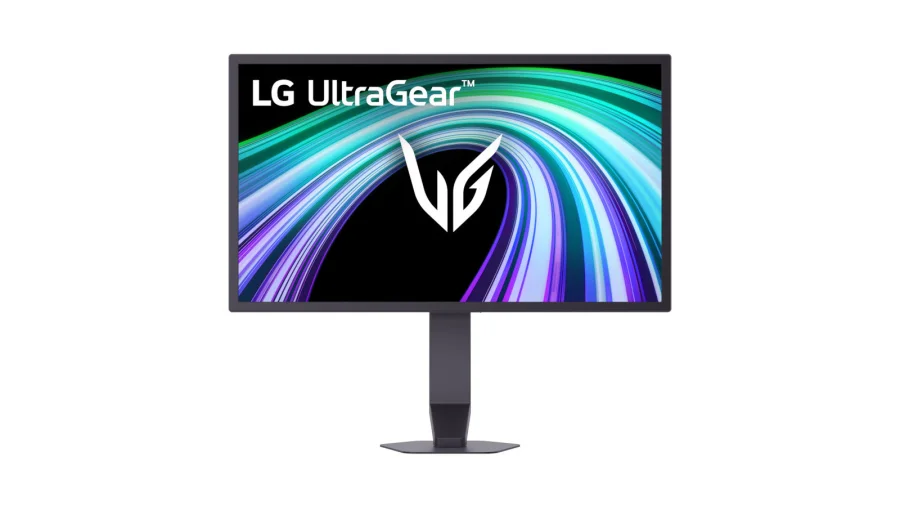
For years, the refresh rate war in gaming monitors felt like a race to diminishing returns. 144Hz became the standard. Then 240Hz. Then 360Hz. Then 500Hz. Each jump promised smoother motion, but the gains felt incremental, almost academic. Then LG dropped a bomb. The company has unveiled the world’s first native 1,000Hz Full HD gaming monitor — the UltraGear 25G590B — and suddenly, the conversation about what’s possible in competitive gaming has been rewritten overnight. This isn’t just a faster screen. It’s a fundamental leap in how we perceive motion in real-time.
What Is the LG UltraGear 25G590B and Why Is 1,000Hz a Big Deal?
The LG UltraGear 25G590B is a 24.5-inch Full HD (1920x1080) gaming monitor that achieves a native 1,000Hz refresh rate. To put that in perspective, a standard 60Hz monitor updates the image 60 times per second. A 1,000Hz monitor updates it 1,000 times per second. This means motion blur is virtually eliminated. In fast-paced esports titles like Valorant, Counter-Strike 2, or Overwatch 2, every single frame — every flick shot, every strafe, every pixel of movement — is rendered with a clarity that was previously impossible outside of research labs. For competitive players, this isn’t a luxury; it’s a potential game-changer.
Why This Matters Right Now
The timing of this announcement is critical. Esports is more competitive than ever, with prize pools reaching tens of millions of dollars and professional players constantly seeking any edge. A 1,000Hz monitor doesn’t just make the game look smoother — it reduces input lag to near-zero levels and provides a level of visual feedback that could allow players to react faster and more accurately. For the average gamer, it means the end of screen tearing and ghosting in fast scenes. For the industry, it signals that the ceiling for display performance is far higher than anyone imagined. The question is no longer “how fast is fast enough?” but “what can we do with this speed?”
How the Announcement Unfolded
LG Electronics made the announcement on May 19, 2026, from its headquarters in Englewood Cliffs, New Jersey. The company positioned the 25G590B as a direct response to the needs of the esports ecosystem. The 24.5-inch screen size is no accident — it’s the standard size used in most professional tournaments, ensuring that all critical visual information stays within a player’s natural field of view. LG emphasized that this is a native 1,000Hz panel, not an overclocked or interpolated refresh rate, meaning the monitor is built from the ground up to handle this speed without compromise.
Who Is Affected and What Officials Are Saying
The primary audience is clear: professional esports players, high-level competitive gamers, and enthusiasts who demand the absolute best in motion clarity. But the ripple effects extend to monitor manufacturers, GPU makers, and even game developers. LG’s official statement highlighted that the 25G590B is designed to “push the boundaries of what’s possible in competitive gaming,” and early reactions from the esports community have been a mix of excitement and cautious curiosity. Many are waiting to see how the monitor performs in real-world conditions and, crucially, what it will cost.
What We Know So Far — and What Remains Unclear
What we know: The LG UltraGear 25G590B is a real, working product with a native 1,000Hz refresh rate at Full HD resolution. It uses a 24.5-inch panel, a size favored by esports pros. The announcement was made official by LG.
What remains unclear: The price and release date are still under wraps. We don’t know the exact panel technology (likely TN or a fast IPS variant), the response time, or the connectivity requirements (DisplayPort 2.1 is almost certain). Most importantly, we don’t know if current GPUs can consistently push 1,000 frames per second in modern games, or if this monitor is more of a future-proofing investment for next-gen hardware.
Risks, Concerns, and the Balanced View
While the technology is impressive, there are real questions. The most obvious is the GPU bottleneck. Even the most powerful graphics cards today struggle to maintain 500fps in demanding titles, let alone 1,000fps. This means the monitor’s full potential may only be realized in less graphically intensive esports games or with future hardware. There’s also the question of diminishing returns — can the human eye even perceive the difference between 500Hz and 1,000Hz? While studies suggest that trained esports players can benefit from higher refresh rates, the practical advantage may be smaller than the spec sheet suggests. Finally, the price is expected to be extremely high, potentially placing it out of reach for all but the most dedicated professionals.
Why Similar Trends Are Growing
LG’s move is part of a broader trend in the display industry. Competitors like ASUS, Acer, and Samsung have been pushing refresh rates higher, with 500Hz monitors becoming more common. The race to 1,000Hz was inevitable, and LG has fired the starting pistol. This announcement also aligns with the growing importance of esports as a mainstream entertainment sector, where every millisecond of advantage is monetized. Expect other manufacturers to announce their own 1,000Hz panels in the coming months.
- The 24.5-inch screen size is the standard for professional esports tournaments.
- LG has not yet confirmed the panel type, response time, or connectivity specifications.
- The monitor is expected to require a high-bandwidth connection like DisplayPort 2.1 to achieve 1,000Hz at Full HD.
“LG’s UltraGear 25G590B is the world’s first native 1000Hz Full HD gaming monitor, designed to push the boundaries of what’s possible in competitive gaming.” — LG Electronics Official Announcement
What Readers, Users, or Investors Should Know Now
For competitive gamers: This monitor is a glimpse into the future, but don’t rush to buy it unless you have a top-tier GPU and play games that can hit 1,000fps. For investors: This signals that LG is doubling down on high-end display technology, which could strengthen its position in the premium monitor market. For the average consumer: This is a halo product — it showcases what’s possible, but the real-world benefits for most users will trickle down to more affordable monitors in the next few years.
What Could Happen Next
Expect LG to reveal pricing and availability at a major gaming event like Gamescom or CES 2027. We’ll likely see a flood of reviews from esports pros and tech reviewers testing the monitor’s real-world performance. Competitors will scramble to announce their own 1,000Hz panels. The bigger question is whether game developers and GPU manufacturers will adapt to this new standard, or if the 1,000Hz monitor will remain a niche product for the elite few.
Our Take: Why This Story Matters Beyond One Monitor
The LG UltraGear 25G590B is more than just a spec-sheet champion. It’s a statement that the display industry is not done innovating. For years, the focus was on resolution and HDR. Now, the pendulum is swinging back to motion clarity and speed. This monitor forces us to rethink what “smooth” means and challenges the entire gaming ecosystem — from GPU makers to game engines — to catch up. Whether it becomes a must-have for pros or a fascinating footnote in tech history, one thing is certain: the race to 1,000Hz has officially begun.
FAQs
What is the LG UltraGear 25G590B and why is it special?
The LG UltraGear 25G590B is the world’s first native 1,000Hz Full HD gaming monitor. It’s special because it refreshes the image 1,000 times per second, virtually eliminating motion blur and providing unprecedented clarity in fast-paced games, especially for esports.
Can my current PC run a 1,000Hz monitor?
Most likely not at its full potential. To benefit from 1,000Hz, your graphics card needs to output 1,000 frames per second. Only the most powerful GPUs can achieve this in less demanding esports titles. For most users, the monitor will still work at lower refresh rates, but the 1,000Hz advantage is for future-proofing or top-tier hardware.
When will the LG 1,000Hz monitor be released and how much will it cost?
LG has not yet announced a release date or price. Given the cutting-edge technology, it is expected to be expensive — likely in the range of several thousand dollars — and may launch in late 2026 or early 2027.
Is 1,000Hz better than 4K for gaming?
It depends on the use case. For competitive esports where motion clarity and low latency are paramount, 1,000Hz at Full HD is superior. For immersive, story-driven games where visual fidelity and detail matter more, a 4K monitor with a high refresh rate (e.g., 144Hz or 240Hz) is a better choice. They serve different purposes.