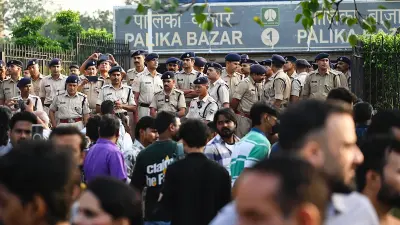
For thousands of Delhi residents who have struggled for months to get a simple complaint registered or a stolen phone traced, a new weekly window of hope is opening. Starting next week, every police station across the national capital will hold a dedicated "Thana Divas-Jan Sunwai" — a fixed day each week when citizens can walk in and directly speak to the station house officer about their grievances.
What the weekly Jan Sunwai initiative entails
Delhi Police will organise a weekly "Thana Divas-Jan Sunwai" at every police station across the national capital from next week to improve grievance redressal and enhance institutional accountability, a senior police officer said on Sunday. The initiative follows directions from Lieutenant Governor VK Saxena, who has been pushing for greater public outreach and transparency in policing. While the specific day and time for the weekly hearings are yet to be officially announced, the programme is expected to be rolled out uniformly across all 200+ police stations in Delhi.
Why this matters for ordinary Delhi residents
For many residents, visiting a police station can be an intimidating and often fruitless exercise. Complaints get lost in paperwork, officers are unavailable, and follow-ups require multiple visits. The Jan Sunwai model aims to change this by creating a structured, predictable platform where citizens know exactly when and whom to approach. This is particularly significant for victims of petty crime, women facing domestic issues, and residents of low-income neighbourhoods who often lack the resources to pursue complaints through higher channels.
How the Jan Sunwai model evolved in Delhi
The concept of Jan Sunwai is not new to Delhi. The Delhi government already runs a CM Jan Sunwai Portal — an integrated grievance-redressal system where citizens can file and track complaints online. However, the police department's adoption of a physical, station-level weekly hearing marks a shift towards more direct, face-to-face accountability. The move also aligns with LG Saxena's broader emphasis on public outreach and administrative reforms across Delhi's civic agencies.
Who will benefit most from the weekly hearings
The initiative is expected to benefit a wide cross-section of Delhi's population. Senior citizens who are not comfortable with online portals will find it easier to visit their local station on a fixed day. Small business owners dealing with theft or harassment cases can expect more timely responses. Women seeking protection orders or filing domestic violence complaints will have a dedicated forum. The key, however, lies in whether station officers actually listen and act — not just hold the hearing as a formality.
Official response and implementation plan
A senior Delhi Police officer confirmed the initiative to PTI, stating that the weekly Jan Sunwai is designed to "improve grievance redressal and enhance institutional accountability." The officer added that detailed guidelines regarding the day, timing, and procedure for the hearings would be communicated to all police stations shortly. The success of the programme will depend on strict adherence to the schedule and genuine follow-up on complaints received.
What this means for police accountability in Delhi
The weekly Jan Sunwai represents a structural change in how Delhi Police interacts with the public. By mandating a fixed weekly forum, the initiative creates a paper trail of complaints and responses, making it harder for officers to ignore or delay cases. It also puts pressure on station house officers to resolve issues within a defined timeframe. However, experts caution that without a robust monitoring mechanism and consequences for non-compliance, the initiative could become a mere box-ticking exercise.
Confirmed facts vs what remains unclear
Confirmed: Delhi Police will hold weekly Jan Sunwai at all police stations starting next week. The initiative follows LG's directive and aims to improve grievance redressal and accountability. Unclear: The specific day and time for the hearings have not been announced. The mechanism for tracking complaint resolution and ensuring officer compliance is yet to be detailed. Whether the programme will cover all types of complaints or be limited to certain categories is also not specified.
Risks and challenges ahead
While the intent is commendable, the Jan Sunwai initiative faces several practical challenges. Police stations in Delhi are already overburdened with routine work, and adding a weekly hearing could stretch resources thin. There is also the risk of the hearings becoming crowded and chaotic if not managed properly. Critics point out that similar initiatives in the past have lost momentum after initial enthusiasm. Without a clear escalation mechanism for unresolved complaints, citizens may end up frustrated again.
Wider trend: Police-public engagement across India
Delhi is not alone in experimenting with structured public outreach. Several states, including Maharashtra, Karnataka, and Uttar Pradesh, have introduced versions of "Jan Sunwai" or "Thana Diwas" to improve police-community relations. The common thread is a recognition that traditional complaint mechanisms are broken and that direct, regular interaction between citizens and station officers is essential for trust-building. Delhi's move could serve as a model — or a cautionary tale — for other metropolitan police forces.
What citizens should do now
If you live in Delhi and have a pending complaint at your local police station, note the upcoming Jan Sunwai schedule once it is announced. Prepare a written summary of your complaint, including any FIR number or reference details. Carry identification and any supporting documents. Be clear and concise when presenting your issue. If the station officer does not address your concern, ask for a written acknowledgment and note the next steps. For those who cannot attend in person, the CM Jan Sunwai Portal remains an alternative option.
Future outlook: Can weekly hearings fix Delhi's policing problems?
The weekly Jan Sunwai has the potential to significantly improve police accountability in Delhi — but only if implemented with sincerity and oversight. The first few months will be critical in setting the tone. If station officers take complaints seriously and resolve them promptly, public trust will grow. If the hearings become a ritual without results, cynicism will deepen. The LG's office and senior police leadership will need to monitor outcomes closely and make adjustments as needed.
Our Take
The weekly Jan Sunwai is a welcome step towards making Delhi Police more accessible and accountable. It addresses a genuine pain point for millions of residents who find the current complaint system opaque and intimidating. However, the initiative's success will be measured not by the number of hearings held, but by the number of complaints actually resolved. The real test lies in implementation — ensuring that every station officer treats the Jan Sunwai as a serious accountability exercise, not a public relations formality. For now, Delhi residents have reason to be cautiously optimistic.
Frequently Asked Questions
What is the Delhi Police Jan Sunwai initiative?
It is a weekly grievance redressal programme where every police station in Delhi will hold a fixed day for citizens to directly submit complaints and seek resolution from the station house officer. The initiative aims to improve public outreach and police accountability.
When will the weekly Jan Sunwai start?
The initiative is set to begin from next week. The specific day and time for the hearings at each police station are yet to be officially announced by Delhi Police.
Who can attend the Jan Sunwai at police stations?
Any resident of Delhi with a complaint or grievance related to their local police station can attend. This includes victims of crime, those with pending FIRs, and individuals seeking assistance with safety or security issues.
What should I bring to the Jan Sunwai hearing?
Carry a written summary of your complaint, any FIR or reference number, identification proof, and supporting documents such as receipts, photographs, or witness statements. Being prepared will help the officer understand and act on your issue faster.