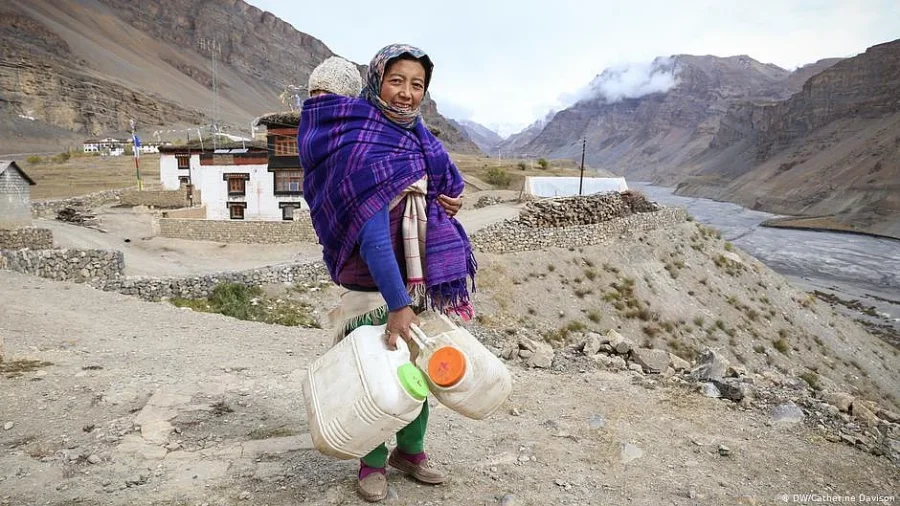
Kashmir’s highest mountain peaks are warming faster than its urban centers, a trend that is accelerating the retreat of glaciers, shrinking snow reserves, and disrupting the fragile ecological balance of the Himalayas. This is the central finding of a major scientific study conducted by the Department of Earth Sciences at the University of Kashmir.
The research, which analyzed nearly three and a half decades of satellite data, reveals a stark picture of environmental change that has direct implications for water security, agriculture, and livelihoods across the region.
Why This Development Is Drawing Attention
The study, led by noted glaciologist Professor Shakil Ahmad Romshoo, found that glaciers in the Kashmir Himalayas have lost nearly 17 per cent of their total area over the past three decades. This is not a slow, gradual change—it is a rapid transformation that is reshaping the landscape.
More concerning is the finding that the highest elevations are warming faster than the valleys and cities below. This phenomenon, known as elevation-dependent warming, means that the very sources of the region’s rivers—the glaciers and snowfields—are under the most intense pressure.
What Has Changed and Why It Matters
The study documented an upward shift of approximately 80 to 300 metres in the equilibrium line altitude (ELA). The ELA is the boundary that separates the zone where snow accumulates from the zone where snow melts. When this line moves higher, it means that more of the glacier is in the melt zone and less is in the accumulation zone.
This shift is not a theoretical projection. It is a measured reality based on Landsat satellite data collected between 1980 and 2013. The nine benchmark glaciers analyzed in the study represent a cross-section of the Kashmir Himalayas, and their collective retreat signals a systemic change.
The consequence is straightforward: less snow and ice stored at high altitudes means less water flowing into rivers during the dry summer months. For a region where agriculture, hydropower, and daily life depend on glacial meltwater, this is a direct threat.
Who Could Be Affected Most
Farmers and Rural Communities
Kashmir’s agriculture, particularly the cultivation of rice, apples, and saffron, relies heavily on consistent water supply from snowmelt and glacier runoff. A shrinking glacier system means unpredictable water availability, which can disrupt planting cycles and reduce crop yields.
Urban Populations and Water Managers
As glaciers retreat, the initial effect can be increased meltwater, but this is a temporary surge. Once the glacier mass is depleted, river flows decline. Cities like Srinagar, which depend on these river systems, face long-term water scarcity challenges that will require new infrastructure and management strategies.
What Officials, Experts, or Reports Indicate
Professor Shakil Ahmad Romshoo and his team have published their findings in a peer-reviewed scientific study, adding to a growing body of evidence that the Himalayan cryosphere is in crisis. The study’s use of long-term satellite data provides a robust, empirical foundation for its conclusions.
The research aligns with broader global observations that high-mountain regions are warming faster than lower elevations. This elevation-dependent warming is a well-documented phenomenon, but the specific data from Kashmir provides local, actionable evidence for policymakers.
The Questions That Still Remain
While the study clearly documents the rate of glacier retreat and the upward shift of the ELA, several questions remain unanswered. The study period ends in 2013, and more recent data would be needed to assess whether the trend has accelerated or stabilized in the last decade.
It is also unclear how the loss of glacier area translates into actual water flow reductions for specific rivers and communities. The relationship between glacier mass loss and downstream water availability is complex and depends on factors like precipitation patterns and groundwater recharge.
What is not in question is the direction of the trend. The glaciers are retreating, the mountains are warming, and the ecological balance is shifting.
What Happens Next Could Matter More
The study serves as a baseline for future monitoring and policy action. If the current warming trend continues, the rate of glacier retreat is likely to increase, leading to more severe water shortages and ecological disruption.
For Kashmir, the immediate priority is to integrate these findings into water resource planning, agricultural policy, and disaster preparedness. The long-term challenge is to address the root cause: the global greenhouse gas emissions that are driving high-altitude warming.
What happens next depends on whether this scientific warning translates into political and social action. The glaciers are not waiting.
Key Takeaways
- Kashmir’s highest mountains are warming faster than its cities, accelerating glacier retreat.
- Glaciers in the region have lost nearly 17% of their total area in three decades.
- The equilibrium line altitude has shifted upward by 80 to 300 meters, indicating more melting.
- The study analyzed nine benchmark glaciers using satellite data from 1980 to 2013.
- Water security for agriculture, hydropower, and urban supply is directly threatened.