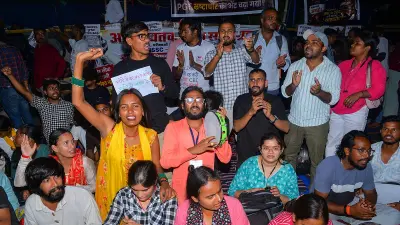
A teenage girl was allegedly gangraped at knifepoint in Delhi's Kalkaji area, with three accused named in the case. The incident has once again brought the spotlight back to the safety of young women in the national capital — a concern that has echoed through Delhi's streets for years.
What Happened in the Kalkaji Case
According to the available account, the teenage victim was assaulted at knifepoint by three accused in the Kalkaji area of South Delhi. The use of a weapon in the alleged crime has added to the gravity of the case and drawn sharp public attention.
Details about the exact sequence of events, the time of the incident, and the relationship between the accused and the victim are still emerging. Officials have not released a full statement on the matter so far.
Why This Case Is Drawing Urgent Attention
Delhi has a long and painful history of high-profile crimes against women, and each new case reignites public anger and demands for accountability. For families across the city, the Kalkaji incident is not an isolated headline — it is a reminder of the everyday fears that shape how women and girls move through public spaces.
The involvement of multiple accused and the alleged use of a knife make this case particularly alarming. It also raises uncomfortable questions about deterrence, policing, and the safety infrastructure in the capital's neighbourhoods.
How the Investigation Is Taking Shape
A police case has been registered, and investigators are working to establish the full facts. The three accused have been identified, though their identities and custody status have not been officially confirmed in the available information.
Standard procedure in such cases involves medical examination of the victim, forensic collection of evidence, and recording of statements. The pace and transparency of the probe will be closely watched.
Who Is Affected — and Why It Matters Beyond One Case
The immediate impact is on the teenage victim and her family, who now face a long and difficult road to justice and recovery. But the ripple effects extend far wider.
Parents, students, and working women in Delhi and beyond will read this news with a familiar sense of unease. Every such incident chips away at public confidence in the systems meant to protect them.
Official Response and Legal Framework
Under Indian law, the Protection of Children from Sexual Offences (POCSO) Act and provisions of the Bharatiya Nyaya Sanhita apply to cases involving minors and sexual violence. These carry stringent punishments, and the identity of the victim is legally protected.
Officials have not yet issued a detailed public statement on the specifics of this case. Any claims circulating without official confirmation should be treated with caution.
What Is Confirmed and What Remains Unclear
Confirmed: A teenage girl was allegedly assaulted at knifepoint by three accused in the Kalkaji area, and a case has been registered.
Unclear: The exact date and time of the incident, the identities of the accused, whether arrests have been made, and the current condition of the victim. These details are still awaited and should not be assumed.
Risks and the Broader Safety Question
Cases like this often trigger demands for faster trials, stronger policing, and better street-level safety measures. At the same time, there is a real risk of misinformation spreading before facts are verified — which can harm the investigation and the victim's privacy.
Balanced coverage means holding space for both outrage and accuracy. Premature conclusions help no one.
A Pattern Delhi Cannot Afford to Ignore
This case fits into a wider, troubling pattern of crimes against women in the capital that surface with painful regularity. Each incident prompts promises of reform, yet the underlying concerns about safety, lighting, transport, and policing persist.
The real test is not in statements after a crime, but in the systems that prevent the next one.
What Readers Should Do Now
If you or someone you know is affected by sexual violence, help is available. The national women's helpline (181) and childline (1098) operate 24x7. Reporting to police and seeking medical and legal support early can make a critical difference.
Avoid sharing unverified details or images related to the case — it is both legally risky and harmful to the victim.
What Comes Next
Investigators are expected to pursue forensic evidence, witness statements, and the identification and possible arrest of the accused. The case will likely move through the legal process under POCSO and related provisions.
Further official updates are awaited, and this report will be updated as verified information becomes available.
Our Take
The Kalkaji case is a grim reminder that headlines about women's safety in Delhi are not abstract statistics — they are real lives. What matters now is a swift, transparent investigation and a justice process that respects the victim's dignity. Public anger is understandable, but it must be matched by patience for facts and pressure for systemic change.
Frequently Asked Questions
What is the Kalkaji gangrape case?
It refers to an incident in which a teenage girl was allegedly gangraped at knifepoint by three accused in Delhi's Kalkaji area. A police case has been registered and an investigation is underway.
Have the accused been arrested?
The three accused have been identified, but official confirmation on arrests and custody status is still awaited. Details should be verified through police statements.
What laws apply to this case?
Given that the victim is a teenager, the POCSO Act applies alongside provisions of the Bharatiya Nyaya Sanhita. These laws carry stringent penalties for sexual offences against minors.
How can someone report such a crime in Delhi?
You can dial 112 for emergency police help, 181 for the women's helpline, or 1098 for childline. Reports can also be made at the nearest police station.