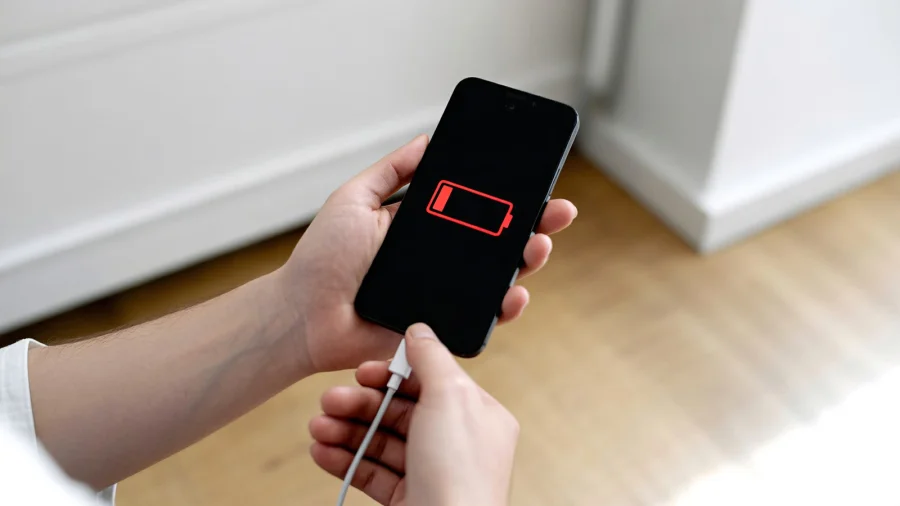
You plug in your phone charger, charge your device, and then walk away — leaving the charger still plugged into the wall. It's a habit millions of Indians have. But does that idle charger actually cost you money? The short answer is yes — but the real story is more nuanced than you might think.
What is standby power and how much does your charger really draw?
Even when no phone is connected, a charger plugged into a wall socket continues to draw a small amount of electricity. This is called "standby power" or "phantom power." According to experts, a typical phone charger draws between 0.1 to 0.5 watts when idle. To put that in perspective, a 0.3-watt draw running 24/7 for a year uses about 2.6 kilowatt-hours (kWh) of electricity.
Why this matters for Indian households with multiple chargers
In many Indian homes, it's common to have chargers for phones, tablets, smartwatches, earphones, and laptops — all plugged in permanently. If you have five chargers each drawing 0.3 watts idle, that's 1.5 watts continuously. Over a year, that's roughly 13 kWh — enough to power a small LED bulb for several months. While the cost per charger is tiny (around ₹5–10 per year), the cumulative effect across a household adds up.
How much does it actually cost you? A simple calculation
Let's do the math. At an average Indian electricity tariff of ₹6–8 per kWh, a single idle charger costs about ₹15–20 per year. For a home with 10 chargers, that's ₹150–200 annually. Compare that to a refrigerator that runs 24/7 and costs ₹3,000–5,000 per year, or an air conditioner that can add ₹10,000+ to your bill. The charger waste is real but dwarfed by larger appliances.
What experts and studies say about phantom power from chargers
Energy researchers have long studied standby power. The Lawrence Berkeley National Laboratory found that standby power accounts for 5–10% of residential electricity use in developed countries. However, phone chargers are a small fraction of that. Most of the waste comes from TVs, set-top boxes, gaming consoles, and computers. "Your TV uses more electricity in standby mode than a dozen phone chargers combined," one energy analyst noted.
Modern chargers vs older models: Is there a difference?
Older chargers with bulky transformers tend to draw more standby power — sometimes up to 1 watt. Newer chargers, especially those using GaN (gallium nitride) technology or smart chips, are far more efficient. Many modern chargers draw less than 0.1 watts when idle. Some even have auto-shutoff features that cut power completely when no device is detected. If you have an old charger from five years ago, it's likely wasting more than a new one.
Confirmed facts vs what remains unclear about charger electricity waste
Confirmed: All plugged-in chargers draw some standby power. The amount varies by model and age. The cost per charger is very low. Unplugging saves energy. Unclear: Exact standby draw for every charger model is not publicly available. The precise impact on your bill depends on your local electricity rate and number of chargers. Some claims online exaggerate the savings — unplugging one charger won't cut your bill by ₹100.
Risks and balanced view: Is unplugging worth the effort?
Critics argue that obsessing over charger standby power is a distraction from bigger energy waste. A single ceiling fan left on overnight wastes more electricity than a charger left plugged in for months. Others point out that unplugging and re-plugging chargers can wear out the socket or the charger's plug over time. The real benefit may be psychological — building a habit of energy mindfulness that extends to larger appliances.
The bigger picture: Standby power across your entire home
Phone chargers are just one part of a larger problem. In a typical Indian home, the biggest standby power culprits are: TVs (1–3 watts idle), set-top boxes (5–15 watts), Wi-Fi routers (5–10 watts), and gaming consoles (10–30 watts). If you want to save real money, unplugging your TV and set-top box when not in use will have a far bigger impact than unplugging your phone charger.
Practical steps: What you should actually do
If you want to reduce standby power waste, here's what energy experts recommend: 1) Use a power strip for multiple chargers and turn it off when not in use. 2) Upgrade old chargers to newer, more efficient models. 3) Focus on larger appliances first — unplug TV, set-top box, and computer when not needed. 4) For phone chargers, unplugging is a good habit but not a financial game-changer. 5) Consider smart plugs that cut power automatically.
Future outlook: Will chargers become zero-standby?
Technology is moving toward near-zero standby power. New USB-C Power Delivery chargers and GaN chargers already draw less than 0.05 watts idle. Some manufacturers are working on chargers that completely disconnect from the grid when no device is detected. Regulations in Europe and India are also pushing for stricter standby power limits. Within a few years, the question of charger waste may become irrelevant.
Our Take
Yes, your phone charger wastes a tiny amount of electricity when not charging. But the real story is about perspective. In a country where millions still lack reliable electricity, every bit of conservation matters. However, the most effective energy savings come from addressing the biggest wasters — not from obsessing over a few rupees a year. Unplug your charger if it makes you feel better, but don't expect it to transform your electricity bill. The real win is building a mindset of energy awareness that leads to bigger changes.
Frequently Asked Questions
Does a phone charger use electricity when not charging?
Yes, it does. Even when no device is connected, a charger plugged into a wall socket draws a small amount of electricity — typically 0.1 to 0.5 watts. This is called standby power or phantom power.
How much money does an idle phone charger waste per year?
For a single charger, the cost is very low — around ₹15–20 per year in India, depending on your local electricity rate. For a household with multiple chargers, it could add up to ₹150–200 annually.
Is it worth unplugging my phone charger to save electricity?
Unplugging your charger saves a tiny amount of electricity. It's a good habit for energy mindfulness, but the real savings come from unplugging larger appliances like TVs, set-top boxes, and computers.
Do modern chargers waste less standby power than old ones?
Yes. Newer chargers, especially GaN (gallium nitride) and USB-C Power Delivery models, draw much less standby power — often below 0.1 watts. Older chargers with transformers can draw up to 1 watt when idle.