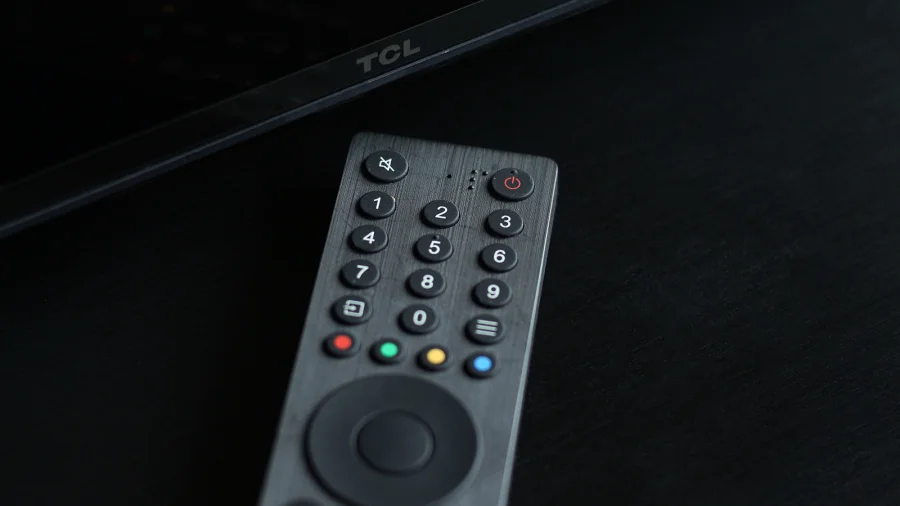
Every time you press a button on your TV remote, a burst of invisible infrared light travels from the device to your television. This technology, first demonstrated in the 1950s and refined for consumer use in the 1980s, is now over 70 years old. Yet, despite the rise of Bluetooth, Wi-Fi, and voice control, the humble infrared remote remains the default for almost every television sold today. Why hasn’t it been replaced?
The simplicity that keeps IR alive
Infrared remote technology is remarkably simple. When you press a button, the remote sends a coded sequence of infrared light pulses to a receiver on the TV. The TV decodes the sequence and performs the action. There’s no pairing, no software updates, no battery-draining handshake protocols. This simplicity translates directly into cost: a basic IR remote costs manufacturers less than a dollar to produce. For a product that often ships free with a TV, that’s a critical advantage.
Why Bluetooth hasn’t taken over
Bluetooth remotes do exist, especially for smart TVs and streaming devices like Apple TV or Roku. They offer benefits: no line-of-sight requirement, longer range, and two-way communication (so the TV can tell the remote its battery level). But Bluetooth adds complexity. It requires pairing, consumes more power (meaning frequent battery changes), and increases manufacturing cost by several dollars. For the core functions of a TV remote—changing channels, adjusting volume, powering on and off—Bluetooth is overkill.
The battery life trade-off
One of the most practical reasons IR persists is battery life. An IR remote can last for years on a pair of AA or AAA batteries because it only draws power when a button is pressed. Bluetooth remotes, by contrast, must maintain a constant connection, draining batteries even when idle. For users who expect their remote to work without thinking about batteries, IR is the clear winner.
Universal compatibility without pairing
IR remotes work with any TV that has an IR receiver—which is virtually every television ever made. There’s no need to pair, no compatibility issues across brands, and no software fragmentation. A universal IR remote can control a TV from 1995 just as easily as one from 2025. Bluetooth remotes, on the other hand, often require specific protocols and may not work with older devices.
The line-of-sight limitation
The most obvious drawback of IR is that it requires a direct line of sight between the remote and the TV receiver. If you hide your TV behind a cabinet door or sit at an extreme angle, the remote won’t work. This limitation is why some premium remotes now include both IR and Bluetooth—IR for basic functions, Bluetooth for advanced features like voice search or keyboard input. But for the vast majority of users, pointing the remote at the TV is not a burden.
Confirmed Facts vs What Remains Unclear
Confirmed: IR technology has been used in TV remotes since the 1980s. IR remotes are cheaper to manufacture than Bluetooth remotes. IR remotes consume significantly less power. Bluetooth remotes require pairing and have higher battery drain. Unclear: The exact percentage of TVs shipped with IR-only vs Bluetooth remotes. Whether IR will eventually be phased out in favor of Bluetooth or other wireless standards. The long-term environmental impact of disposable IR remote batteries compared to rechargeable Bluetooth alternatives.
Why IR remains the standard for budget and mid-range TVs
For television manufacturers, cost is the deciding factor. A basic IR remote adds almost nothing to the bill of materials. Bluetooth adds $2–5 per remote, which for a budget TV can be a significant percentage of the profit margin. As a result, IR remains the default for all but the most premium television models. Even many high-end smart TVs ship with an IR remote, with Bluetooth reserved for optional voice or motion controls.
The role of infrared in the age of smart homes
While Bluetooth and Wi-Fi have become standard for smart home devices like lights and thermostats, IR has found a niche as a universal control method. Devices like the Logitech Harmony Hub (now discontinued) and various IR blasters allow users to control multiple IR devices from a single app or voice assistant. This has extended the life of IR technology, proving that even an old standard can adapt to new ecosystems.
Practical Reader Guidance
If you’re buying a new TV and wondering whether to prioritize Bluetooth or IR, consider your usage. If you primarily watch TV in a standard living room setup with the remote in hand, IR is perfectly adequate and will save you money. If you need to control your TV from another room, use voice commands, or pair a keyboard, look for a model with Bluetooth or a hybrid remote. For most people, the decades-old IR standard is still the right choice.
Future Outlook
Infrared technology is unlikely to disappear from TV remotes anytime soon. The cost and simplicity advantages are too strong. However, we may see a gradual shift toward hybrid remotes that use IR for basic functions and Bluetooth for advanced features. As smart TVs become more interactive, Bluetooth may become more common, but IR will remain the backbone of the TV remote for the foreseeable future.
Our Take
The persistence of infrared in TV remotes is a textbook example of how a technology can survive not because it’s the most advanced, but because it’s the most practical. In a world obsessed with the latest innovation, IR reminds us that sometimes the best solution is the simplest one. It’s cheap, reliable, and universally compatible—qualities that matter far more to the average user than the ability to control a TV from across the house. The next time you pick up your remote, take a moment to appreciate the invisible light that has been connecting you to your television for decades.
Frequently Asked Questions
Why do TV remotes still use infrared instead of Bluetooth?
Infrared is cheaper, simpler, and uses far less battery power than Bluetooth. For basic TV functions like changing channels and adjusting volume, IR is perfectly adequate and costs manufacturers less than a dollar per remote.
Can I use a Bluetooth remote with an older TV?
No, unless the TV has a Bluetooth receiver built in. Most older TVs only have IR receivers. You can use a universal IR remote or an IR blaster adapter to control them.
Does infrared remote technology have any disadvantages?
Yes, the main disadvantage is that IR requires a direct line of sight between the remote and the TV receiver. It also has a shorter range than Bluetooth and cannot pass through walls or obstacles.
Will infrared remotes eventually be replaced?
Not entirely. While Bluetooth and Wi-Fi remotes are becoming more common for smart TVs, IR will likely remain the standard for basic TV control due to its low cost and simplicity. Hybrid remotes that use both technologies are the most likely future.