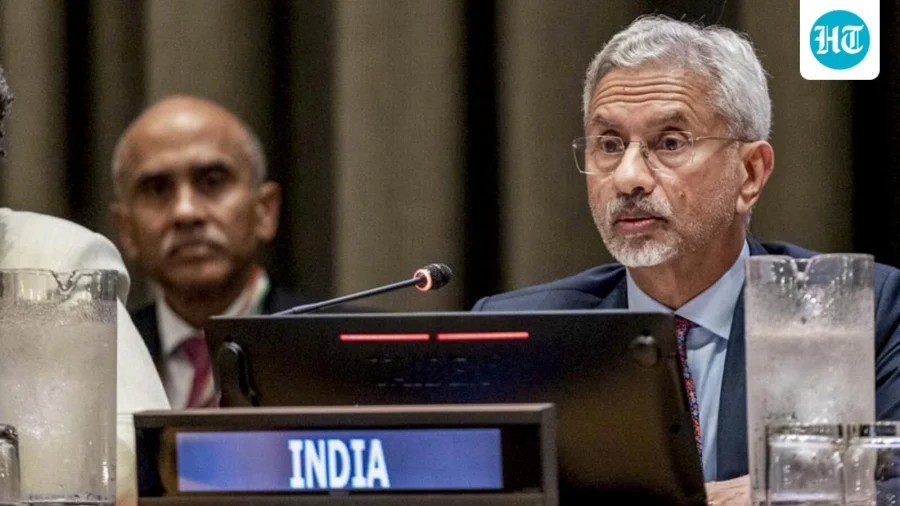
India has joined the European Union, Australia, Brazil and Canada to launch a new multilateralism platform — a grouping that signals a shared intent to rework how the world's toughest problems are tackled. The announcement places India at the centre of a coalition that spans four continents and brings together major economies with distinct strategic priorities.
A Coalition Built Around Security and Climate Justice
External Affairs Minister S. Jaishankar emphasised the need for collaborative efforts to address issues such as international security and climate justice. His framing suggests the platform is not just about dialogue, but about coordinated action on two of the most contested fronts in global affairs.
International security has become increasingly fragmented, with traditional alliances under strain and new flashpoints emerging. Climate justice, meanwhile, remains a sticking point between developed and developing economies over funding, responsibility and transition timelines.
Why a New Platform Matters Now
The timing is significant. Multilateral institutions have faced growing criticism for slow decision-making and uneven representation. A fresh platform involving India, the EU, Australia, Brazil and Canada could offer an alternative channel for consensus-building.
For India, this aligns with its broader push for a more representative global order — one where emerging economies have a stronger voice in shaping rules rather than merely following them.
How the Grouping Came Together
The platform brings together a mix of developed and developing economies. The EU and Canada represent established Western blocs, while Brazil and India carry the weight of the Global South. Australia adds a key Indo-Pacific perspective.
That combination is deliberate. It suggests an effort to bridge the divide that often stalls negotiations in larger forums, where consensus is harder to reach.
Who Stands to Gain — and How
For India, the platform offers a stage to project leadership on climate and security without being boxed into existing blocs. For Brazil, it reinforces its role as a voice for developing nations. For the EU, Canada and Australia, it provides a way to engage emerging powers on shared priorities.
For ordinary citizens, the practical impact will depend on whether the platform translates into concrete outcomes — funding, technology transfer, or coordinated security responses.
What Jaishankar's Message Signals
Jaishankar's emphasis on collaboration reflects a consistent Indian position: that global challenges cannot be solved unilaterally or by a handful of powers. His remarks frame multilateralism not as an ideal, but as a necessity.
That message is likely to resonate with other middle powers who feel sidelined in existing structures.
Reading the Intent Behind the Launch
Launching a platform is one thing; making it work is another. The real test will be whether this grouping can move beyond statements and deliver on security coordination and climate commitments.
Still, the very formation of the group is a signal — that a set of nations is willing to experiment with new formats when older ones stall.
Confirmed Facts vs What Remains Unclear
Confirmed: India, the EU, Australia, Brazil and Canada have come together to launch a multilateralism platform, and Jaishankar has publicly stressed collaboration on international security and climate justice.
Unclear: The platform's exact structure, membership criteria, decision-making process, funding, and specific deliverables have not been detailed in available information. Any claims about its future impact remain speculative at this stage.
Risks and a Balanced View
New platforms often struggle with duplication. Critics may argue that adding another grouping complicates an already crowded multilateral landscape rather than streamlining it.
There is also the question of follow-through. Without binding commitments or resources, platforms risk becoming talking shops. Whether this one avoids that fate will depend on sustained political will from all five participants.
A Wider Shift in Global Governance
This launch fits a broader pattern: middle powers and emerging economies are increasingly forming flexible coalitions rather than relying solely on legacy institutions. From climate clubs to security dialogues, the trend is toward smaller, purpose-driven groupings.
India's participation in this platform is consistent with its strategy of multi-alignment — engaging multiple partners without exclusive alliances.
What Readers Should Watch For
For students of international relations, this is a case study in coalition-building. For policymakers and analysts, the key indicators will be the platform's first joint statements, any announced workstreams, and whether it attracts additional members.
For the general public, the relevance lies in whether this translates into action on climate finance, security cooperation, or both.
What Could Come Next
Expect further details on the platform's scope in the coming weeks. Early meetings, joint declarations, or working groups would signal seriousness. Silence, on the other hand, would suggest a symbolic launch without operational depth.
India's role will be closely watched, given its dual identity as a major emitter and a leading voice for the Global South.
Our Take
This is less about a single announcement and more about a direction. India joining the EU, Australia, Brazil and Canada to launch a multilateralism platform reflects a growing appetite for new formats of cooperation — ones that are nimbler and more representative than traditional institutions.
Whether it delivers will depend on execution. But the intent itself is a notable shift in how global governance is being reimagined.
Frequently Asked Questions
What is the multilateralism platform launched by India and other countries?
It is a new grouping involving India, the EU, Australia, Brazil and Canada, aimed at promoting collaborative approaches to global challenges, particularly international security and climate justice.
Why did India join this platform?
India has consistently advocated for a more representative and effective multilateral system. Joining this platform aligns with its push for collective action on security and climate issues.
What did EAM Jaishankar say about the platform?
Jaishankar emphasised the need for collaborative efforts to address issues such as international security and climate justice, signalling India's commitment to joint global action.
What does this mean for global governance?
It suggests a growing trend of like-minded nations forming flexible coalitions to address issues where larger institutions struggle to reach consensus. The platform's actual impact will depend on its operational follow-through.