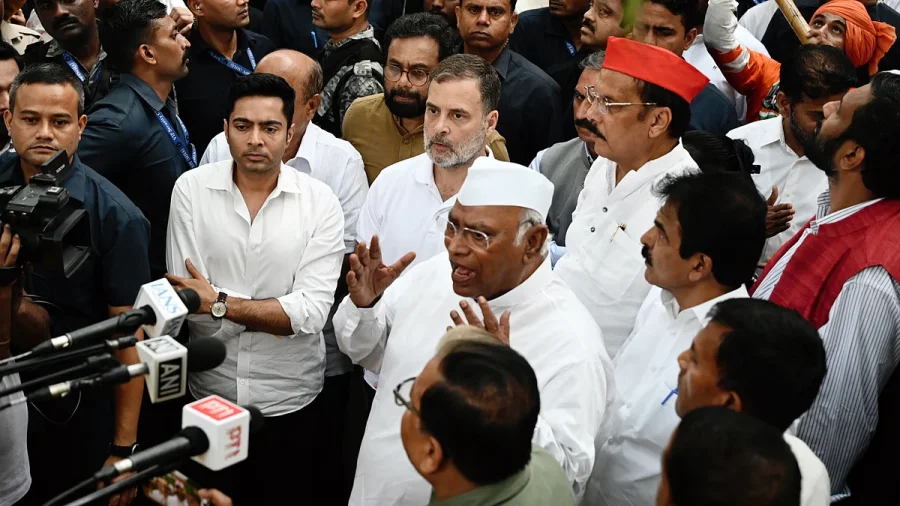
The INDIA bloc is not backing down. For the third straight day, Opposition MPs intensified their protest demanding Chief Election Commissioner Gyanesh Kumar's resignation — and on Thursday, they added two significant moves to their strategy: a visit to Rajghat and a second consecutive lunch hosted by Congress president Mallikarjun Kharge.
The symbolism was deliberate. Rajghat, the memorial of Mahatma Gandhi, has long been a site where political parties project moral authority. By gathering there, the INDIA bloc is framing its protest not merely as a procedural demand but as a defence of democratic principles.
Why Kharge's Second Lunch Matters More Than It Seems
Two lunches in two days is not routine. It signals that the Opposition is actively coordinating its next steps, not just reacting to events. Kharge, as Congress president and a senior INDIA bloc figure, is positioning himself as a convenor of sorts — someone who can bring disparate Opposition parties onto the same page.
For a coalition that has faced questions about its durability, this kind of sustained, visible coordination is a message in itself. The message: we are still together, and we are not going away.
The Core Demand: Why the Opposition Wants Gyanesh Kumar Out
At the heart of the protest is a demand for CEC Gyanesh Kumar's resignation. The Opposition has raised concerns about the functioning of the Election Commission under his leadership, though the specific grievances have not been detailed in the available information.
What is clear is that the INDIA bloc has decided to make this a central issue — one that it believes resonates beyond Parliament and into the public domain.
Unanswered Letters and Denied Meetings: The Opposition's Frustration
Opposition leaders say their requests for meetings with President Droupadi Murmu and the election commissioners have either gone unanswered or been denied. This, they argue, leaves them with few options beyond public protest.
Whether these claims are accurate or represent a breakdown in communication is not fully clear from the available information. What is evident is that the Opposition feels shut out of formal channels — and is using the streets and the media to compensate.
Rahul Gandhi and the Intensifying Street Presence
Rahul Gandhi has been among the most visible faces of the protest, joining MPs as they escalate their public presence. The Congress leader's involvement signals that the party sees this as a high-stakes moment — one worth investing political capital in.
Opposition MPs have also accused authorities of using police action to suppress dissent. These are serious allegations, and they add a confrontational edge to an already tense standoff.
What We Know — and What We Don't
Confirmed: The INDIA bloc held a second lunch hosted by Kharge. MPs visited Rajghat. Protests are in their third day. Opposition leaders say their meeting requests have been denied or ignored.
Unclear: The specific grounds for the demand for CEC Gyanesh Kumar's resignation. Whether the government or Election Commission has responded formally. The exact nature of the police action the Opposition alleges.
Speculation: Whether this protest will lead to any concrete outcome — a resignation, a meeting, or a change in the Election Commission's functioning — remains unknown.
The Risk of Protest Fatigue — and Why It Hasn't Set In Yet
Protests in India often lose momentum after the first 48 hours. The fact that the INDIA bloc has sustained this into a third day — and added new elements like the Rajghat visit and the second lunch — suggests a level of organisation that is not accidental.
But risks remain. Without a clear, achievable demand or a formal response from the authorities, the protest could eventually run out of steam. The Opposition's challenge is to keep the pressure up while avoiding the perception of going through the motions.
A Pattern of Opposition Coordination — or a One-Off?
This is not the first time the INDIA bloc has coordinated publicly. But the combination of street protests, symbolic visits, and repeated meetings suggests a more structured approach than before.
If this level of coordination continues, it could reshape how the Opposition operates — not just on this issue, but on future ones. If it fades, it will be remembered as another moment of unity that did not translate into sustained action.
What This Means for Ordinary Citizens
For most Indians, the immediate impact of this protest is limited. The demand for the CEC's resignation is a political one, and its outcome will be decided in the corridors of power, not on the streets.
But the broader question — how the Opposition holds the government accountable when formal channels appear closed — matters to anyone who cares about democratic processes. The way this standoff is resolved will set a precedent for future disputes.
What Happens Next
The INDIA bloc is likely to continue its protests in the coming days. Whether it escalates — through larger gatherings, parliamentary disruptions, or legal challenges — depends on how the government and the Election Commission respond.
If the Opposition's meeting requests continue to be denied, expect the rhetoric to harden. If a meeting is granted, the protest may shift from the streets to the negotiating table.
Our Take
This is a story about more than one demand or one protest. It is about how the Opposition, when it feels locked out of formal processes, chooses to make its voice heard. The INDIA bloc's decision to sustain its protest — and to do so with visible coordination — is a signal that it believes this issue is worth the political cost.
Whether that belief is vindicated will depend on factors beyond its control: the government's response, the public's attention span, and the Election Commission's next moves. For now, the Opposition is betting that persistence will pay off. That bet is not guaranteed — but it is being made with unusual discipline.
Frequently Asked Questions
Why is the INDIA bloc protesting?
The INDIA bloc is demanding the resignation of Chief Election Commissioner Gyanesh Kumar, citing concerns about the functioning of the Election Commission. The protest is now in its third day.
What is the significance of the Rajghat visit?
Rajghat is the memorial of Mahatma Gandhi. By visiting it, the Opposition is framing its protest as a defence of democratic principles, not just a procedural demand.
Why did Kharge host a second lunch?
The second consecutive lunch signals that the INDIA bloc is actively coordinating its strategy and maintaining unity among its constituent parties.
Have the authorities responded to the Opposition's demands?
According to Opposition leaders, their requests for meetings with President Droupadi Murmu and the election commissioners remain unanswered or have been denied. No formal response from the government or Election Commission has been reported.
[NEWS_SCHEMA] {"@context":"https://schema.org","@type":"NewsArticle","headline":"INDIA Bloc Rajghat March: Kharge Hosts Second Opposition Lunch","description":"INDIA bloc MPs protest for third day demanding CEC Gyanesh Kumar's resignation. Kharge hosts second lunch as Opposition seeks meetings with President Murmu.","image":"","datePublished":"2025-10-09","dateModified":"2025-10-09","author":{"@type":"Person","name":"Political Correspondent","url":"","sameAs":[]},"publisher":{"@type":"Organization","name":"The India Report","logo":{"@type":"ImageObject","url":""}},"mainEntityOfPage":{"@type":"WebPage","@id":""},"articleSection":"Politics","keywords":"INDIA bloc protest, CEC resignation, Mallikarjun Kharge, Rajghat, Rahul Gandhi, President Murmu"} [SOURCES] No high-confidence sources available. This article is based on the original story provided.