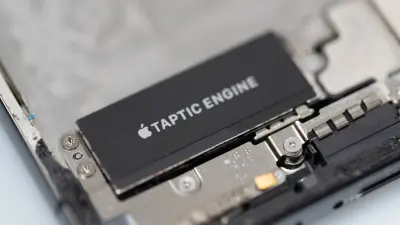
Imagine a processor so powerful it could fit 50 billion transistors on a chip the size of your fingernail. That's the promise of IBM's latest breakthrough — a chip technology that operates below 1 nanometre, using a radical new design that researchers are calling a 'block of flats' approach.
How IBM's 'block of flats' design works
Traditional chip manufacturing has long relied on shrinking transistors horizontally — like squeezing more people into a single-floor building. But as transistors approach atomic scales, this method hits physical limits. IBM's solution? Build upwards.
The company's new nanosheet transistor design stacks components vertically, much like floors in an apartment block. This allows more transistors in the same footprint while improving electrical performance and reducing power leakage.
Why this matters for your phone, laptop, and cloud
Smaller, more efficient transistors mean processors that are faster and consume less power. For everyday users, this could translate to smartphones that last days on a single charge, laptops that never heat up, and data centres that slash their electricity bills.
For industries like artificial intelligence and cloud computing, the implications are even bigger. More transistors per chip means more complex AI models can run locally, reducing reliance on cloud servers and improving response times.
The long road from lab to factory
IBM's achievement is a research milestone, not a product announcement. The company has demonstrated the technology in its labs, but turning it into a commercially viable manufacturing process is a different challenge.
Industry experts estimate it could take five to ten years before chips using this design appear in consumer devices. The technology must first be adapted for mass production, tested for reliability, and integrated into existing fabrication plants — a process that costs billions of dollars.
Who benefits from this breakthrough
IBM doesn't manufacture its own chips at scale. Instead, it licenses its technology to major semiconductor manufacturers like Samsung and TSMC, who produce chips for companies like Apple, AMD, and Qualcomm.
This means the breakthrough could eventually power everything from iPhones to supercomputers. But the timeline depends on how quickly licensees can adopt the new design and integrate it into their production lines.
What IBM researchers are saying
IBM's research team described the 'block of flats' design as a fundamental shift in how transistors are built. "We're moving from a 2D world to a 3D world," one researcher told the BBC. The company believes this approach can extend Moore's Law — the observation that transistor density doubles roughly every two years — well into the next decade.
The physics behind the breakthrough
At below 1 nanometre, quantum effects start to dominate. Electrons can 'tunnel' through barriers they shouldn't be able to cross, causing leaks and errors. IBM's nanosheet design addresses this by using ultra-thin layers of silicon that better confine electrons, reducing leakage and improving switching speed.
The 'block of flats' analogy is apt: by stacking transistors vertically, IBM creates more 'floor space' for computing without increasing the chip's footprint. This allows engineers to pack more functionality into the same area while managing heat and power more effectively.
Confirmed facts vs what remains unclear
Confirmed: IBM has demonstrated a working transistor design below 1 nanometre using nanosheet stacking. The technology has been verified in IBM's research labs. The design is a world first for sub-1nm chip technology.
Unclear: The exact timeline for commercial production. The cost of adapting existing fabrication plants. Whether the design can be scaled to mass production without performance degradation. How competitors like TSMC and Intel will respond.
IBM's moat: Why this company matters in chip research
IBM has a long history of semiconductor innovation, from the first DRAM chip to the 7nm and 5nm breakthroughs. The company's research division, one of the world's largest, continues to push fundamental limits even as it no longer manufactures chips at scale.
IBM's moat lies in its intellectual property portfolio and its licensing model. By inventing the underlying technology and letting others manufacture it, IBM generates revenue without the massive capital expenditure of building fabs. This 'research-first' approach has kept IBM relevant in chip innovation for decades.
Risks and balanced view
The biggest risk is that the technology never makes it to mass production. Many lab breakthroughs have failed to scale commercially due to cost, yield issues, or competing technologies. Intel, for instance, has struggled with its own 7nm and 5nm transitions.
Critics also point out that the semiconductor industry is already exploring alternative approaches, such as quantum computing and neuromorphic chips, which could render traditional transistor scaling less relevant. IBM itself is investing heavily in quantum research.
The wider trend: A race to the atomic limit
IBM's announcement is the latest salvo in a global race to push chip technology to its physical limits. TSMC and Samsung are already producing 3nm chips, with 2nm expected in the next two years. Intel has its own roadmap for 1.4nm by 2027.
But below 1nm, every manufacturer faces the same fundamental physics challenges. IBM's 'block of flats' design offers one potential solution, but competitors are pursuing their own approaches, including gate-all-around (GAA) transistors and complementary FET (CFET) designs.
What this means for students, investors, and tech enthusiasts
For students and researchers, IBM's breakthrough is a reminder that fundamental physics still has room for innovation. The nanosheet design could become a textbook example of how 3D stacking extends Moore's Law.
For investors, the news reinforces the importance of semiconductor intellectual property. Companies like IBM that own foundational patents can benefit from licensing revenue without the risks of manufacturing.
For tech enthusiasts, the takeaway is simple: the next decade will see chips that are dramatically more powerful and efficient. But patience is required — the 'block of flats' design won't arrive in your next phone.
Future outlook: What happens next
IBM will likely publish detailed technical papers on the design, allowing the broader semiconductor industry to evaluate and adapt it. Licensing discussions with manufacturers like Samsung and TSMC could begin within the next year.
If successful, the technology could appear in high-end server chips by the late 2020s, followed by consumer devices in the early 2030s. But the path is uncertain, and competing technologies could overtake it.
Our Take
IBM's 'block of flats' design is a genuine engineering achievement, but it's important to separate the science from the hype. The breakthrough is real — a working transistor below 1nm is a world first. But the journey from lab to laptop is long, expensive, and uncertain.
What makes this story significant is not the immediate impact, but the direction it signals. The semiconductor industry is moving from 2D to 3D, and IBM has shown one viable path. Whether that path leads to mass production or remains a research curiosity will depend on economics, engineering, and competition.
For now, it's a reminder that the limits of silicon are not yet reached — and that innovation often comes from thinking vertically.
Frequently Asked Questions
What is IBM's 'block of flats' chip design?
It's a new transistor design that stacks components vertically, like floors in a building, allowing more transistors in the same space. This enables chip technology below 1 nanometre for the first time.
When will IBM's sub-1nm chips be available in products?
Commercial production is likely years away. Industry estimates suggest five to ten years before the technology appears in consumer devices, as it must first be adapted for mass manufacturing.
How does this compare to current chip technology?
Current leading chips use 3nm and 4nm processes. IBM's breakthrough is below 1nm, which could allow up to 50 billion transistors on a chip the size of a fingernail — far more than today's most advanced processors.
Will this make my phone or laptop faster?
Eventually, yes. The technology promises faster performance and better energy efficiency. But it will take years to reach consumer products, and the first applications will likely be in data centres and supercomputers.