In early 2026, the Central Board of Secondary Education (CBSE) promised a revolution. The On-Screen Marking (OSM) protocol was supposed to bring standardised marking, faster results, and complete transparency to India’s high-stakes board exams. No more manual errors. No more delays. No more doubts.
Instead, what was meant to be a ‘brave new experiment’ has turned into a crisis of confidence. Students, teachers, and parents are now asking a question that strikes at the heart of the education system: How do you trust the CBSE test results?
What Exactly Is CBSE’s On-Screen Marking System?
The OSM system was designed to digitise the evaluation process. Instead of physical answer sheets being marked by hand, examiners would assess scanned copies on a screen. The goal was to standardise marking across thousands of evaluators, reduce human error, and allow for remote evaluation—a modern solution for a massive, complex system.
CBSE announced OSM on 9 February 2026. The Class 12 board exams began on 17 February. The system was deployed on 3 March, when evaluation started. The timeline was extraordinarily tight—barely a week between announcement and the first exam, and less than a month before actual marking began.
Why This Matters Right Now
For millions of students, CBSE board results determine college admissions, career paths, and life trajectories. A single mark can mean the difference between a dream college and a backup option. When the system meant to ensure fairness becomes a source of confusion, the stakes are personal and profound.
Parents are worried. Teachers are frustrated. Students are anxious. The promise of transparency has been replaced by uncertainty. And with no official clarification from CBSE or the government, the silence is only deepening the distrust.
How the Situation Developed
The timeline tells a troubling story. On 9 February, Prime Minister Narendra Modi’s annual ‘Pariksha pe charcha’ event was aired nationally—a platform meant to reassure students and parents about the examination process. On the same day, CBSE announced OSM. The timing, as many observers noted, seemed carefully orchestrated.
But the reassurance was short-lived. As evaluation began on 3 March, complaints started surfacing. Students reported discrepancies in marks. Teachers struggled with the new system. Demands for clarity grew louder. Yet, according to reports, there has been no official response from the Prime Minister or CBSE leadership since the initial announcement.
Who Is Affected and What Officials Are Saying
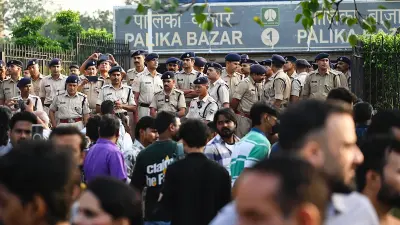
The impact is widespread. Class 12 students across India—over a million of them—are directly affected. Their parents are caught in the anxiety of uncertainty. Teachers, who are the frontline evaluators, are grappling with a system they had little time to understand.
Despite demands from students and teachers for answers, CBSE has not issued a detailed clarification. The silence is unusual for an organisation that typically communicates regularly during exam seasons. This lack of transparency is itself becoming a major concern.
What We Know So Far — and What Remains Unclear
What is confirmed: OSM was announced on 9 February, deployed on 3 March, and is being used for Class 12 board exams. Complaints have been reported. No official response has been given.
What remains unclear: How many students have been affected? What specific errors have been identified? Is CBSE planning to review or re-evaluate papers? Will results be delayed? And most importantly—can the system be trusted?
Risks, Concerns, and the Balanced View
Let’s be fair: digitisation of examination systems is not inherently bad. Many countries have moved to digital marking with success. The potential benefits—faster results, reduced bias, better data—are real.
But the execution matters. Rushing a system of this scale, with minimal testing and no pilot phase, invites problems. The lack of communication after complaints compounds the issue. Trust, once broken, is hard to rebuild—especially when the stakes are as high as a student’s future.
Critics argue that CBSE prioritised optics over substance. The coincidence with ‘Pariksha pe charcha’ suggests a political rather than educational motive. Supporters might say that any new system faces teething problems, and that OSM will improve over time. But for students waiting for results, that argument offers little comfort.
Why Similar Trends Are Increasing
This is not an isolated incident. Across India, digital transformation in education has been uneven. From online classes during the pandemic to AI-based proctoring, technology has been introduced rapidly, often without adequate preparation. The result is a pattern: big promises, rushed implementation, and then a crisis of trust.
- Digital evaluation systems in other Indian boards have faced similar criticism.
- Online exam proctoring during COVID-19 led to widespread complaints about fairness.
- Automated result processing has sometimes produced errors that took months to correct.
“The promise was alluring—standardised marking, quicker results, transparency, elimination of manual errors and the convenience of remote evaluation. Yet, this ‘brave new experiment’ went horribly wrong.” — Original story
What Students, Parents, and Teachers Should Know Now
If you are a student or parent affected by this situation, here is what you can do:
Stay informed. Follow official CBSE communications. Check the board’s website and verified social media channels for updates.
Document everything. If you suspect an error in your results, keep copies of your answer sheets, mark sheets, and any correspondence with the school or board.
Use official channels. CBSE typically has a grievance redressal system. File a formal complaint if you believe there is a discrepancy.
Be patient but persistent. These issues often take time to resolve. But do not let silence discourage you from seeking answers.
What Could Happen Next
The coming weeks will be critical. CBSE may issue a clarification or announce a review process. If complaints continue to mount, there could be demands for a re-evaluation or even a postponement of result declarations.
Longer term, this episode could force CBSE to rethink its approach to digital transformation. A more transparent, phased rollout—with proper pilot testing and stakeholder consultation—might restore confidence. But that will take time.
For now, the immediate question remains unanswered: Can students trust their CBSE results?
Our Take: Why This Story Matters Beyond One Incident
This is not just about a technical glitch or a bureaucratic misstep. It is about the relationship between institutions and the people they serve. When a system designed to evaluate merit becomes a source of anxiety, it undermines the very purpose of education.
CBSE’s OSM experiment was a bold idea. But bold ideas need careful execution, transparent communication, and—most importantly—accountability. Without those, even the best intentions can backfire.
The silence from the top is the most troubling part. Students and parents deserve answers. Not just about marks, but about the system itself. Trust is not given; it is earned. And right now, CBSE has a lot of earning to do.
FAQs
What is CBSE On-Screen Marking (OSM)?
OSM is a digital evaluation system where examiners mark scanned copies of answer sheets on a screen instead of physical paper. CBSE introduced it for the 2026 Class 12 board exams to standardise marking and reduce errors.
Why are students and parents worried about CBSE results this year?
The OSM system was announced just days before exams began and deployed during evaluation. Complaints about discrepancies have emerged, and CBSE has not issued a detailed clarification, creating widespread uncertainty and distrust.
Can I challenge my CBSE board exam result if I suspect an error?
Yes. CBSE typically offers a grievance redressal process. You should contact your school, keep all documentation, and file a formal complaint through official CBSE channels if you believe there is a marking error.
Will CBSE delay the 2026 board results because of the OSM controversy?
It is too early to say. CBSE has not announced any delays. However, if complaints continue to mount, a review or re-evaluation process could affect the timeline. Stay tuned to official CBSE announcements for updates.