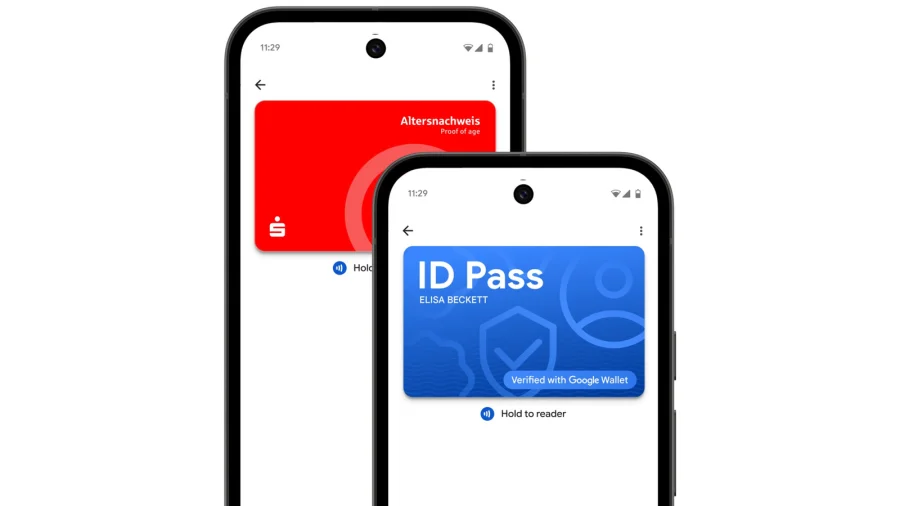
For years, Europeans have watched from the sidelines as Google Wallet rolled out digital ID support in the United States. This summer, that changes.
Google is finally bringing digital ID passes to select EU states, allowing users to store a government-issued ID directly on their phones. The move signals a major push into Europe's fragmented digital identity market — and it comes with a twist.
The company is also testing a new age verification system in partnership with a European bank, opening the door for secure, phone-based age checks at stores, bars, and online services.
Which EU States Will Get Google Wallet ID Passes First?
Google has confirmed that digital ID passes will be available in "select EU states" starting this summer, though the company has not yet released a full list of participating countries.
Based on the company's rollout patterns and existing partnerships, early adopters are likely to include countries with advanced digital identity infrastructure, such as Germany, France, and the Netherlands. However, Google has not officially confirmed any specific states.
The digital ID pass will allow users to store a secure, encrypted version of their government-issued ID — such as a driver's license or national ID card — directly in Google Wallet. The pass can be used for identity verification at airports, hotels, car rental agencies, and other locations that accept digital IDs.
Why This Matters for European Travelers and Residents
For frequent travelers within the EU, the ability to store a digital ID on a smartphone could eliminate the need to carry a physical wallet for identity checks. At airports, border crossings, and hotels, a simple tap of the phone could replace the routine of pulling out a passport or national ID card.
For residents, the convenience is equally significant. Digital ID passes could simplify everyday tasks like picking up packages, verifying age at stores, or accessing government services online.
But the real game-changer may be the age verification system Google is developing with a European bank.
Age Verification: A New Partnership With a European Bank
Alongside the ID pass rollout, Google is introducing a new age verification process in partnership with a European bank. The system is designed to allow users to prove their age without revealing their full identity or date of birth.
This is a critical distinction. Instead of showing a bartender or online service your full ID — which includes your name, address, and exact birth date — the new system would simply confirm whether you are over a certain age threshold.
For example, a user could tap their phone at a store to confirm they are over 18 or 21 without exposing their name, address, or exact age. This privacy-first approach could make digital age verification more acceptable to users who are wary of sharing personal data.
The partnership with a European bank also adds a layer of trust and security. Banks are already subject to strict Know Your Customer (KYC) regulations, meaning the identity data used for verification is already verified and trusted by financial authorities.
How Digital ID Passes Work in Google Wallet
Adding a digital ID pass to Google Wallet is designed to be straightforward. Users open the Google Wallet app, select "Add to Wallet," and choose the ID pass option. They then scan the photo page of their passport or national ID card, or enter the details manually.
The system uses encryption and secure hardware on the phone to protect the data. Google has emphasized that the digital ID pass is not a simple photo of the ID — it is a cryptographically secure credential that can be verified by authorized readers.
When a user needs to verify their identity, they tap their phone on a compatible reader. The reader checks the digital signature and confirms the ID is valid without exposing the user's full data to the reader.
What Is Confirmed and What Still Needs Clarity
While the announcement is significant, several details remain unclear.
Confirmed:
- Google Wallet will support digital ID passes in select EU states starting summer 2025.
- A new age verification process is being developed in partnership with a European bank.
- The system is designed to allow age verification without revealing full identity.
Unclear:
- Which specific EU states will be included in the initial rollout.
- Which European bank is partnering with Google for age verification.
- Whether the digital ID pass will be accepted at all locations that currently accept physical IDs.
- How the system will handle cross-border verification within the EU.
Risks and Concerns Around Digital ID Adoption
Digital ID passes offer convenience, but they also raise legitimate concerns.
Privacy advocates worry about the centralization of identity data. If a user's phone is lost or stolen, the digital ID pass could be vulnerable — though Google has implemented multiple layers of security, including biometric authentication and remote wipe capabilities.
There are also questions about acceptance. Even if Google Wallet supports digital IDs, not all businesses, airports, or government agencies may have the compatible readers needed to verify them. The rollout could be slow if adoption of the necessary infrastructure lags behind.
Additionally, the partnership with a bank raises questions about data sharing. While Google has emphasized privacy, some users may be uncomfortable with a technology company and a bank jointly managing their identity data.
A Broader Shift Toward Digital Identity in Europe
Google's move is part of a larger trend. The European Union has been pushing for a unified digital identity framework through the eIDAS regulation, which aims to make digital IDs interoperable across member states.
Several EU countries, including Estonia, Germany, and Belgium, already have well-established digital ID systems. Google's entry into this space could accelerate adoption by making digital IDs more accessible to everyday users through a familiar app.
Apple has also been expanding its digital ID support, though primarily in the United States. Google's European rollout could put pressure on Apple to follow suit in the EU market.
What Users Should Know Now
If you live in an EU state and are interested in using Google Wallet ID passes, here is what you should do:
- Keep an eye on Google's official announcements for the list of supported states.
- Ensure your Google Wallet app is updated to the latest version.
- Have your passport or national ID card ready for the setup process.
- Check whether local businesses, airports, and government agencies in your area accept digital IDs.
For those concerned about privacy, Google has stated that the digital ID pass uses encryption and does not share your full identity data with every reader. However, users should still evaluate whether the convenience outweighs their personal privacy preferences.
What Could Happen Next
If the EU rollout is successful, Google is likely to expand digital ID support to more European countries and potentially to other regions. The age verification system, if widely adopted, could become a standard feature for online services, age-restricted purchases, and physical retail.
The partnership with a European bank also suggests that Google is exploring deeper integration with financial institutions. This could lead to additional features, such as using the digital ID pass for bank account verification or secure online transactions.
However, the pace of adoption will depend on regulatory approval, infrastructure readiness, and public trust. Digital identity is a sensitive area, and any security breach or privacy misstep could slow the rollout significantly.
Our Take
Google's decision to bring digital ID passes to Europe is a logical next step in the company's push to make Google Wallet a central hub for digital identity. The timing is right — the EU is actively working on digital identity standards, and users are increasingly comfortable storing sensitive data on their phones.
The age verification system, in particular, is a smart move. By partnering with a bank, Google gains access to verified identity data without having to build its own verification infrastructure. And by allowing age checks without revealing full identity, the company addresses a key privacy concern that has held back digital ID adoption in the past.
Still, the success of this initiative will depend on execution. Google needs to ensure that the digital ID pass is accepted widely enough to be useful, that the security is robust enough to prevent fraud, and that the privacy protections are transparent enough to earn user trust.
If Google gets this right, the summer of 2025 could mark the beginning of a new era for digital identity in Europe. If it gets it wrong, the backlash could set the industry back years.
FAQs
Which EU states will get Google Wallet ID passes this summer?
Google has confirmed that digital ID passes will be available in "select EU states" starting summer 2025, but has not released a full list. Early candidates likely include Germany, France, and the Netherlands, though this has not been officially confirmed.
How does the age verification system work with a European bank?
The new age verification system allows users to confirm they are over a certain age without revealing their full identity or date of birth. It is being developed in partnership with a European bank, which provides verified identity data through existing KYC regulations.
Is the digital ID pass secure?
Yes. Google uses encryption and secure hardware on the phone to protect the digital ID pass. The pass is a cryptographically secure credential, not a simple photo of the ID. Users also need to authenticate with biometrics or a PIN to access the pass.
Will the digital ID pass be accepted everywhere in the EU?
Not immediately. Acceptance depends on whether businesses, airports, and government agencies have compatible readers. The rollout is expected to be gradual, with major airports and hotels likely to be early adopters.