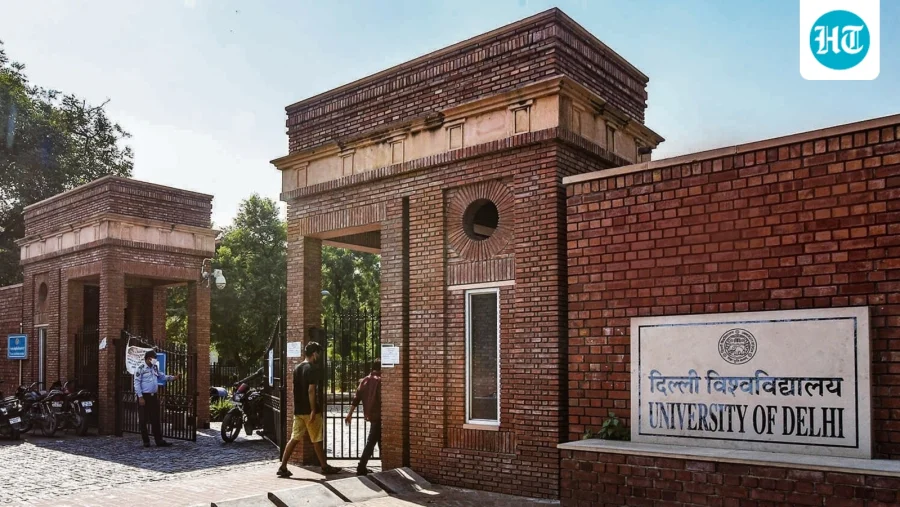
Seventy-eight years ago, days before India tasted freedom, a quiet note reached Delhi University's Executive Council. Students wanted a union of their own. The Vice-Chancellor had simply passed on the request — and with it, an idea that would outlive every government that followed.
A Request Recorded Days Before Independence
On August 6, 1947, the DU Vice-Chancellor informed the Executive Council that students desired to establish a university students' union. The date matters. India was still eleven days away from Independence, and Delhi was on the edge of enormous change.
What the students asked for was modest — recognition, a platform, a voice. What they eventually got was DUSU, the Delhi University Students Union, today one of the country's most visible student bodies.
Why a ₹150 Grant Mattered More Than It Sounds
The union's early life was built on a ₹150 grant. In 1947 terms, that was not a trivial sum — but it was nowhere near what a modern student body spends on a single election cycle.
The grant signalled something bigger than money. It meant the university was willing to formally recognise students as stakeholders, not just enrollees. That recognition is what allowed DUSU to grow into a representative institution rather than an informal club.
From a Council Note to a Campus Institution
DUSU's evolution mirrors the evolution of Indian higher education itself. In the early years, student unions across India were largely cultural and debating bodies. Over time, they became political training grounds.
Delhi University, being at the heart of the capital, sat at the centre of that shift. Its student body became a launchpad for leaders who later moved into state and national politics — a pattern visible across several decades of Indian public life.
Who DUSU Actually Represents Today
For the thousands of students who enrol at Delhi University every year, DUSU is more than a name on a ballot. It is the body that speaks on hostel issues, examination concerns, fee matters, and campus safety.
Its office-bearers — President, Vice-President, Secretary, and Joint Secretary — are elected by students, giving the union a democratic mandate that few campus organisations in India can claim.
What the Founding Record Actually Confirms
Verified: the August 6, 1947 Executive Council note, the students' request for a union, and the ₹150 grant that supported its early functioning.
Less clear from the available record: the exact names of the students who first pushed the proposal, and the precise timeline between the Council's note and the union's formal constitution. Those details remain part of DUSU's institutional memory rather than its public documentation.
Why DUSU Elections Draw So Much Attention
DUSU polls are not just a campus event. They are watched by political parties, covered by national media, and treated as an early indicator of youth sentiment in the capital.
That attention has both benefits and costs. It gives students a real platform — but it also pulls campus politics into larger ideological battles that sometimes overshadow the everyday concerns of students.
The Risks of a Politicised Student Body
Critics argue that DUSU's growing political weight has come at a price. Campaigns have at times been marred by allegations of code violations, expenditure disputes, and clashes between student groups.
Supporters counter that political engagement is exactly what a student union should encourage — that apathy, not activism, is the bigger threat to democratic culture on campus.
A Wider Pattern in Indian Student Politics
DUSU is not unique. Student unions across India — from Jawaharlal Nehru University to Banaras Hindu University — have followed similar arcs: founded as representative bodies, then gradually absorbed into larger political ecosystems.
What makes DUSU distinct is its location. Being in Delhi, it sits closest to the institutions of power, and that proximity has shaped both its influence and its controversies.
What This History Means for Today's Students
For current DU students, the 1947 origin story is more than nostalgia. It is a reminder that the union exists because students once asked for it — and that its relevance depends on whether students continue to engage with it.
Voting in DUSU elections, raising issues through proper channels, and holding office-bearers accountable are the practical ways that legacy stays alive.
What Comes Next for DUSU
DUSU's future will likely be shaped by the same tensions that have defined its past: balancing student welfare with political ambition, and staying representative as Delhi University itself expands.
Whether it remains a launchpad for national politics or refocuses on campus-level concerns is a question only future student cohorts can answer.
Our Take
DUSU's story is a reminder that institutions rarely begin with grand ambitions. They begin with a request, a small grant, and a willingness to be heard. From a ₹150 allocation in 1947 to a body that shapes headlines today, DUSU's evolution is less about money and more about what students chose to build with it.
Frequently Asked Questions
When was DUSU founded?
DUSU's origins trace to August 6, 1947, when Delhi University's Vice-Chancellor informed the Executive Council that students wished to establish a university students' union.
What was the initial grant given to DUSU?
The union began with a ₹150 grant, which supported its early functioning as a recognised student body.
Why is DUSU important today?
DUSU represents Delhi University students on academic, hostel, and campus-life issues, and its elections are closely followed as a barometer of youth political sentiment in the capital.
Is DUSU involved in national politics?
DUSU has historically served as a launchpad for leaders who later entered state and national politics, though its primary mandate remains student representation.