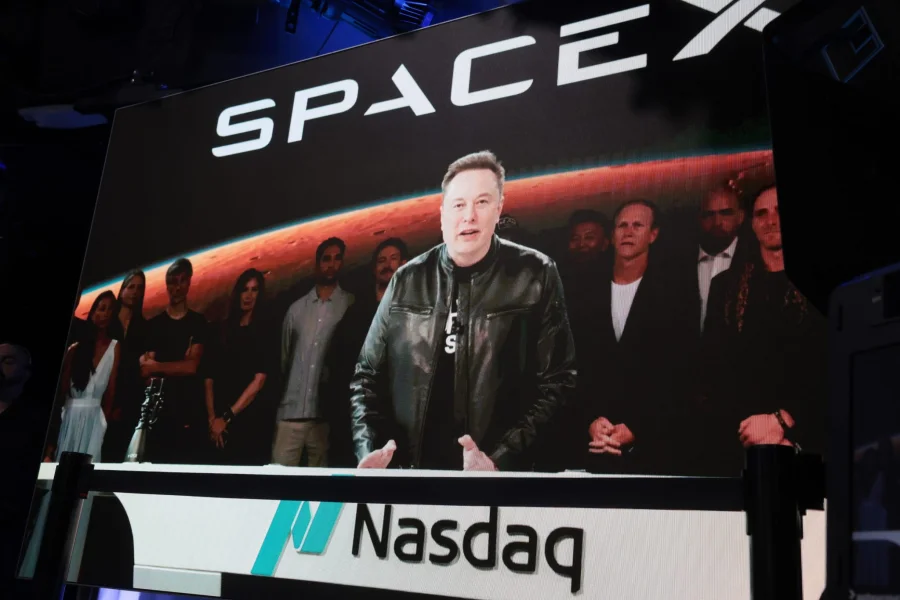
When SpaceX finally goes public, the celebration won’t just be in mission control—it will be in the boardrooms of a handful of venture capital firms that bet on Elon Musk’s rocket company when it was still a long shot. For Founders Fund, Andreessen Horowitz, and Valor Equity Partners, the IPO represents not just a payday, but a historic validation of a two-decade-long bet that reshaped venture capital itself.
How early bets on SpaceX turned into billions
SpaceX was founded in 2002, a time when venture capital was still recovering from the dot-com bust. U.S. VCs deployed roughly $20.3 billion into private companies that year—a fraction of the tens of billions now poured into single rounds for AI companies like OpenAI. The firms that backed SpaceX early, when the company was struggling to launch its first rocket, are now poised to reap rewards that dwarf those early numbers.
Founders Fund, led by Peter Thiel, invested in SpaceX during its early, capital-intensive years. Andreessen Horowitz came in later, during a growth stage, while Valor Equity Partners, whose founder Antonio Gracias has been a longtime SpaceX board member, has held its stake through multiple funding rounds. Together, these firms are expected to see returns measured in tens of billions, according to reports from Bloomberg and Fortune.
Why this IPO is different from any other
SpaceX is not just another tech IPO. It is a company that has achieved what no government or private entity has: reusable rockets, a satellite internet constellation with Starlink, and a valuation that could exceed $1.75 trillion. For venture capital, the SpaceX IPO is a rare event—a single investment that can generate returns comparable to an entire fund’s performance.
For context, the entire U.S. venture capital industry deployed about $20 billion in 2002. The returns from SpaceX alone could exceed that figure for the firms involved. This is not just a win for the investors; it is a signal of how much venture capital has scaled and concentrated its bets on transformative technology.
The journey from near-bankruptcy to market leader
SpaceX’s path to IPO was anything but smooth. In 2008, the company was on the brink of collapse after three failed launches of its Falcon 1 rocket. A successful fourth launch secured a NASA contract that kept the company alive. Early investors like Founders Fund and Valor stuck with Musk through those dark days, a decision that now looks prescient.
Over the next decade, SpaceX transformed the space industry. It developed the Falcon 9, the first reusable orbital rocket, and later the Falcon Heavy and Starship. Starlink, its satellite internet service, now has millions of subscribers and generates significant revenue. The company’s valuation has grown from a few hundred million dollars in its early days to over $1.75 trillion in private markets, according to reports.
Who benefits most from the SpaceX IPO
While many investors will profit, the biggest winners are those who held their stakes the longest. Founders Fund, which invested in SpaceX’s early rounds, is expected to see returns of over $10 billion, according to Bloomberg. Andreessen Horowitz, which invested in later rounds, could see returns in the billions as well. Valor Equity Partners, with its board seat and long-term commitment, is also set for a massive windfall.
Other notable winners include Sequoia Capital and a handful of smaller funds that participated in secondary markets. But the three firms—Founders Fund, Andreessen Horowitz, and Valor—are the most prominent, representing a cross-section of venture capital’s evolution from early-stage risk-taking to growth-stage scaling.
What SpaceX’s IPO means for the venture capital industry
The SpaceX IPO is a landmark moment for venture capital. It demonstrates that the biggest returns come from backing companies that redefine entire industries, not just improve existing ones. It also highlights the growing concentration of returns in a handful of mega-firms that can write large checks and hold for decades.
Critics argue that this concentration is unhealthy for the startup ecosystem, as it leaves less room for smaller funds and new entrants. Supporters counter that SpaceX’s success proves the model works: patient capital, aligned with visionary founders, can produce outsized returns that benefit entire economies.
Confirmed facts vs what remains unclear
Confirmed: Founders Fund, Andreessen Horowitz, and Valor Equity Partners are among the largest VC shareholders in SpaceX. The company has filed confidentially for an IPO. The valuation is expected to exceed $1.75 trillion.
Unclear: The exact IPO date and pricing are not yet public. The precise returns for each firm will depend on the final IPO price and how many shares they sell. Some details about secondary market transactions remain private.
Why Valor Equity Partners stands out among SpaceX investors
Valor Equity Partners, founded by Antonio Gracias, is less known than Founders Fund or Andreessen Horowitz, but its role in SpaceX is critical. Gracias has served on SpaceX’s board since 2008 and has been a key advisor to Musk. Valor’s investment strategy focuses on operational improvement and long-term holding, which aligns perfectly with SpaceX’s capital-intensive, long-horizon business model.
Valor’s returns from SpaceX are expected to be among the highest in its portfolio, potentially exceeding 100x on its initial investment. This makes Valor a case study in how specialized, patient capital can compete with larger, more diversified firms.
Risks and balanced view of the SpaceX IPO
While the IPO is expected to be a blockbuster, risks remain. SpaceX operates in a highly regulated industry, and any delays in Starship development or Starlink profitability could affect valuation. The company also faces competition from Blue Origin, Rocket Lab, and international players like China’s space program.
For investors, the IPO price may already reflect high expectations. If the company’s growth slows or if macroeconomic conditions worsen, the stock could underperform. Early VC winners may also face criticism for cashing out at the expense of retail investors who buy at the peak.
The broader trend: venture capital’s shift to mega-bets
The SpaceX IPO is part of a larger trend in venture capital: the move toward fewer, larger bets on transformative technology. Firms like Founders Fund and Andreessen Horowitz have raised massive funds to back companies like SpaceX, OpenAI, and Stripe. This strategy has produced enormous returns but also increased risk concentration.
For the broader startup ecosystem, this means that the next generation of founders may find it harder to attract early-stage capital, as VCs focus on later-stage, proven winners. However, it also means that the biggest ideas—like reusable rockets or artificial general intelligence—can get the funding they need to succeed.
What investors and founders should learn from SpaceX’s journey
For founders, the lesson is clear: find investors who are willing to hold for the long term and support you through failures. For investors, the lesson is to bet on visionary founders and be patient. SpaceX’s success was not guaranteed, and many early investors lost money on other space startups. But those who stuck with Musk through the near-bankruptcy years are now set for historic returns.
Future outlook: what happens after the IPO
After the IPO, SpaceX will face new pressures: quarterly earnings reports, shareholder demands, and public scrutiny. The company may use the IPO proceeds to fund Starship development, expand Starlink, and pursue Mars missions. For VC winners, the IPO provides liquidity, but many may hold their shares for further upside.
The long-term impact on the space industry could be profound. A publicly traded SpaceX with a high valuation could attract more private investment into space startups, accelerating innovation. It could also lead to consolidation, as larger players acquire smaller competitors.
Our Take
The SpaceX IPO is more than a financial event—it is a testament to the power of patient, visionary venture capital. Founders Fund, Andreessen Horowitz, and Valor Equity Partners didn’t just bet on a rocket company; they bet on a future where space is accessible, commercial, and profitable. Their returns are deserved, but they also highlight a venture capital industry that has become increasingly concentrated and risk-tolerant. For the rest of us, the IPO is a reminder that the biggest rewards often come from the most audacious bets.
Frequently Asked Questions
Which venture capital firms are the biggest winners from SpaceX’s IPO?
Founders Fund, Andreessen Horowitz, and Valor Equity Partners are among the largest VC winners. Each firm invested at different stages and is expected to see billions in returns.
How much could Founders Fund make from the SpaceX IPO?
According to Bloomberg, Founders Fund could see returns exceeding $10 billion, depending on the final IPO valuation and share sales.
Why is Valor Equity Partners considered a key investor in SpaceX?
Valor’s founder, Antonio Gracias, has served on SpaceX’s board since 2008 and the firm has held its stake through multiple funding rounds, making it one of the most committed long-term investors.
What is the expected valuation of SpaceX at IPO?
Reports suggest a valuation exceeding $1.75 trillion, which would make it one of the most valuable companies in the world at the time of listing.